
What's inside
As an Amazon Associate I earn from qualifying purchases. This post may contain affiliate links at no extra cost to you.
The Metabo HPT NT1865DSA and DeWalt DCN650 are cordless 15-gauge angled finish nailers for trim work. Both drive nails from 1-1/4 to 2-1/2 inches, use an angled magazine, and avoid the hose and compressor of a pneumatic nailer. The practical difference is less about reach or nail size than about the battery platform you already own, tool feel, and how much you value a faster follow-up shot.
As an Amazon Associate we earn from qualifying purchases at no extra cost to you.


Our Top Picks
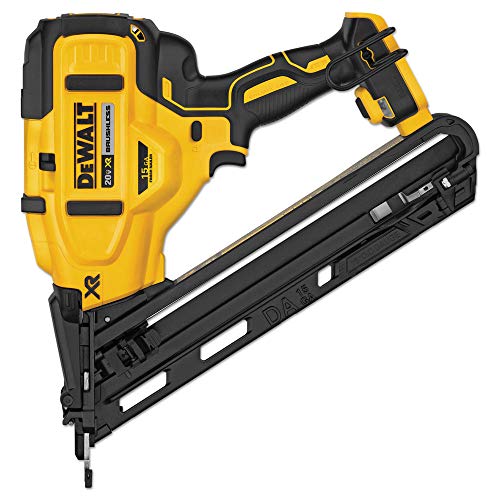 20V MAX XR Lithium-Ion Cordless 15-Gauge Angled Finish1 Count (Pack of 1)14.36 x 14.09 x 4.61 inches6.62 poundsCheck on Amazon


Key differences at a glance
| Feature | Metabo HPT NT1865DSA | DeWalt DCN650 |
|---|---|---|
| Gauge and nail range | 15 gauge; 1-1/4 to 2-1/2 inches | 15 gauge; 1-1/4 to 2-1/2 inches |
| Power source | 18V battery platform | 20V MAX battery platform |
| Drive system | Spring drive | Flywheel drive |
| Magazine angle | 34 degrees | 34 degrees |
| Typical trim use | Baseboard, casing, jambs, and heavier moulding | Baseboard, casing, jambs, and heavier moulding |
| Platform advantage | Good fit for existing Metabo HPT 18V users | Good fit for existing DeWalt 20V MAX users |
Both are angled 15-gauge nailers, not 16-gauge straight nailers. Their thicker nails hold substantial trim more securely, but leave larger holes to fill. Check the nail type and angle specified for the tool before buying fasteners; 34-degree strips are not interchangeable with every angled nailer’s strips.
Drive performance and finish quality
DeWalt’s flywheel system spins up before driving a nail. It can deliver quick follow-up shots, which helps when moving along a long run of baseboard or casing. The trade-off is a brief spin-up sound and feel before firing. Metabo HPT uses a spring drive that stores energy mechanically. It does not have the same flywheel cycle, though its feel and firing response are different enough that a short test on scrap is worthwhile if you do repetitive work.
Neither tool is immune to proud nails. Dense hardwood, knots, a low battery, or a nail that meets a hard spot can leave the head above the surface. Set depth for the material, keep the nose square, and test several nails on offcuts before installing trim. For delicate profiles, a proud head is usually easier to correct than a nail driven too deep and a dented face.
Both have tool-free depth adjustment and a no-mar nose intended to protect finished stock. Those features help, but the nose can still scuff paint or soft wood if debris gets trapped under it. Keep the contact area clean, and use a scrap piece to check settings when changing from pine to harder material.
Handling, access, and jams
These are full-size cordless tools, not pneumatic nailers with a small hose fitting. The battery adds weight at the handle, and overhead or one-handed work can become tiring. Compare the bare-tool weight only if you plan to use the same battery size; a larger pack can change balance noticeably. The angled magazine helps reach into corners and work close to a wall, but it does not make either tool compact enough for every tight return.
For occasional trim jobs, a jam is not a major concern if the tool is maintained and loaded correctly. If a nail bends or the driver does not retract, disconnect the battery before clearing the nose. Do not keep firing against a jam: that can worsen the obstruction or damage the workpiece. Follow the manual’s jam-clearing steps, and use compatible, undamaged nail strips.
Battery platform and price
For most buyers, platform cost is the deciding factor. If you already have usable batteries and a charger from one brand, buying that brand’s bare tool can make either nailer the better value. A lower sticker price on the other brand may disappear once you add batteries and a charger. Check exactly what a listing includes; kits and bare tools can look similar in search results.
Metabo HPT’s 18V platform is the natural choice for owners already invested in those tools. DeWalt’s DCN650 makes sense for people with 20V MAX batteries and chargers. If you own neither system, compare current kit prices, warranty terms, local service, and battery availability rather than assuming one platform is always cheaper.
If you are still choosing a tool type, a cordless 15-gauge finish nailer is useful for heavier trim and door jambs. For small, delicate moulding, consider whether a cordless 18-gauge brad nailer would leave a smaller hole and suit the work better.
Which one should you buy?
Choose the DeWalt DCN650 if you already use DeWalt 20V MAX batteries or prioritize a fast, consistent rhythm on long trim runs. Choose the Metabo HPT NT1865DSA if you are on the 18V platform and its price or balance suits you better. For a homeowner doing a few rooms, neither tool’s brand advantage is worth buying into a second battery system unless the kit price is compelling.
A 15-gauge nailer is not the right answer for every trim task. Its nails can split narrow stock, and the larger holes need filling and touch-up. For very thin trim, use a smaller-gauge nailer or another fastening method; for structural fastening, use the fastener specified for the job. If the work is limited to one project, renting or borrowing may cost less than a tool and battery kit.