What's inside
As an Amazon Associate I earn from qualifying purchases. This post may contain affiliate links at no extra cost to you.
Our Top Picks

Stand stability at a glance
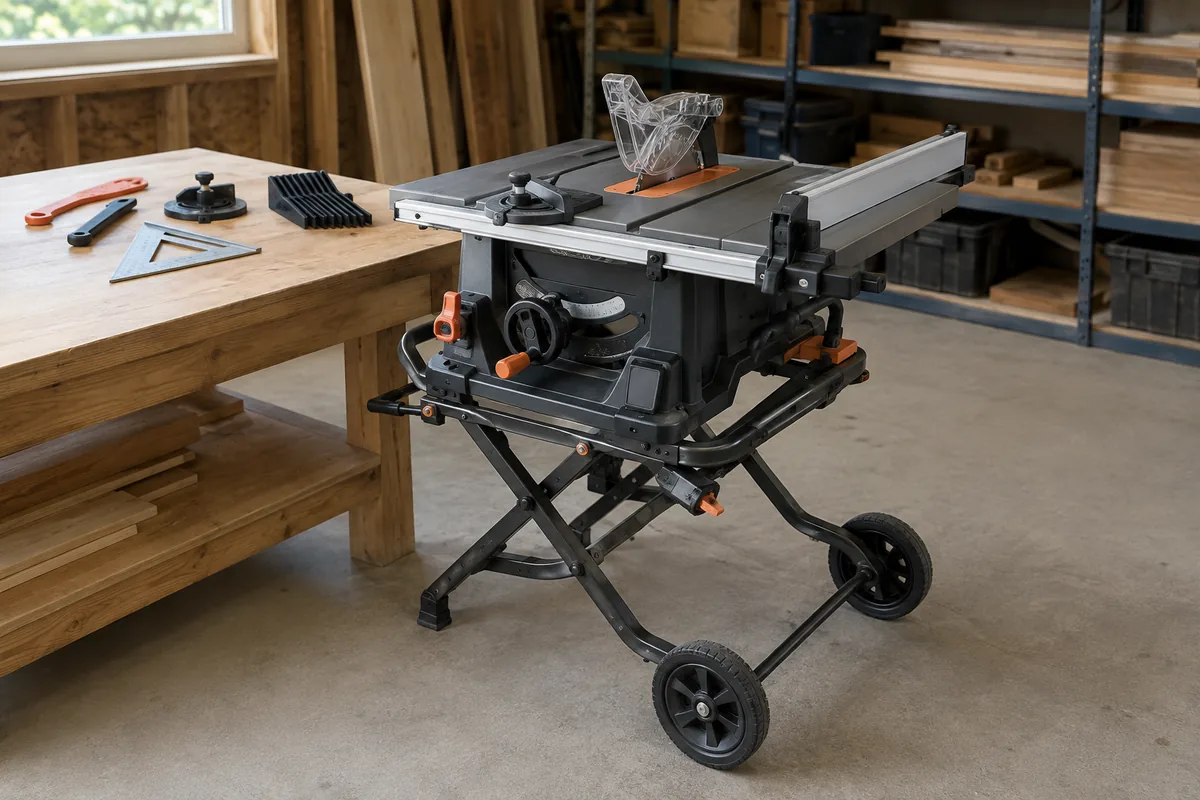
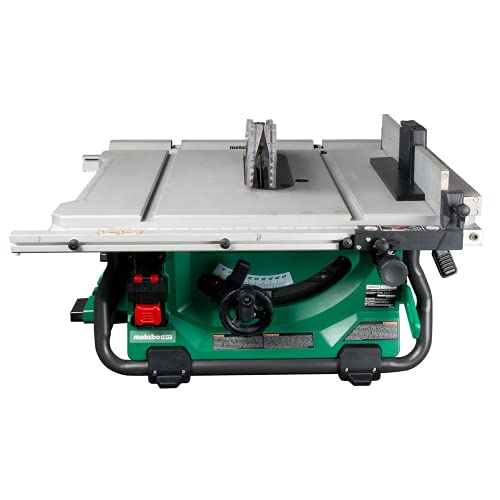
The Metabo HPT C10RJS and Ryobi RTS12 are both 10-inch jobsite table saws with 15-amp motors, but their stands take different approaches. The Metabo HPT is the heavier, more substantial machine. Its folding rolling stand gives it a wider-feeling base and better resistance to movement when you are feeding long or heavy stock. The Ryobi is lighter and easier to carry, but it is more sensitive to uneven ground, aggressive feeding, and a poorly locked stand.
| Feature | Metabo HPT C10RJS | Ryobi RTS12 |
|---|---|---|
| Blade size | 10 inches | 10 inches |
| Motor | 15 amps | 15 amps |
| Stand type | Folding rolling stand | Folding stand |
| Approximate saw weight | About 96 pounds with stand | About 50 to 55 pounds, depending on package |
| Best stability trait | Mass and broad rolling base | Simple setup and low carry weight |
| Main limitation | Bulky to load and store | More prone to shifting during difficult cuts |
Why the Metabo HPT stand is more stable
The C10RJS wins the stability comparison primarily through weight. A table saw that weighs close to 100 pounds is harder to push across a garage floor when a board catches or the operator applies sideways pressure. The Metabo HPT’s rolling stand also keeps the saw at a useful working height while giving the base a planted stance.
As an Amazon Associate we earn from qualifying purchases at no extra cost to you.

That extra mass matters when ripping 2x lumber, cutting plywood, or making repeated cuts with the fence locked near the right side of the table. The saw is less likely to skate, twist, or creep away from the operator. It also feels more settled when a long board is resting partly on the table and partly on an outfeed support.
The stand still has failure points. The folding mechanism must be fully opened and locked, and the wheels need to sit flat. If one leg is not completely deployed, the saw can rock even though the frame itself is robust. On sloped concrete or gravel, the casters can also let the machine roll unless you chock a wheel.
Where the Ryobi RTS12 stands up
The Ryobi RTS12 is not automatically unstable. On a level garage floor, driveway, or properly prepared jobsite, it can make accurate cuts without drama. Its lighter frame is an advantage when one person has to carry the saw up steps, lift it into a vehicle, or move it repeatedly during a remodel.
The trade-off appears when the cut becomes demanding. Feeding a bowed 2×4, pushing a full sheet against the fence, or correcting a board that is drifting sideways can move a lightweight saw. The usual symptom is not a dramatic tip-over; it is creeping, rocking, or a changing fence relationship. Those small movements can produce inconsistent rip widths and make kickback more likely if the stock is forced back toward the blade.
With the Ryobi, setup discipline has a larger effect. Open every leg completely, engage the locking points, and check for rocking before switching on the motor. A rubber mat or a pair of wheel chocks can help on smooth concrete. For plywood work, use a separate outfeed table or roller support rather than letting the sheet lever against the saw.
Setup and safety differences
Neither stand should be treated as a substitute for support equipment. A 4-by-8-foot plywood sheet weighs roughly 50 to 75 pounds depending on thickness. When most of that sheet hangs off the saw, it can pull either machine sideways. The operator should have an assistant, outfeed table, or side support before making the cut.
Check the stand by pressing down on opposite corners of the tabletop. There should be no rocking. If the saw moves, find the unlocked joint or uneven foot before adjusting the fence. Do not compensate for a loose stand by pushing harder or holding the workpiece against the fence with extra force.
The Metabo HPT’s rolling design is convenient, but wheels are a stability compromise when the saw is not on a flat surface. The Ryobi’s lighter body is easier to reposition but demands more attention to the floor and support layout. In both cases, keep the stand clear of cords, scrap, and wet ground.
Cutting performance and portability
Both saws use 15-amp motors and 10-inch blades, so the stand—not the headline motor rating—is the clearest difference for this decision. A stable base helps the operator maintain a steady feed rate, especially near the end of a rip cut. It also reduces the chance that a fence setting changes after the saw has been bumped.
The Metabo HPT is the better choice for a contractor who sets up once in the morning and makes many cuts throughout the day. It is also preferable for heavier framing work and frequent ripping of dimensional lumber. The cost is transportation: loading a roughly 96-pound saw and stand into a truck is a two-person task for many users.
The Ryobi makes more sense for a homeowner, trim installer, or DIY user who values portability and does not routinely cut large sheets alone. If the saw will be stored in a basement, carried through a house, or used for occasional shelving and flooring projects, the lower weight can outweigh its weaker resistance to movement.
Which one should you buy?
Choose the Metabo HPT C10RJS if stand stability is your top priority. Its heavier rolling base is the safer bet for long stock, repeated cuts, and jobsite conditions where the floor is not perfectly smooth. It is the more confidence-inspiring saw, provided you can manage its size and weight.
Choose the Ryobi RTS12 if you need a lighter saw and can control the work area. The cheaper option is fine for occasional DIY ripping when you use solid outfeed support, verify the stand locks, and avoid feeding oversized sheets without help. Its portability is a real benefit, not merely a consolation prize.
For either saw, budget for a proper table saw outfeed support if you cut boards longer than about 6 feet or handle sheet goods. That accessory will improve control more than a small difference in fence adjustment. If you work on smooth concrete, a set of rubber wheel chocks or an anti-slip mat can also make the lighter Ryobi more predictable.
Final verdict
The Metabo HPT C10RJS has the better stand stability, and the difference is noticeable during heavy or awkward cuts. The Ryobi RTS12 remains a sensible buy when low weight, easy transport, and a lower price matter more than maximum rigidity. Put either saw on level ground, lock the stand completely, and support the material properly; those three steps determine whether the design performs as intended.