What's inside
As an Amazon Associate I earn from qualifying purchases. This post may contain affiliate links at no extra cost to you.
Our Top Picks
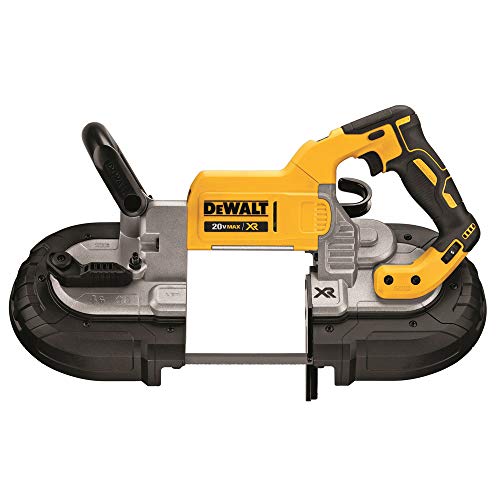
 DEWALT DCS374P2 20V Max Deep Cut Band SawOne Size22.08 x 7.88 x 17.75 inches24.97 PoundsCheck on Amazon
 JET 5" x 6" Metal Cutting Horizontal/Vertical Band37 x 17.72 x 41.75 inches115 PoundsCheck on Amazon


What “Deep-Cut” and “Compact” Usually Mean
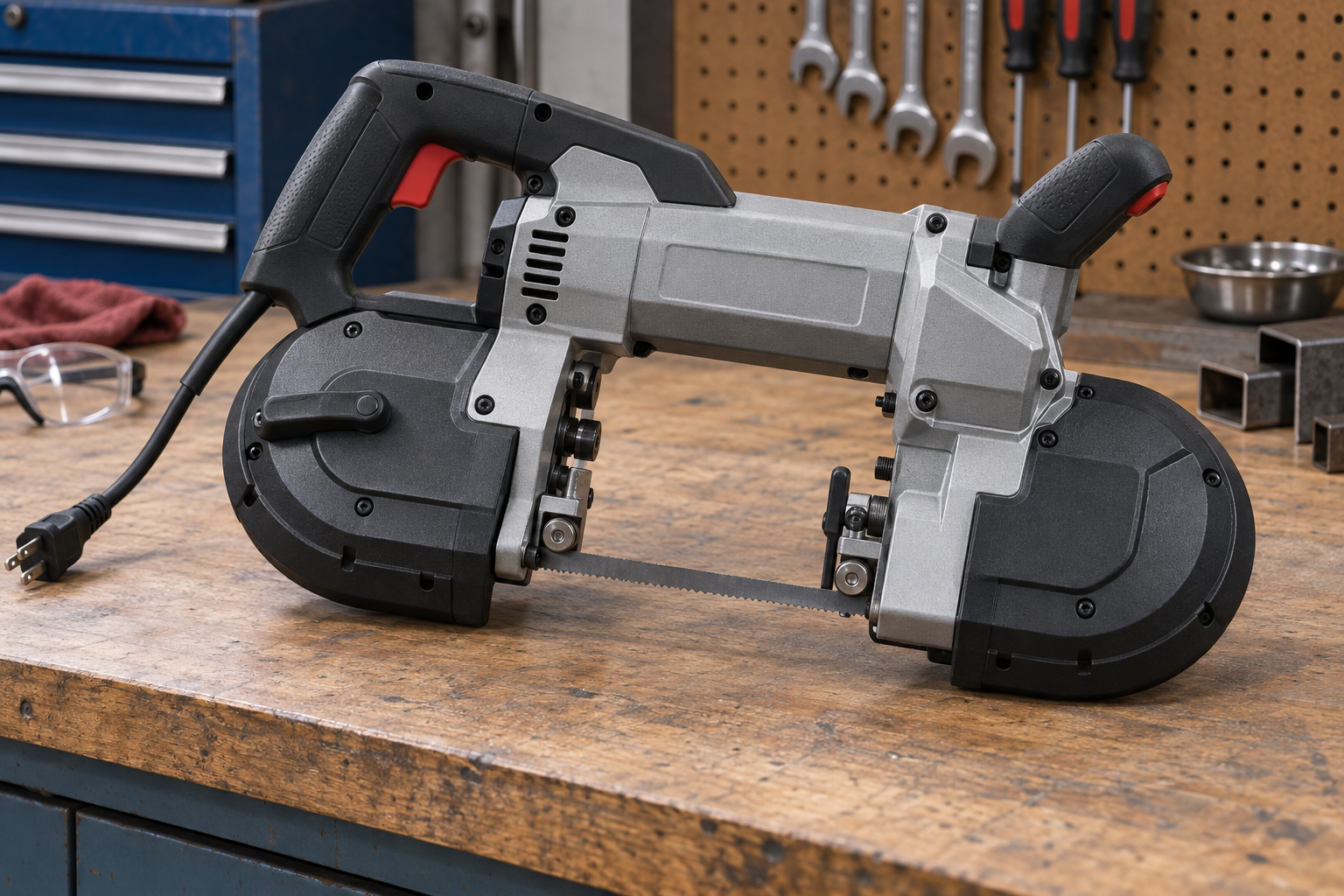
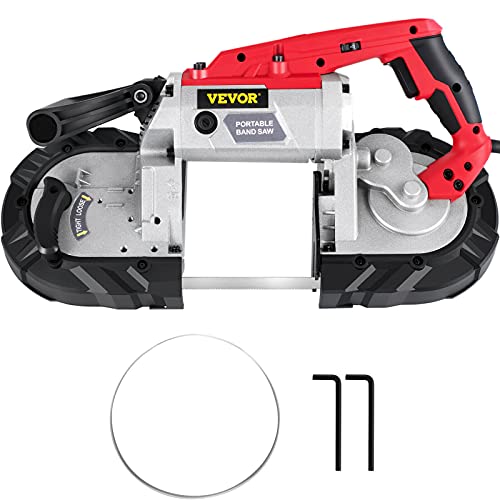
For steel pipe fabrication, the difference between a deep-cut band saw and a compact band saw is mainly capacity, not cutting principle. Both use a continuous toothed blade running around two wheels. The deep-cut saw simply has a larger throat and a taller cutting frame, usually with a maximum rectangular capacity around 5 by 5 inches or more. Compact saws commonly fall around 3 by 3 or 4 by 4 inches.
Some compact saws are marketed as portable or benchtop saws, while deep-cut tools may be portable, stationary, or convertible between vertical and horizontal operation. Motor size alone is not a reliable guide. A well-geared 10-amp saw can cut pipe more effectively than a faster tool with poor blade tracking and a weak vise.
As an Amazon Associate we earn from qualifying purchases at no extra cost to you.



If most of your work involves 1/2- to 2-inch steel pipe, tubing, and occasional angle iron, a compact saw can be entirely adequate. If you regularly cut 3-inch pipe, structural tube, thick-wall schedule pipe, or bundled material, the extra throat and frame clearance of a deep-cut saw quickly become useful.
Capacity Matters More Than Advertised Motor Power
Pipe is round, so its nominal outside diameter determines whether it fits the saw. A 3-inch nominal steel pipe is not necessarily 3 inches outside diameter, and flanges, couplings, or welded fittings may be much wider than the pipe itself. Check the saw’s actual capacity at 90 degrees, not just the maximum size listed in a headline.
| Feature | Compact band saw | Deep-cut band saw |
|---|---|---|
| Typical 90-degree capacity | About 3 x 3 to 4 x 4 inches | About 5 x 5 inches or larger |
| Best pipe range | Small-bore pipe and tubing up to roughly 2 inches | Medium and large pipe, thick-wall tube, and structural sections |
| Portability | Usually easier to carry and use on a ladder or in a cramped shop | Heavier; often needs a stand or dedicated bench space |
| Typical blade length | Shorter, often around 32 to 35 inches | Longer, often around 44 to 52 inches |
| Cutting stability | More sensitive to twisting and forcing | More stable on wide or heavy sections |
For a shop that cuts 1-inch schedule 40 pipe, either category will work. For 4-inch pipe, a compact saw is generally the wrong purchase even if the pipe technically fits at an angle. The frame, vise, and blade guides may not leave enough room to clamp the work squarely.
Browse deep-cut portable band saws for steel cutting if your routine jobs exceed compact capacity rather than relying on a claimed maximum that leaves no clearance.
Cut Quality, Blade Control, and Failure Modes
A band saw can make a clean, nearly burr-free cut, but only when the blade is supported correctly. The blade guides should sit close to the work without touching it, and the pipe should be clamped so it cannot rotate. Round pipe that rolls during the cut can strip teeth, bend the blade, or produce a noticeably out-of-square end.
Compact saws are more prone to deflection because their frames and guide arms are smaller. This matters when cutting thick-wall pipe or when the operator applies too much feed pressure. A cut may start square and then wander as the blade heats. The usual result is a tapered end that makes fitting and welding harder.
Deep-cut saws are not immune. Their larger frames can encourage users to push too hard, and a long blade can flutter if tension is low. A deep-cut saw also takes longer to accelerate and is less convenient for a single quick cut. Use moderate pressure and let the teeth remove the metal. If the blade squeals, stalls, or produces blue chips, reduce feed pressure and check the blade.
For general mild steel, a variable-pitch bi-metal blade is the safest starting point. Around 10/14 teeth per inch works well for many pipe sizes, while thinner wall tubing may benefit from a finer 14/18 or 18/24 TPI blade. Avoid using a coarse blade on thin-wall tube; it can catch and rip the wall instead of cutting smoothly. Avoid an excessively fine blade on heavy stock, where it loads with chips and cuts slowly.
Portability Versus Shop Productivity
A compact saw wins when fabrication happens at a jobsite. It is easier to carry to a pipe rack, fits in a service van, and can often be operated with one hand while the other steadies the tool. That convenience is valuable for repair work and installation cuts.
For repeated fabrication, the deep-cut saw is less tiring. Many models have a variable-speed dial, a better vise, and a hydraulic or adjustable feed system. Some can be mounted in a stand for hands-free cutting. That setup improves consistency when producing multiple pieces, such as ten 24-inch pipe sections.
Weight is also a practical issue. A compact tool may weigh roughly 15 to 25 pounds, while a heavy deep-cut saw can approach 50 pounds before adding a stand. If you routinely work above shoulder height, the lighter option may be safer even if it takes an extra pass or two to finish difficult stock.
Which Saw Fits Your Fabrication Work?
Choose a compact band saw when most of your cuts are under 3 inches, portability matters, and you are fabricating railings, brackets, small frames, or plumbing supports. The cheaper option is fine for occasional work if you clamp the pipe securely and accept that cuts through thick-wall steel will be slower. A compact saw is also a sensible second tool for field work when a larger saw already handles shop production.
Choose a deep-cut band saw when you regularly cut 3- to 5-inch pipe, structural tube, channel, or heavy angle iron. The larger capacity reduces repositioning, gives the vise more room to hold round stock, and generally produces straighter cuts under load. Look for a rigid adjustable vise, accessible blade tension adjustment, replaceable guide bearings, and a speed range suitable for steel rather than a single high-speed setting.
See compact portable metal-cutting band saws for small pipe and field repairs. For a production bench, compare horizontal-vertical metal-cutting band saws that can be used with a stand.
Setup Details That Prevent Bad Cuts
Support long pipe on both sides of the saw so its weight does not lever the work upward as the cut finishes. Set the vise close to the blade, but leave enough clearance for the guide arm. For thin-wall pipe, use a blade with more teeth in the cut and reduce feed pressure near breakthrough. The last few millimeters are where teeth commonly catch.
Deburr the cut with a file or flap wheel, and inspect the blade after any sudden catch. Missing teeth, a bent blade, or a cut that consistently wanders are reasons to stop rather than compensate by forcing the tool. With steel pipe, a correctly sized compact saw is better than an oversized deep-cut saw used without support—but if the stock barely fits, buy the larger capacity before the work becomes a series of compromised cuts.