What's inside
As an Amazon Associate I earn from qualifying purchases. This post may contain affiliate links at no extra cost to you.
Our Top Picks
 DEWALT 15 Amp 8-1/4 in. Compact Portable JobsiteOne Size22.75 x 22.75 x 13 Inches54 poundsCheck on Amazon



The short answer
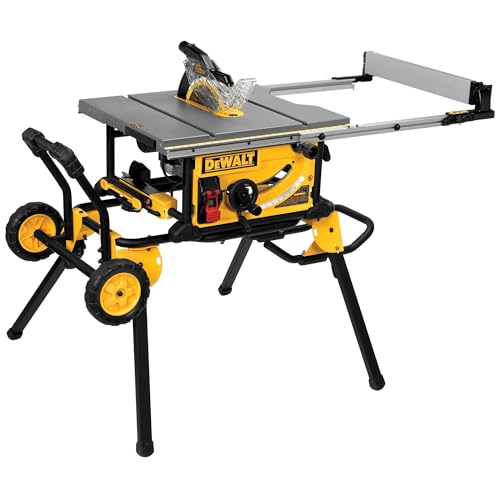
The DeWalt DWE7485 packs more easily, by a wide margin. It is a compact 8-1/4-inch jobsite table saw weighing about 46 pounds, with a small footprint and no permanent rolling stand. One person can lift it into a truck, carry it up stairs, and store it on a shelf.
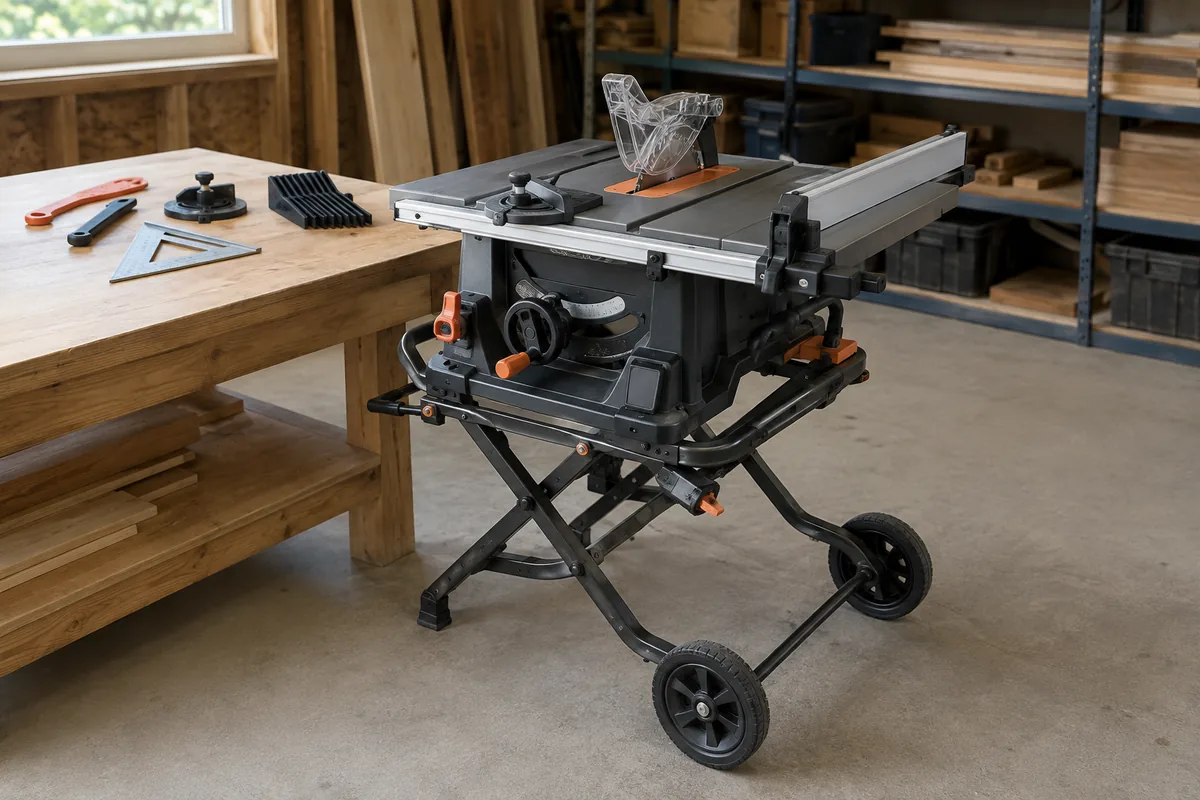
The Metabo HPT C10RJS is a more capable but much bulkier package. Its 10-inch blade, rolling stand, larger table, and roughly 35-inch rip capacity make it better suited to repeated work on sheet goods and long boards. The trade-off is a machine that is closer to a small portable contractor saw than a grab-and-go jobsite saw.
As an Amazon Associate we earn from qualifying purchases at no extra cost to you.



If “packs easily” means loading the saw by yourself and keeping it out of the way between jobs, buy the DeWalt. If it means rolling a complete saw from the truck to the work area, the Metabo’s folding stand is useful—but it still takes considerably more room to transport.
Size and weight in real use
The DWE7485’s compact body is its main advantage. DeWalt lists the saw at about 46 pounds, and its relatively narrow base is easy to grip from both sides. The fence stores on the saw, and the included blade guard, miter gauge, and push stick do not require a separate toolbox if you use the built-in storage points.
That weight is manageable, but it is not featherlight. Carrying it one-handed for a long distance is awkward, especially with the fence installed. Still, one person can reasonably lift it into a pickup bed or carry it up a flight of stairs. A simple folding stand or portable table saw stand can improve working height without turning the saw into a permanent rolling assembly.
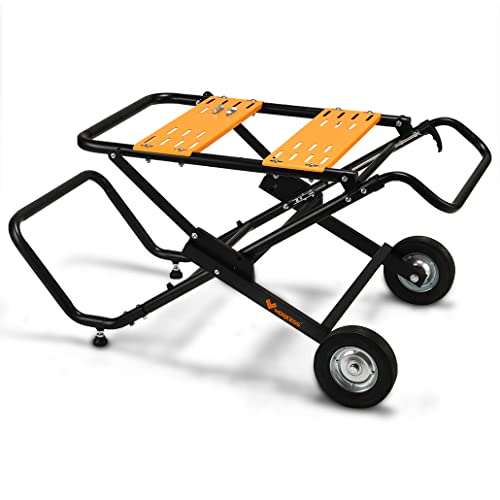
The C10RJS includes a wheeled folding stand, which sounds more portable than it is. The complete package is commonly listed at roughly 96 pounds, with dimensions around 35 inches long, 24 inches wide, and 40 inches high when assembled. Exact figures can vary slightly by package and retailer, but the important point does not: this is a two-person lift for many users, and it consumes substantially more truck and garage space.
Its wheels help on a smooth driveway or shop floor. They are less impressive over gravel, thresholds, wet grass, or a cluttered remodeling site. You also need clearance to fold the stand and enough room to turn the saw through doorways.
DeWalt DWE7485 vs Metabo HPT C10RJS
| Feature | DeWalt DWE7485 | Metabo HPT C10RJS |
|---|---|---|
| Blade diameter | 8-1/4 inches | 10 inches |
| Motor | 15 amps | 15 amps |
| No-load speed | 5,800 rpm | 4,500 rpm |
| Maximum rip capacity | 24-1/2 inches | About 35 inches |
| Approximate weight | 46 pounds | About 96 pounds with stand |
| Stand | Not included as a permanent rolling stand | Included folding rolling stand |
| Best fit | Frequent loading, small shops, trim and framing work | Sheet goods, longer stock, repeated setup at one site |
What the extra size buys you
The Metabo’s 10-inch blade gives it more cutting depth. At 90 degrees, a 10-inch saw can generally cut around 3-1/8 inches, while the DeWalt’s 8-1/4-inch blade cuts about 2-9/16 inches. That difference matters when cutting 3-inch lumber, thick hardwood, or stacked material. Neither saw should be treated as a substitute for a larger cabinet saw, but the C10RJS has more margin for thick stock.
The larger table and approximately 35-inch rip capacity are also useful for plywood. The DWE7485’s 24-1/2-inch capacity is enough to rip a 4-by-8 sheet in half, since the cut only needs to be about 24 inches from the edge. It is not enough for many full-width cabinet parts without repositioning the sheet or using an outfeed and side-support setup.
That extra capacity creates a packing penalty. The Metabo’s table extensions and fence make the saw longer and wider even before the stand is unfolded. The DeWalt is easier to fit beside ladders, compressors, and cordless tool cases. For punch-list work, flooring, shelving, and small framing jobs, the smaller saw is often the one that actually gets taken out of the truck.
Setup, breakdown, and common failure points
The DeWalt requires a separate support solution if you want a comfortable working height. Put it on an unstable pair of sawhorses and the saw can shift as a board enters the blade. A rigid stand with a level top is safer. The compact saw also needs outfeed support for long boards; otherwise the stock can lift, bind, or push the operator toward the blade as the cut finishes.
The Metabo’s integrated stand solves the height problem and usually makes setup faster when you have open ground. Its wheels can be a liability during cutting if the stand is not fully locked. Check every latch before starting, particularly after transporting it folded. A loose extension table or poorly seated fence can produce a tapered cut, and a fence that is not parallel to the blade can cause burning or kickback.
Both saws use a riving knife and blade guard that should remain installed for ordinary cuts. Removing the guard to make setup faster is a poor trade: kickback is the major failure mode with either machine, especially when ripping bowed lumber or forcing stock through a dull blade. Use a sharp blade, support the work, and do not reach past the blade to retrieve a cutoff.
Which one should you buy?
Choose the DWE7485 if you regularly work alone, have limited storage, or carry tools through finished homes. It is the better choice for a contractor who values a compact loadout more than maximum rip width. Its 24-1/2-inch capacity handles common framing and remodeling cuts, and the lighter body makes daily transport less punishing. Budget for a stable stand if you do not already have one; a table saw outfeed support is also worthwhile for long boards.
Choose the C10RJS when the saw will spend most of its time at one jobsite, especially where you are breaking down plywood or ripping wide panels. The rolling stand and larger capacity can save time on repetitive work. The added weight is acceptable if you normally unload with help or roll it only across reasonably smooth surfaces.
The cheaper option is fine when the job does not demand the larger blade or wide rip capacity. For occasional home projects, flooring, shelves, trim, and framing, the DeWalt’s smaller footprint is often more valuable than the Metabo’s extra capacity. If you already own a sturdy workbench and a circular saw for breaking down sheets, the DWE7485 is the more sensible portable table saw.
For frequent plywood production, thick stock, and a dedicated setup area, the C10RJS earns its space. For everything else, the DeWalt is the saw you are more likely to carry, store, and use without assistance.