What's inside
As an Amazon Associate I earn from qualifying purchases. This post may contain affiliate links at no extra cost to you.
Our Top Picks
 BOSCH GTS15-10 10 Inch Portable Jobsite Table Saw10 in28.1 x 27.8 x 13.53 inches102.95 poundsCheck on Amazon



The short answer
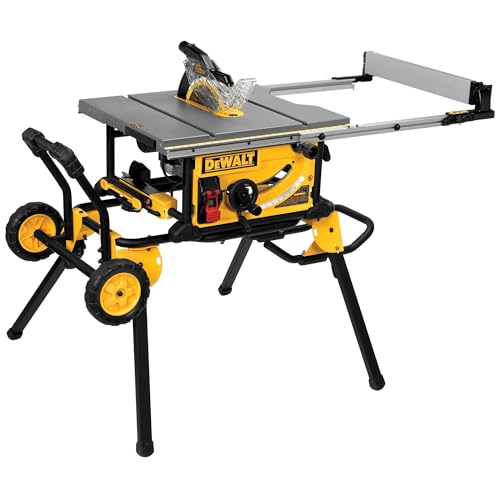
For breaking down full sheets of plywood or MDF, both saws benefit from a rolling stand, but the DeWalt DWE7491RS is the stronger choice when you want more rip capacity and a little more room to manage a wide panel. Its rack-and-pinion fence is quick to adjust and stays parallel when moved correctly. The Bosch 4100XC-10 is a capable alternative, especially if you value its gravity-rise stand and already have a reliable way to support material on the outfeed side.
Neither saw makes a full 4-by-8-foot sheet easy for one person. A table saw supports only the material that rests on its table; a long sheet can tip, sag, or steer the cut if its far end is unsupported. Plan on a helper or a large, stable support surface, and consider making rough cuts with a track saw or circular saw before bringing smaller panels to the table saw.
As an Amazon Associate we earn from qualifying purchases at no extra cost to you.


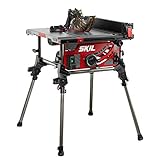
Specifications that matter for sheet goods
| Feature | DeWalt DWE7491RS | Bosch 4100XC-10 |
|---|---|---|
| Blade | 10-inch, 24-tooth carbide | 10-inch, 24-tooth carbide |
| Maximum rip to the right | 32½ inches | 30 inches |
| Maximum rip to the left | 22 inches | 8½ inches |
| Motor | 15 amp | 15 amp |
| Stand | Rolling stand with fold-up legs | Gravity-rise wheeled stand |
| Approximate assembled weight | About 90 pounds | About 94 pounds |
Published specifications can vary by package and market, so confirm the exact configuration before buying. The main difference for panel work is capacity: the DeWalt gives you 2½ inches more rip to the right and considerably more room to the left of the blade. That extra left-side capacity can help with certain setups, but most cabinet-panel breakdowns rely on a straight, repeatable fence cut to the right.
Fence and cut control
The DeWalt’s rack-and-pinion fence is its clearest practical advantage. Front and rear rails move together when you turn the adjustment knob, making it fast to set a rip width and less fiddly than nudging a fence into position by hand. Check that it locks square and parallel to the blade before a critical cut; a fence that is out of alignment can pinch the work, leave a poor edge, or increase kickback risk. The fence also needs to be extended and locked properly for wide cuts.
The Bosch fence is usable, but it is less convenient for frequent changes in width. Take time to align it and verify the measurement at both ends rather than assuming the scale or lock position is exact. For repeat cuts, make a test cut in scrap and measure the result. Either saw can produce clean cabinet parts with a sharp blade and a careful setup, but neither fence removes the need to check alignment.
Both saws ship with general-purpose 24-tooth blades. That blade is suited to fast ripping, not the cleanest crosscuts in veneered plywood. For fewer chips, use a sharp, higher-tooth-count blade suitable for plywood and support the sheet well. A scoring pass or a zero-clearance insert can further reduce tear-out, though neither replaces a proper blade and feed technique.
Stands, handling, and support
The Bosch gravity-rise stand is quick to raise and lower and rolls well on a jobsite. Its folding action is convenient when you regularly move between storage and setup. The DeWalt stand is also mobile, with legs that fold under the saw, and the saw’s wide rip capacity makes it an appealing package for ripping long stock and panels. In practice, floor condition matters: small wheels and uneven ground can make either stand awkward to move when loaded.
For sheet goods, stand design is secondary to material support. A ¾-inch 4-by-8 sheet weighs roughly 60 to 70 pounds, depending on material, and it can twist or pull sideways as the cut progresses. Use an outfeed table, roller support, or a helper who can support the offcut without pushing it into the blade. Keep the sheet flat against the table and fence; do not reach across the blade to catch a falling piece. For safer, easier initial breakdown, a track saw and guide rail can turn a full sheet into manageable panels before final sizing.
Which one should you buy?
Choose the DWE7491RS if you regularly rip wide panels, want fast fence adjustments, or expect to change widths often. Its 32½-inch right-side capacity clears a nominal 30-inch rip and leaves a little margin. That matters when cutting cabinet sides or breaking a sheet into wide sections. The extra capacity is useful, but it does not make unsupported sheet handling safe or eliminate the need for an outfeed plan.
Choose the 4100XC-10 if the Bosch costs meaningfully less, you prefer its stand, and your usual work fits within its 30-inch right-side rip limit. For many shop projects, the difference between 30 and 32½ inches will not affect the cut. If you mostly rip narrow strips, cut framing stock, or process plywood after rough breakdown, the Bosch can be the better value. Spend the savings on a suitable plywood blade, stable support, or a table-saw outfeed support rather than paying extra for capacity you rarely use.
A safer way to break down a sheet
Start with a flat, stable surface and inspect the panel for bow or damage. If it is too large to control comfortably, rough-cut it on foam insulation with a circular saw or track saw, leaving a small amount for the table saw to remove. For a table-saw rip, set the fence, check blade alignment, and support the panel before starting. Stand out of the blade’s direct line, keep hands clear of the blade path, and use a push stick or push block as the cut reaches the end. Never pull a sheet backward over a spinning blade if it begins to bind; switch off the saw and wait for the blade to stop before dealing with the work.