What's inside
As an Amazon Associate I earn from qualifying purchases. This post may contain affiliate links at no extra cost to you.
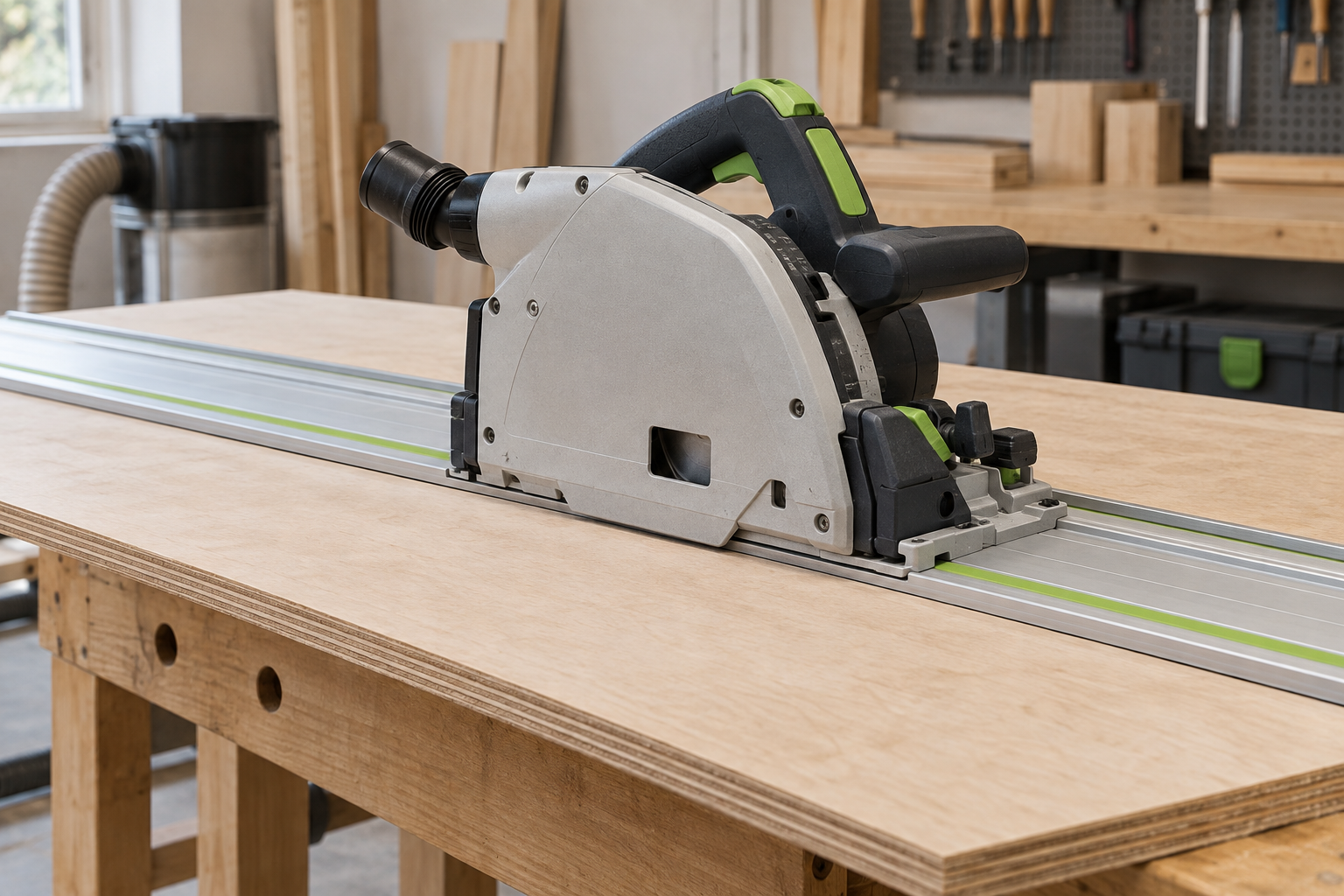
The Makita SP6000 and Triton TTS1400 are corded track saws for breaking down sheet goods and making long, straight cuts without wrestling a full-size sheet across a table saw. Both can do useful work in a home shop, but they differ in refinement, track compatibility and price. The better value depends less on cutting power than on how often you use the saw and what tracks and accessories you already own.
As an Amazon Associate we earn from qualifying purchases at no extra cost to you.


Our Top Picks


At a glance
| Feature | Makita SP6000 | Triton TTS1400 |
|---|---|---|
| Power | 12-amp corded motor | 1,400-watt corded motor, about 11.7 amps at 120 volts |
| Blade size | 6-1/2 inches | 6-1/2 inches |
| Maximum cutting depth | About 2-3/16 inches at 90 degrees without a rail | About 2-3/16 inches at 90 degrees without a rail |
| Useful strengths | Refined adjustments, consistent performance and a well-established rail system | Strong feature set for the price, including a scoring mode |
| Best fit | Frequent use or an existing Makita-compatible setup | Lower-cost entry into track-saw work |
Specifications and included accessories can vary by market and kit, so check the exact listing before buying. The saws are close in basic capacity: a 6-1/2-inch blade is suited to 3/4-inch plywood and most common sheet goods, while thicker stock may need a second pass or a different saw.
Cut quality and control
Either saw can make clean cabinet-panel cuts when paired with a straight, properly supported rail and a sharp blade. The rail’s splinter strip helps support the surface fibers, but it only works well when it is aligned to the blade’s actual cut line. A fresh strip, correctly trimmed, matters more to edge quality than a small difference in motor rating.
The Makita’s appeal is its controlled feel. Its speed control and plunge action make it easier to manage the start of a cut and work through different materials. That can matter when cutting veneered plywood, where rushing the plunge or feeding too aggressively can chip the face. The SP6000 also has an anti-tip feature for bevel cuts on a rail; use it when tilting the saw, since the base can otherwise lift or shift and spoil the angle.
The Triton offers a scoring mode intended to reduce tear-out by making a shallow initial cut before the full-depth pass. It can help on delicate surfaces, but it is not a substitute for a sharp blade, a properly adjusted splinter strip or a steady feed. If the rail moves between passes, the scored line and main cut can disagree, leaving a visible shoulder.
Rails and accessories
Rail compatibility is a major value question. Both saws are commonly sold with or used on guide rails, but not every rail, connector or clamp works across brands without checking fit. A saw that looks cheaper can become less of a bargain if you need to replace rails or buy adapters. Confirm the rail included in the kit, its length, and whether the accessories you already own are compatible before ordering.
For furniture or cabinet work, a 55-inch rail is a practical starting length for crosscutting a standard 4-by-8-foot sheet across its 48-inch width. Long rips may require a longer rail or a connector, and a joint between rails needs careful alignment: even a small kink can steer the saw off line. If you are starting from scratch, compare complete track saw rail kits, not just the bare saw price.
Dust collection is useful but not perfect. Connect either saw to a suitable extractor or shop vacuum, and expect some dust to escape, especially with a worn blade or when cutting material that does not sit flat against the rail. Keep the hose from pulling the saw sideways; that can cause a wandering cut even when the rail is clamped securely.
Which is the better value?
Choose the Makita SP6000 if you expect to use a track saw regularly, value smoother adjustments, or already have compatible Makita rails and accessories. For repeat cuts on cabinet parts, doors or built-ins, easier setup and predictable handling can save more time than the purchase-price difference. A Makita SP6000 kit is most compelling when it includes the rail and accessories you actually need.
Choose the Triton TTS1400 if the lower initial cost leaves room in the budget for a rail, clamps and a better blade. For occasional plywood breakdown, a home renovation or a handful of shop projects each year, the Triton is capable of the same basic work. If you are comparing packages, a Triton TTS1400 package with a usable rail may be better value than a cheaper bare tool.
Neither saw makes a poor setup foolproof. A bowed sheet, unsupported offcut or rail that creeps during the cut can ruin a panel. Support the whole sheet on foam insulation or a level cutting surface, clamp the rail where needed, and let the blade reach speed before plunging. If you are new to the process, budget for a suitable fine-tooth track-saw blade for plywood; the stock blade may be adequate for rough breakdown but leave more cleanup on visible edges.
Bottom line for a home shop
The Makita is the safer pick for frequent, accuracy-focused use and for buyers already invested in its rail ecosystem. The Triton is the sensible budget choice when you need a track saw for occasional sheet work and the kit includes a rail at a worthwhile price. Compare the complete setup—saw, rail, clamps, blade and dust connection—rather than choosing on motor figures alone. If the Triton saves enough to buy those essentials, it is not a compromise for many home workshops.