What's inside
As an Amazon Associate I earn from qualifying purchases. This post may contain affiliate links at no extra cost to you.
Roof framing puts a circular saw through repeated cuts in dimensional lumber, often while the workpiece is awkwardly positioned and the operator is on a ladder or roof deck. The choice between a worm-drive saw and a sidewinder comes down less to which one cuts better and more to how much torque, reach, and weight you want to manage over a day of work.
As an Amazon Associate we earn from qualifying purchases at no extra cost to you.


Our Top Picks
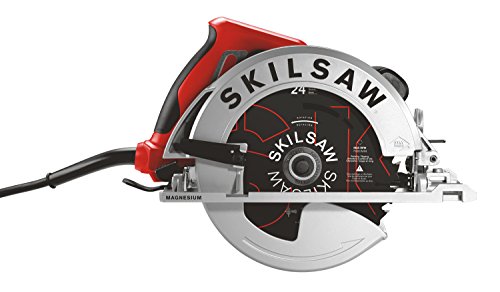 SKILSAW SPT67WL-01 15 Amp 7-1/4 In. Sidewinder CircularOne Size14.37 x 9.84 x 7.44 Inches8.6 PoundsCheck on Amazon

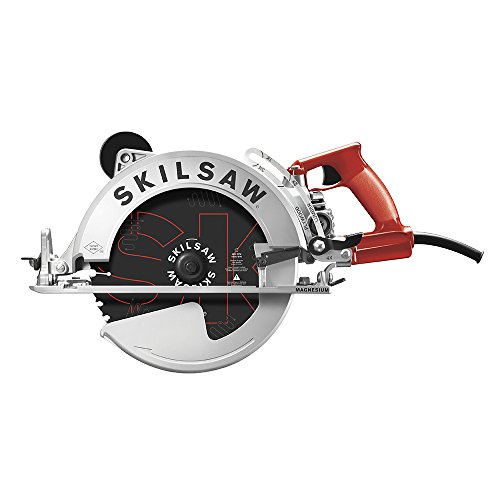

How the drives differ
A sidewinder uses a motor mounted beside the blade, driving it directly through gears. It is typically lighter and more compact than a comparable worm-drive saw. A worm drive uses a motor set behind the blade, with gearing that turns the blade at a right angle. That arrangement usually makes the saw longer and heavier, but gives it a reputation for strong torque under load.
Both types can cut common roof-framing stock, including 2x4s, 2x6s, and many 2x8s, provided the saw has enough blade depth and is set up correctly. Either can make plumb cuts, birdsmouth-related cuts, and bevel cuts. The drive type does not substitute for accurate layout: mark the cut, support the offcut, and keep the shoe flat through the cut.
Roof-framing trade-offs
| Factor | Worm drive | Sidewinder |
|---|---|---|
| Weight and handling | Usually heavier and longer; can feel stable on supported stock, but tiring overhead | Usually lighter and easier to carry, start, and control in tight spots |
| Cutting under load | Torque-oriented gearing can help when pushing through dense or knotty lumber | Plenty of capacity for ordinary framing; may slow more if forced through a tough cut |
| Reach and balance | Rear handle can help keep the body away from the blade, but the long layout takes practice | Compact profile is convenient on a roof deck and in cramped framing bays |
| Typical fit | Repeated heavy cuts, larger stock, or an operator who prefers its balance | General framing, portability, and buyers who value lower weight and cost |
Weight matters more on a roof than it does on a shop bench. A saw weighing a couple of pounds more may not sound significant, but repeated cuts at shoulder height or above can make the difference noticeable. The longer worm-drive body can also be less convenient when cutting short pieces near a roof edge or working between rafters. Conversely, some users find its rear-handle stance gives them more room to position their hands and keep their body behind the saw.
Which one for common cuts?
For routine rafters and blocking cut from 2x material, a good sidewinder is usually enough. A sharp, appropriate framing blade and steady feed rate matter more than having the highest-torque drive. Do not lean hard on a slowing saw: forcing it can overheat the motor, bind the blade, or pull the shoe off the cut line. Let the blade reach speed before entering the wood and keep the work supported so the kerf does not pinch.
A worm drive makes more sense when the saw will see long days of repeated cuts, dense stock, or frequent cuts through thicker material near the saw’s capacity. Its torque can help maintain progress when the cut gets demanding, but it does not make a dull blade safe or prevent binding. A heavy saw can be a liability if fatigue causes you to lose control or rush a cut.
Check actual cutting capacity rather than assuming all circular saws handle the same stock. Many 7-1/4-inch saws cut about 2-1/2 inches deep at 90 degrees, enough for a single pass through typical 2x lumber, whose actual thickness is 1-1/2 inches. Bevel capacity is lower, and the shoe angle and depth setting should be checked before making compound or steep-angle cuts. For lumber thicker than the saw’s capacity, use an appropriate alternative method rather than twisting the saw through an incomplete cut.
Safety on the roof
Roof work raises the cost of a mistake. Secure the lumber before cutting, keep the offcut from dropping onto people below, and avoid cutting while perched on an unstable ladder. Use a stable platform where possible. Keep both hands on the saw as designed, stand clear of the blade’s path, and wait for the blade to stop before setting the saw down. A longer worm drive may offer useful reach, but it is not a reason to stretch beyond a stable stance.
Blade choice affects cut quality and effort. A sharp 24-tooth framing blade is a common choice for fast cuts in construction lumber; a more finely toothed blade can leave a cleaner edge but may cut more slowly. Inspect blades for missing or damaged teeth, and match the blade’s rating and arbor to the saw. Dust, eye protection, hearing protection, and secure footing matter with either design.
What to buy
If most of your work is roof framing with ordinary 2x lumber, prioritize manageable weight, a comfortable grip, a clear cut line, and a shoe that holds its angle. A 7-1/4-inch sidewinder circular saw is a sensible choice for many homeowners and small crews. It is generally easier to carry and is not a compromise for standard rafter cuts when used with a suitable blade.
Choose a 7-1/4-inch worm-drive circular saw if you expect sustained heavy use and are comfortable handling the extra length and weight. If you already own a sound sidewinder, there is little reason to replace it solely for roof framing. Put the money toward a sharp blade, spare batteries or a suitable extension cord, and safe work supports if those are the limiting factors.
For occasional work, the cheaper sidewinder is fine. For daily production, test both drive styles in your actual cutting position if possible. The saw that lets you maintain a steady, controlled cut without tiring is the better framing tool, regardless of which gear layout it uses.