What's inside
As an Amazon Associate I earn from qualifying purchases. This post may contain affiliate links at no extra cost to you.
Our Top Picks
 Makita XSH03Z 18V LXT® Lithium-Ion Brushless Cordless 6-1/2"0.6 in14.02 x 7.8 x 10.43 inches7 poundsCheck on Amazon
 Makita XSH04ZB 18V LXT® Lithium-Ion Sub-Compact Brushless Cordless1 Count (Pack of 1)9 x 13.5 x 9 inches4 poundsCheck on Amazon


Quick verdict
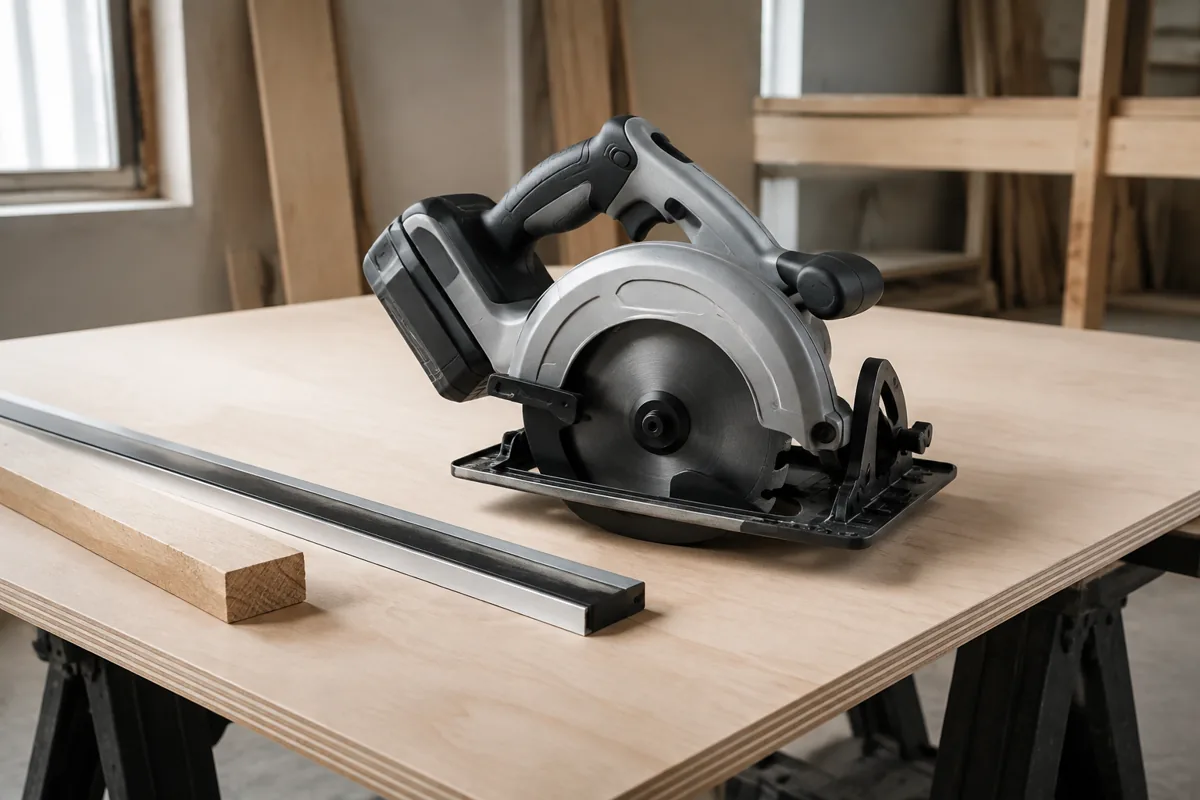
For breaking down plywood and other sheet goods, the Milwaukee M18 FUEL 6-1/2-inch circular saw and Makita XSH03 are close in capability. Both are compact, cordless saws with a 6-1/2-inch blade and a 2-1/4-inch maximum cut depth at 90 degrees. Either can cut typical 3/4-inch plywood in one pass.
Choose between them based less on a claimed speed advantage and more on the battery platform you already own, the direction of the blade, and how you plan to guide the saw. Neither replaces a track saw for consistently clean, cabinet-grade cuts. With a straightedge and a suitable blade, though, either can handle routine panel breakdown.
As an Amazon Associate we earn from qualifying purchases at no extra cost to you.


The relevant differences
| Feature | Milwaukee M18 FUEL 6-1/2-inch saw | Makita XSH03 |
|---|---|---|
| Blade diameter | 6-1/2 inches | 6-1/2 inches |
| Maximum cut at 90° | 2-1/4 inches | 2-1/4 inches |
| Maximum bevel | 50° | 50° |
| Blade position | Right of motor | Left of motor |
| Power platform | Milwaukee M18 | Makita 18V LXT |
Exact weight and included accessories depend on the kit and battery, so compare bare tools or complete kits like for like. A larger battery can improve runtime but adds weight—an important trade when supporting a saw over a wide sheet.
How they handle sheet goods
For a 4-by-8-foot sheet, setup matters more than a small difference in motor performance. Support the panel on foam insulation or sacrificial strips, mark the cut, and keep the offcut from pinching the blade. A pinched blade can stall the saw, leave a rough cut, or pull the tool off line. Never balance a large offcut where it can fall and twist the workpiece.
Both saws have enough depth for common 1/2- and 3/4-inch panels. Set the blade only slightly deeper than the material—about 1/8 inch beyond the underside is a useful starting point. Excess blade exposure increases the amount of exposed teeth and can worsen tear-out. A sharp, fine-tooth blade suited to plywood or laminate makes a bigger difference to edge quality than choosing between these two saws.
For long cuts, clamp a straightedge and check that the saw’s shoe stays against it from start to finish. A saw can drift if the shoe loses contact, the guide shifts, or the operator reaches too far across the panel. If repeatable, splinter-controlled cuts are the priority, consider a circular-saw track guide or a dedicated track saw instead of expecting a compact saw to deliver track-saw results on its own.
Handling and visibility
The Milwaukee’s right-side blade and the Makita’s left-side blade change what you can see, especially depending on which hand you use and which side of the cut you stand on. Before buying, check that you can see the blade path and reference marks in your normal cutting position. If you are switching from a familiar saw, the opposite blade position can take a little adjustment.
Compact saws are easier to manage than full-size models, but a 4-by-8 sheet is still awkward to control alone. Lay it flat and support it well rather than trying to hold the panel upright while cutting. For accurate breakdown, make a rough cut a little wide, then trim to final size if the project allows. That gives you room to correct a small drift without sacrificing the finished dimension.
Battery platform and running cost
If you already own Milwaukee M18 batteries and chargers, the Milwaukee is usually the practical buy. The same is true of the Makita for someone invested in 18V LXT. Buying into a second platform just for a compact circular saw means paying for batteries and a charger as well as the tool. Compare the bare-tool price with the kit price, and check what battery capacity each kit includes.
Runtime depends on material, blade condition, feed rate, and battery capacity. For occasional cuts on one or two sheets, either platform may be adequate with a healthy battery. Repeated long cuts, thick stock, or a dull blade use more power and can make a small battery feel limiting. Don’t force the saw through a cut that is slowing down: ease the feed, check for binding, and replace or sharpen a worn blade.
Which one should you buy?
Buy the Milwaukee if your other cordless tools use M18 batteries; buy the Makita if you are already on LXT. For basic plywood breakdown, neither has a decisive advantage that justifies ignoring your existing battery system. If both platforms are new to you, handle each saw if possible and choose the one whose blade position, controls, and sightline feel more natural.
The cheaper option is fine when you need a compact saw for occasional straight cuts and already have compatible batteries. Spend extra on a guide, clamps, and a good plywood blade before paying more for a saw when cut accuracy is the real problem. A quality 6-1/2-inch plywood blade is a sensible upgrade if your current blade tears the top veneer or leaves a ragged edge.
For frequent cabinet work or clean finished edges on both sides of a panel, choose a track saw or use a scoring method rather than relying on either compact saw alone. For shop shelving, subfloor, and rough panel cuts, the Milwaukee M18 FUEL and Makita XSH03 are both capable; battery compatibility and setup are the deciding factors.