What's inside
As an Amazon Associate I earn from qualifying purchases. This post may contain affiliate links at no extra cost to you.
Our Top Picks


Short answer
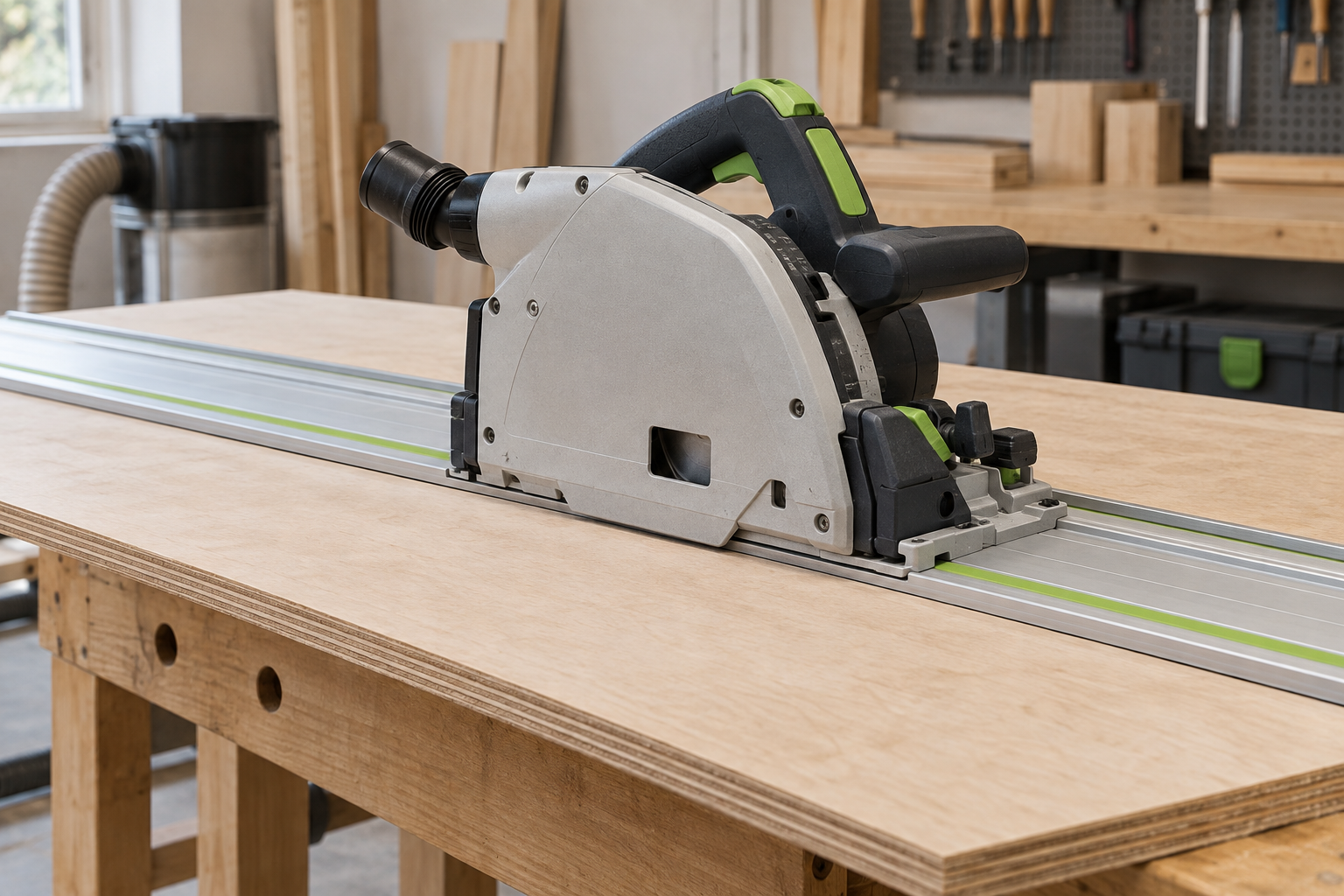
For thick hardwood panels, the Festool TS 75 has more cutting depth and is the safer choice when a job genuinely requires cuts close to 2 inches deep. The Makita SP6000 is lighter, less expensive, and adequate for most cabinet panels and sheet goods, but its roughly 2-1/8-inch maximum depth is measured with the rail removed; on a track, usable depth is closer to 1-3/4 inches. That rail-on difference is decisive when cutting thick stock.
Neither saw replaces a table saw or a properly set up bandsaw for every thick-wood job. For a single cut through stock that exceeds the saw’s rail-on capacity, make the cut from both faces or use a different machine rather than forcing the saw or accepting an incomplete cut.
As an Amazon Associate we earn from qualifying purchases at no extra cost to you.


Depth and capacity in practice
The TS 75 is built around a 75 mm (about 2-15/16-inch) maximum cutting depth without a guide rail. With the rail fitted, the practical maximum is around 2-1/8 inches. The SP6000 is rated for about 56 mm (2-3/16 inches) without its rail and roughly 40 mm (1-9/16 inches) with it. Check the manual for the exact setup and blade, but the working comparison is clear: the Festool has several tenths of an inch more rail-on capacity.
That matters with a 1-3/4-inch hardwood panel. The Makita can handle it if the material is flat, the blade is appropriate, and the cut is set accurately. A panel that measures a full 2 inches, or has uneven thickness, leaves the Makita little margin on the rail. The TS 75 offers more breathing room. If the job involves stock thicker than its rail-on capacity, the extra depth still does not make a one-pass cut safe by default.
Side-by-side comparison
| Feature | Festool TS 75 | Makita SP6000 |
|---|---|---|
| Blade diameter | 210 mm (8-1/4 inches) | 165 mm (6-1/2 inches) |
| Maximum depth, off rail | About 75 mm (2-15/16 inches) | About 56 mm (2-3/16 inches) |
| Approximate depth, on rail | About 2-1/8 inches | About 1-9/16 inches |
| Motor input | 1,600 W | 1,300 W |
| Weight | About 6.2 kg (13.7 lb), saw only | About 4.4 kg (9.7 lb), saw only |
| Best fit | Thick stock and repeated demanding cuts | Sheet goods, cabinets, and lighter track-saw work |
Specifications vary by market and configuration; treat rail-on depth as the number to verify before buying. The larger blade and heavier build make the Festool more capable, but they also make it more tiring to hold and maneuver. The Makita is easier to lift onto a panel and move around a shop.
Cut quality, feed rate, and control
Both saws can make clean, straight cuts when paired with a straight, supported rail and a sharp blade suited to the wood. In thick, dense hardwood, however, blade condition and feed rate matter as much as motor rating. A dull or coarse blade can burn the cut, wander, or overload the saw. Pushing harder to compensate increases the risk of a poor cut and can make the saw harder to control.
The TS 75’s larger blade and greater power reserve suit long cuts through dense, thick stock. Its extra weight can help it feel planted, but it is not a cure for a pinched kerf or a poorly supported panel. The SP6000 has ample power for ordinary panel work and many hardwood cuts, but it has less depth in reserve. Slow the feed if the motor labors, and stop if the blade binds or the cut begins to close.
For either saw, use a blade designed for the material and finish you want, secure the panel against movement, and support the offcut so it cannot sag into the blade. A track does not prevent kickback if the work shifts or the kerf pinches. A fine-finish track-saw blade for hardwood is a sensible upgrade if the supplied blade struggles with tear-out or burn marks.
When a two-sided cut is the better answer
If your panel is thicker than the saw’s rail-on capacity, you can sometimes cut from both faces. Mark the line clearly on both sides, keep the rail registered to the same reference, and make a shallow first pass before completing the cut from the opposite face. Misalignment leaves a step on the edge; even a small error becomes obvious on a glue-up or visible furniture part. Practice on scrap of the same thickness before relying on this method for a finished piece.
For repeated cuts on thick slabs, a table saw with suitable capacity, a bandsaw, or a larger-format cutting setup may be more appropriate. Choose a compatible guide rail long enough to support the entire cut, and check that the saw and rail system are compatible before ordering.
Which one should you buy?
Choose the TS 75 if your regular work includes hardwood panels around 1-3/4 to 2 inches thick, long cuts where power reserve helps, or stock that is beyond the Makita’s comfortable rail-on range. Its extra capacity is useful, but it comes with more weight, a larger blade, and a higher purchase cost. You will feel the weight most when setting up repeated cuts or handling the saw away from the panel.
Choose the SP6000 if your work is mostly plywood, melamine, cabinet parts, and hardwood panels up to about 1-1/2 inches thick. It is lighter and capable of clean work without paying for capacity you rarely use. At 1-3/4 inches, measure the stock carefully and verify the saw’s actual rail-on depth; do not assume the off-rail specification applies with the guide rail installed.
For occasional cuts in thick hardwood, the cheaper Makita can still be a reasonable buy if the material fits within its rail-on capacity or you are prepared to use a carefully aligned two-sided cut. If thick panels are a routine part of the work, the TS 75 is the more suitable track saw—but for stock beyond even its rail-on depth, plan on a different cutting method rather than asking either saw to do too much.