What's inside
As an Amazon Associate I earn from qualifying purchases. This post may contain affiliate links at no extra cost to you.
Our Top Picks
 DEWALT 20V MAX* 6-1/2 in. Brushless Cordless Circular6-1/2-Inch15.25 x 9.63 x 8.5 inches6.3 PoundsCheck on Amazon
 DEWALT 20V MAX XR Brushless Cordless 7-1/4 in.STANDARD15.35 x 9.4 x 9.6 inches9.88 poundsCheck on Amazon


The short answer
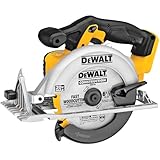
For most right-handed users, the DeWalt DCS573 has slightly better blade visibility during ordinary crosscuts and sheet-goods work. Its blade-left layout puts the cut line on the same side as your face when the saw is held normally, and the front of the shoe is easy to read.
The Milwaukee 2830-20 is close. It also uses a blade-left layout and has a strong, open sight line around the front of the shoe. Its advantage is control: the shoe and guard feel particularly stable when starting a cut or pushing through thicker stock. If you already own M18 batteries, it is not a bad choice simply because the DeWalt is a little easier to sight.
As an Amazon Associate we earn from qualifying purchases at no extra cost to you.


Neither saw provides a true illuminated cut line. Visibility still depends heavily on the blade, dust, lighting, and how accurately you mark the workpiece.
DeWalt DCS573 vs Milwaukee 2830-20
| Feature | DeWalt DCS573 | Milwaukee 2830-20 |
|---|---|---|
| Battery platform | DeWalt 20V MAX | Milwaukee M18 |
| Blade size | 7-1/4 inches | 7-1/4 inches |
| Blade position | Left side | Left side |
| Maximum cut at 90 degrees | About 2-9/16 inches | About 2-1/2 inches |
| Maximum bevel | 50 degrees | 50 degrees |
| No-load speed | 5,500 rpm | 5,800 rpm |
| Best visibility trait | Clear front-of-shoe sight line | Stable shoe and guard during entry |
How blade visibility differs in use
The important point is that both are blade-left saws. That matters more than small differences in the housing. A right-handed user can look over the left side of the shoe and see the blade approaching the pencil mark without leaning awkwardly over the motor. On a blade-right saw, the motor and upper guard tend to occupy more of that sight line.
The DeWalt has the more immediately readable layout. The notch at the front of the shoe gives you a useful reference for starting a straight cut, and the blade is easy to track once the saw is moving. This is especially helpful when trimming plywood, cutting framing lumber to a mark, or following a chalk line that is not perfectly straight.
The Milwaukee’s visibility is also good, but the front guard and shoe can appear slightly busier from some working angles. That is not a major defect. In fact, the Milwaukee’s lower guard action is smooth, and the saw settles confidently onto the material. A smooth guard retracts more predictably at the start of a cut; a guard that catches or hesitates can block the blade just when you need to confirm your entry point.
Both saws use a blade guard that can collect dust near the front of the shoe. Fine plywood dust is the worst offender. After several long cuts, it can obscure the pencil line even when the saw itself has a good sight path. Brushing the shoe clean between cuts is often more effective than choosing one saw over the other.
Starting cuts and maintaining accuracy
For clean starts, set the blade depth so only roughly 1/8 to 1/4 inch of tooth extends below the material. Too much blade exposure makes the cut more aggressive, increases the chance of tear-out, and puts more spinning blade between your eyes and the work. Both saws have enough depth capacity for a 2-by board in one pass, but depth should still be adjusted rather than left fully open.
The DeWalt’s front reference notch is easiest to use when making short cuts from a visible mark. The Milwaukee is similarly accurate, but its weight and rear-handle balance reward a firm two-handed grip. Do not steer either saw by twisting the rear handle. Keep the shoe flat, support the offcut, and let the blade do the cutting.
On long plywood cuts, a guide makes more difference than the saw’s sight line. A clamped straightedge or circular saw guide rail prevents the common failure mode where the operator keeps correcting toward the line and ends up with a wavy edge. Blade visibility helps you stay on the mark, but it cannot compensate for an unsupported panel or a wandering grip.
Where each saw makes sense
Choose the DeWalt DCS573 if blade tracking is your first concern, particularly for finish carpentry, shelving, plywood breakdown, and repeated cuts where you need to see the mark without changing your stance. It is also the better pick if you already have DeWalt 20V batteries and want the clearest conventional sight line of the two.
Choose the Milwaukee 2830-20 if you are invested in M18 batteries, regularly cut framing lumber, or prefer its handling and guard feel. Its slightly higher no-load speed does not automatically make it faster through wood; feed pressure, blade sharpness, and battery condition matter more. A dull blade will cause both saws to slow, pull sideways, and produce more dust.
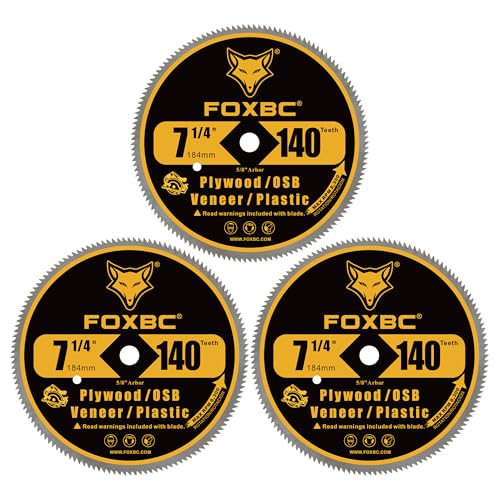
For occasional DIY work, the cheaper saw is fine if it comes with the battery system you already use. There is little value in switching platforms solely for a modest visibility advantage. Put the savings toward a quality 24-tooth framing blade for general lumber or a finer-tooth 7-1/4-inch plywood blade for cleaner sheet cuts.
Safety and final pick
Blade visibility is not a reason to remove or hold back the lower guard. If the guard hangs up, disconnect the battery and clean the pivot area; replace a damaged guard rather than forcing it open. Keep both hands on the saw, keep the cord-free battery clear of the cut, and support the work on sacrificial material so the blade does not pinch as the offcut falls.
For the narrow question of blade visibility, the DeWalt DCS573 wins by a small margin. The Milwaukee 2830-20 is close enough that battery compatibility, balance, and price should decide the purchase for many buyers. If neither platform is already in your shop, select the DeWalt for easier line reading, or choose the Milwaukee if its handling feels more natural in your hands.