What's inside
As an Amazon Associate I earn from qualifying purchases. This post may contain affiliate links at no extra cost to you.
Our Top Picks
 DEWALT FLEXVOLT 60V MAX* Circular Saw with BrakeOne Size15.35 x 8.23 x 9.65 inches8.2 poundsCheck on Amazon
 DEWALT FLEXVOLT 60V MAX* Circular Saw for FramingOne Size18 x 9 x 8.2 inches10.9 PoundsCheck on Amazon


Which Side Is Better for Following a Cut Line?
For most right-handed users, a right-blade circular saw is easier to guide when the cut line is marked on the workpiece’s left side. The blade is then visible from the handle side, and the shoe’s front notch or pointer usually stays in your sightline.
A left-blade saw puts the blade on the other side of the motor. That can make the blade and kerf easier to see when the saw is held in the right hand, particularly when cutting across a wide sheet. It can also make the saw feel more balanced, depending on the motor and battery layout.
As an Amazon Associate we earn from qualifying purchases at no extra cost to you.


Neither layout automatically cuts straighter. Blade visibility, shoe markings, dust, lighting, operator position, and how accurately the saw is set up matter at least as much. A well-adjusted right-blade saw is more useful than a poorly aligned left-blade saw.
How Blade Position Affects Line Visibility
On a right-blade saw, the blade is generally on the right side of the shoe when you are standing behind the tool. This works well if you keep the waste side to the right and watch the left edge of the blade or its kerf. The motor may block part of the view, especially on compact saws with large housings.
On a left-blade saw, the blade is on the left side of the shoe. A right-handed user can often look directly down at the blade without leaning over the motor. This is useful for long rip cuts in plywood, where a small steering error can become a 1/8-inch or larger deviation by the end of an 8-foot sheet.
The important detail is which edge of the blade represents the finished cut. A typical circular saw blade removes about 1/16 inch of material, although thin-kerf blades may remove closer to 3/32 inch and heavier blades may approach 1/8 inch. Put the correct edge of the kerf on the line, not the center of the blade.
| Factor | Left-blade saw | Right-blade saw |
|---|---|---|
| Blade visibility for a right-handed user | Usually better | Usually adequate, but the motor can obstruct the view |
| Balance and handling | Often feels natural when held in the right hand | Familiar layout, though some saws feel motor-heavy |
| Dust directed toward the user | Can be more noticeable on some designs | Often throws dust away from the body, but design varies |
| Best use | Long cuts where direct blade viewing matters | General framing, sheet work, and users accustomed to the layout |
| Main drawback | May throw chips toward the operator | Blade can be harder to see around the motor |
When a Right-Blade Saw Makes More Sense
A right-blade saw is often the safer buy if you already use one and your muscle memory is built around its pointer and bevel scale. Switching sides does not remove the need to watch the cut. In fact, the unfamiliar balance can cause more wandering during the first few projects.
Right-blade saws are also common in framing-oriented designs. If you mostly cut studs, rafters, deck boards, and short pieces of plywood, you can usually follow the line by watching the front shoe notch. For cuts under 4 feet, the visibility difference is rarely decisive.
Dust collection can favor the right-blade layout, but not consistently. Some saws eject chips to the side and away from the operator; others throw dust directly across the work surface. A vacuum adapter, a sharp blade, and cutting with the work supported properly will matter more than blade side alone.
If price is the main concern, a cheaper right-blade saw is fine for occasional DIY work. Spend enough to get a rigid shoe, a blade that runs true, a usable line notch, and a bevel adjustment that locks firmly. A low-cost saw with a bent or flexible shoe can miss a line even when the blade is easy to see.
When a Left-Blade Saw Is Worth Buying
A left-blade saw is worth considering when you frequently break down plywood or make long, visible cuts where direct sight of the blade reduces guesswork. Many right-handed users find it easier to keep the blade’s front edge on the mark without leaning their head over the motor.
This layout can also improve perceived balance. With the blade and motor positioned differently, the saw may sit more naturally against the workpiece rather than pulling away from the line. That is not universal, however. A large battery or heavy motor can change the balance enough to cancel the advantage.
Left-blade saws can send chips toward your body, depending on the blade rotation and discharge design. Wear eye protection, keep your face out of the ejection path, and use a dust port if available. Do not judge dust direction from blade position alone; check the actual saw while making a shallow test cut.
For a cordless tool, compare the complete saw rather than choosing only by blade side. Battery weight, trigger position, shoe stiffness, and runtime may have a greater effect on control. If you are shopping specifically for this layout, compare left-blade cordless circular saws by shoe design and sightline, not just motor voltage.
How to Follow a Cut Line With Either Saw
Mark the finished edge clearly with a sharp pencil, chalk line, or knife. Support the panel so the waste side can fall away without pinching the blade. For a full sheet, place supports roughly every 24 inches, with additional support near the cut if the panel sags.
Set the blade depth so it extends about 1/8 to 1/4 inch below the material. Excess depth increases the amount of exposed blade and can increase tear-out. Start the saw with the shoe fully supported, allow the blade to reach full speed, and enter the cut without forcing the tool.
Watch the same reference point throughout the cut. If you use the left edge of the kerf at the front notch, do not switch to the right edge halfway through. Keep the shoe flat; lifting the rear of the saw to improve visibility changes the cut angle and can bind the blade.
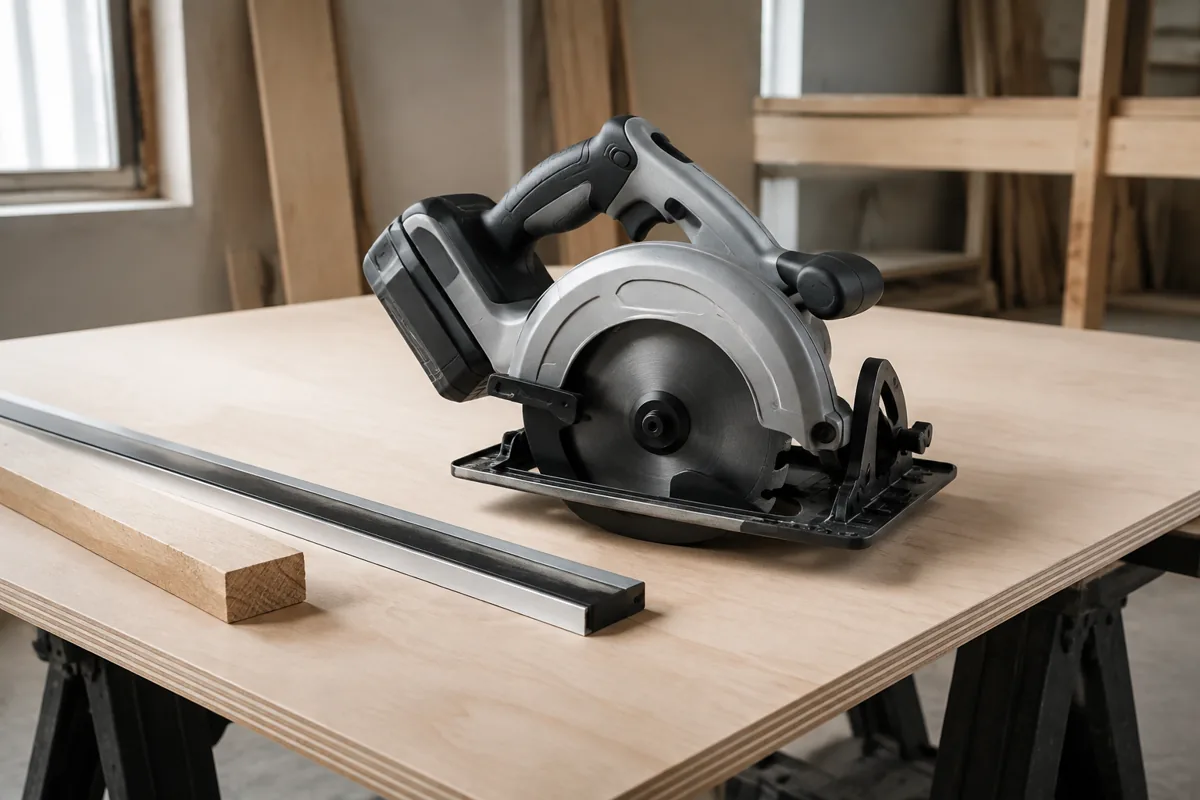
For cleaner sheet cuts, use a fine-tooth plywood blade or a guide rail. A straightedge clamped to the panel is more reliable than trying to steer by eye over 6 or 8 feet. A circular saw guide rail removes most of the blade-side debate because the guide controls the shoe directly.
Which One Should You Buy?
Choose a left-blade saw if you are right-handed, regularly cut large sheets, and value a direct view of the blade. Choose a right-blade saw if you do general construction work, already cut accurately with that layout, or want the widest selection of affordable options.
For occasional repairs and small projects, buy the cheaper saw with the better shoe, line indicator, and comfortable balance. For repeated plywood work, prioritize a rigid shoe, low vibration, a dependable bevel lock, and compatibility with a guide system. Blade side is a useful preference, but it should be the tie-breaker after accuracy, handling, and support are sorted out.