What's inside
As an Amazon Associate I earn from qualifying purchases. This post may contain affiliate links at no extra cost to you.
The main difference between a left-blade and right-blade circular saw is which side of the shoe the blade sits on. That changes how much of the cut line you can see, but it does not make one layout universally easier or more accurate. Your dominant hand, the saw’s handle position, the material, and the direction of the cut all matter.
For many right-handed users, a blade-left saw gives a clear view of the blade and pencil line. A blade-right saw can feel more natural to hold and may keep sawdust farther from the user’s face, though its motor can block the sightline on some cuts. The best choice is the layout that lets you hold the saw steadily while keeping the intended side of the line visible.
As an Amazon Associate we earn from qualifying purchases at no extra cost to you.


Our Top Picks
 DEWALT 20V MAX XR Brushless Cordless 7-1/4 in.STANDARD15.35 x 9.4 x 9.6 inches9.88 poundsCheck on Amazon
 DEWALT FLEXVOLT 60V MAX* Circular Saw for FramingOne Size18 x 9 x 8.2 inches10.9 PoundsCheck on Amazon


What blade-left and blade-right mean
Stand behind the saw as you would when making a cut. On a blade-left model, the blade is on the left side of the motor and handle; on a blade-right model, it is on the right. This refers to the blade’s position relative to the saw, not the side of the board where you stand.
Most standard circular saws cut with the blade’s teeth moving upward through the material at the front of the saw. The motor, guard, shoe, and handle occupy different positions around the blade depending on the layout. Those parts, rather than the blade alone, determine whether your pencil mark is easy to follow.
Which layout shows the line better?
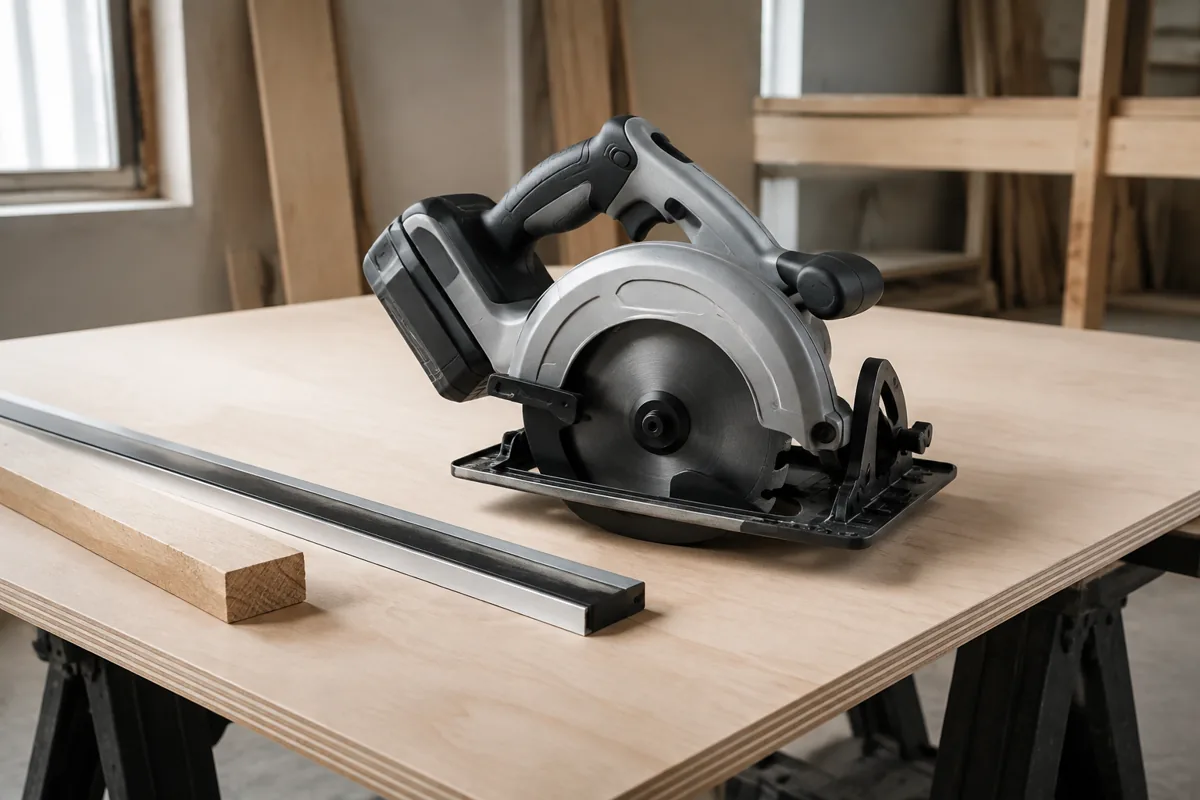
A right-handed user often finds a blade-left saw easier to watch because the blade and cut line sit on the user’s left, away from the hand and arm holding the main handle. You can look down past the motor and see where the blade is tracking. A blade-right saw may put the motor between your eye and the line, especially if you lean over the saw from the right.
That is a tendency, not a rule. Motor size, shoe shape, sight notches, and the user’s stance can change the view. A left-handed user may prefer the opposite arrangement. Before buying, hold the saw in your normal cutting stance and look at the front sight notch, blade edge, and pencil line together. If buying online, check the tool’s layout and return terms; product photos can make the sightline look clearer than it is.
Also consider what you need to see. A cut is guided by the blade’s path, not by the outer edge of the shoe. Many saw shoes have a notch or pointer for a 90-degree cut, with a separate mark for a 45-degree bevel. Those marks indicate an approximate blade path; they do not account for blade thickness or guarantee that the blade will stay exactly on a pencil line.
Side-by-side comparison
| Factor | Blade-left saw | Blade-right saw |
|---|---|---|
| Typical view for a right-handed user | Often easier to see the blade and line | May be partly blocked by the motor or hand |
| Hand position | Can feel less natural to users accustomed to blade-right saws | Often feels familiar to users who learned on this layout |
| Sawdust | May throw dust toward the user, depending on port and cut | May discharge dust away from the user, depending on model |
| Best check before purchase | Confirm you can grip it steadily and keep the offcut supported | Confirm the motor does not hide the line from your stance |
Dominant hand and control matter more than the label
A circular saw needs two-handed control when the design calls for it: one hand on the main handle and one on the front grip. You should be able to push the saw forward without twisting your wrist, reaching across the blade, or leaning far enough to lose balance. A clear line is no help if the grip makes the saw wander.
Try the saw with its battery or cord arranged as it will be on the job. Check that your forearm does not cross the blade path, that the lower guard can retract without being obstructed, and that the shoe rests flat. If you routinely cut large sheets on the floor, test whether you can see the line without putting your face directly over the blade. Do not make a cut one-handed just to improve visibility.
For a left-handed user, either layout may work, but controls and grip shape deserve extra attention. If possible, handle both versions at a shop. For occasional home repairs, a comfortable saw with a useful sight notch is usually a better buy than paying more solely for a particular blade side.
Accuracy, dust, and common failure modes
Blade layout will not correct a poor setup. A saw can drift if the shoe is not held firmly against a straightedge, the blade is dull, or the operator steers by watching the wrong side of the kerf. For a clean edge, mark the waste side and keep the blade just outside the finished dimension. A typical circular-saw blade removes about 1/8 inch of material, though kerf width varies; putting the blade on the good side of the mark can leave a workpiece undersized.
Dust is another practical difference. Some saws send chips toward the user or cover the cut line within a few inches. A dust port or vacuum attachment can help, but it will not capture everything. Eye protection is essential, and hearing protection is sensible for repeated cuts. Never clear chips near a moving blade.
Support the work so the offcut cannot pinch the blade. Pinching can stop the saw abruptly or kick it back toward you. Before cutting, unplug a corded saw or remove the battery when adjusting depth or changing the blade. Set blade depth so the teeth extend only about 1/8 to 1/4 inch below the material; exposing much more blade increases the chance of injury without improving the cut.
What to buy for your work
If sighting the line is your main concern and you are right-handed, start by comparing blade-left circular saws. If you prefer a familiar grip or want a layout that may direct dust away from you, compare blade-right circular saws. Treat dust direction as model-dependent, not guaranteed by blade side.
For straight cuts in sheet goods, a compatible circular-saw guide rail or a clamped straightedge can improve accuracy more than switching layouts. Verify compatibility and the rail’s usable length before ordering. If your cuts are occasional and rough, a lower-priced saw is fine when it tracks reliably, the shoe stays square, and you can control it comfortably. Spend more only for features you will use, such as better dust collection, a larger cutting capacity, or a guide system.
Choose for the cut you actually make
For a right-handed person who follows pencil marks by eye, blade-left is often the easier layout to sight. Blade-right can still be the better choice if its grip, balance, or dust direction suits your work. Neither layout guarantees a straighter cut. Test the sightline from your actual stance, use the correct shoe mark, keep the waste side clear, and support the stock so the saw can move without binding.