What's inside
As an Amazon Associate I earn from qualifying purchases. This post may contain affiliate links at no extra cost to you.
Our Top Picks
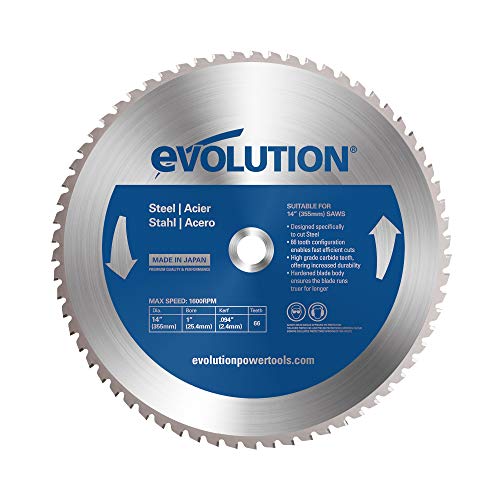 Evolution Power Tools 14BLADEST Blade for Cutting Mild14 Inch14 x 14 x 1 inches1 poundsCheck on Amazon


The best blade for thin steel sheet
For most thin steel sheet, the best choice is a 7-1/4-inch carbide-tipped metal-cutting blade with about 60 teeth. It should be specifically rated for ferrous metal, not merely labeled “multi-purpose” or “construction.”
A carbide metal-cutting blade makes a relatively cool, narrow cut and produces short chips instead of the long, dangerous sparks and abrasive dust created by a cutoff wheel. On 20- to 24-gauge sheet (roughly 0.8 to 0.6 mm), a fine-tooth blade leaves a cleaner edge and is less likely to grab than a coarse blade.
As an Amazon Associate we earn from qualifying purchases at no extra cost to you.


For very thin sheet, tooth count matters more than maximum cutting speed. A 40-tooth blade can cut quickly, but it is more prone to catching the unsupported edge of sheet metal. A 60- or 80-tooth blade is usually the safer, cleaner option. The trade-off is slower feed speed and faster tooth wear if you force it.
Blade types compared
| Blade type | Best use | Thin-sheet result | Main drawback |
|---|---|---|---|
| Carbide-tipped ferrous-metal blade, 60–80 teeth | Regular cuts in mild steel sheet | Clean, relatively cool cut | Costs more; teeth can chip if the sheet moves |
| Carbide multi-material blade, 48–60 teeth | Occasional steel plus aluminum, wood, or plastic | Good enough for rough or moderate-visibility work | Usually not as clean or long-lasting in steel |
| Abrasive metal cutoff wheel | Cheap, occasional cutting | Works, but leaves burrs and heat discoloration | Dust, sparks, kerf waste, and faster wear |
| Standard wood blade | Wood only | Unsafe and unsuitable | Wrong tooth geometry and excessive grabbing risk |
What to look for when buying
Check the blade’s printed rating before looking at tooth count. The blade must be rated for ferrous metal and for the revolutions per minute of your saw. A typical 7-1/4-inch metal-cutting blade may have a lower maximum RPM than a wood blade. Never assume that because the arbor fits, the blade is suitable.
Match the blade diameter and arbor size to the saw. A 7-1/4-inch saw generally uses a 5/8-inch diamond or round arbor, while compact saws may use 5-3/8-inch blades with different mounting details. Do not remove parts of the arbor washer or force an incompatible mounting hole.
Look for a thin kerf if your saw has limited power or you are making many cuts. A kerf around 0.045 to 0.065 inch reduces load and wastes less material. The thinnest blade is not automatically best, however: an ultrathin plate can deflect, especially when cutting a loose sheet.
For clean visible edges, choose a fine-tooth ferrous blade such as a 60- or 80-tooth design. For roofing panels, ductwork, brackets, or other work that will be covered, a 40- to 48-tooth blade is often the better value. It cuts faster and costs less per job.
Carbide versus abrasive blades
Abrasive wheels are the cheap option, and they are fine for a few cuts when appearance does not matter. A metal-cutting abrasive blade for a circular saw can cut sheet steel, but expect a wider kerf, a hot edge, sparks, and a substantial amount of fine dust. The cut edge may need filing, and thin sheet can discolor or warp from heat.
Carbide is worth the added price when you need multiple cuts, a straighter edge, or less cleanup. It also produces chips that are easier to control than a stream of sparks. Carbide teeth can still chip: dropping the blade, cutting through a hidden screw, or allowing the sheet to vibrate can ruin it quickly.
Do not substitute a standard grinding wheel, wood blade, or an abrasive wheel not approved for the saw. A circular saw’s guard and spindle speed are part of the safety system. Use only accessories explicitly rated for that tool.
How to cut thin sheet without bending it
Support the sheet on both sides of the cut and keep the offcut from dropping while the teeth are engaged. A sheet that flexes can pinch the blade, kick the saw back, or lift into the blade. Sacrificial foam insulation or closely spaced supports work well, provided the blade will not strike hidden metal underneath.
Clamp a straightedge as a guide and mark the cut with a fine marker or scribe. Set the blade depth only slightly deeper than the sheet—about 1/8 inch beyond the metal is usually enough. Excessive depth increases the chance of hitting the support and gives the blade more opportunity to snag.
Let the saw reach full speed before entering the sheet. Feed steadily without forcing it. If the motor slows, back off rather than pushing harder. Keep both hands on the saw, stay out of the kickback line, and wear eye protection, hearing protection, gloves suitable for handling sharp sheet, and long sleeves. Metal chips remain hot and sharp even when the cut looks finished.
Practical buying recommendations
For a homeowner cutting a few pieces of thin mild-steel sheet, a 60-tooth ferrous-metal carbide blade is the best balance of finish, speed, and price. It is more specialized than a multi-material blade, but that specialization pays off in cleaner cuts.
If steel is only an occasional part of a mixed-material project, a multi-material carbide blade is a reasonable compromise. Choose it when convenience matters more than maximum blade life or a nearly finished edge.
Buy an abrasive blade only when the job is short, the edge will be hidden, and sparks and cleanup are acceptable. For repeated fabrication or visible panels, the carbide ferrous-metal blade is the less frustrating and usually less expensive choice over the whole project.