What's inside
As an Amazon Associate I earn from qualifying purchases. This post may contain affiliate links at no extra cost to you.
For ripping solid wood, the right circular saw blade is usually the one with fewer teeth, not the one with the highest tooth count. Fewer teeth leave larger gullets between them, giving sawdust somewhere to go as the blade cuts along the grain. That usually means faster feeding, less heat, and fewer burned edges.
The best choice depends on the saw diameter, the wood species, the required edge quality, and whether you will joint or sand the cut afterward. A blade that is excellent for rough construction work can leave an unnecessarily ragged edge in expensive hardwood. Conversely, a fine-tooth blade can struggle badly when ripping thick stock.
The basic tooth-count rule
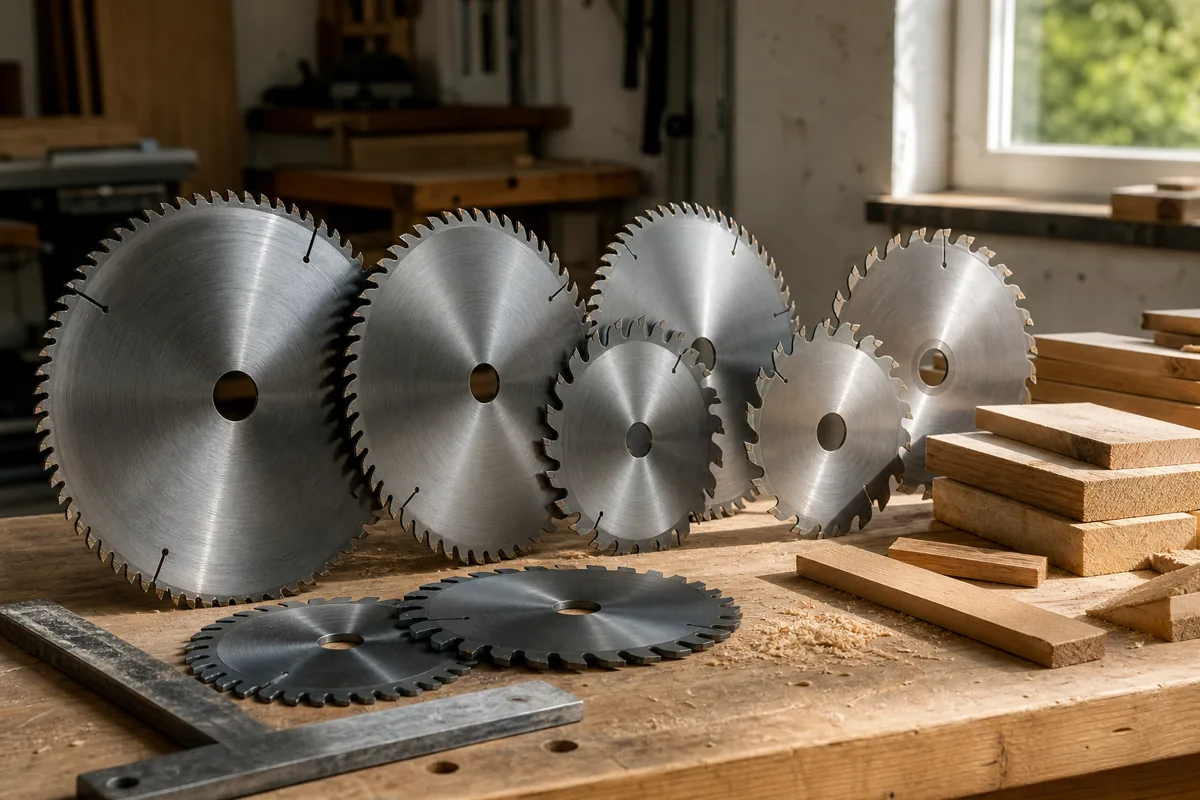
For a typical 7-1/4-inch circular saw, start with a 24-tooth framing or ripping blade for fast cuts in dimensional lumber and solid boards. A 40-tooth combination blade is a better general-purpose choice when you want a cleaner edge and only make occasional rip cuts. Blades with 60 teeth or more are normally aimed at crosscutting, plywood, laminates, and finish work rather than long rips in solid wood.
Tooth count is relative to blade diameter. A 24-tooth blade on a 7-1/4-inch saw has a very different cutting density from a 24-tooth blade on a 12-inch saw. As a rough guide, a rip blade may have about 3 to 6 teeth engaged in the wood at once. Too many engaged teeth increase resistance and make the motor work harder.
| Typical blade | Best use | Edge quality | Main trade-off |
|---|---|---|---|
| 12–18 teeth | Very fast rough ripping, thick stock | Rough | Fast but more splintering and tear-out |
| 24 teeth | Routine ripping of construction lumber and solid boards | Fair | Less clean than a combination blade |
| 40 teeth | General-purpose ripping and crosscutting | Good | Slower feed and more heat on long rips |
| 60–80 teeth | Fine crosscuts, plywood, and visible finish edges | Very good | Can burn, bog down, or load with dust during ripping |
Choose by wood species and thickness
Softwood such as pine, fir, and cedar generally cuts well with a 24-tooth blade. A 12- or 18-tooth blade is useful when speed matters more than appearance, especially on 2-by lumber that will be framed, painted, or trimmed. The cut will be rougher, but the cheaper blade may be the sensible choice for a deck or shed.
Hardwoods such as oak, maple, ash, and walnut create more resistance. A 24-tooth blade still works for fast ripping, but a good 30- to 40-tooth combination blade is often easier to control and leaves an edge requiring less cleanup. On thick hardwood, however, even 40 teeth can be excessive if you force the feed. A coarse blade with large gullets may cut cooler and straighter.
Thickness matters because the blade remains in the cut longer. Ripping a 3/4-inch board is easier than ripping a 2-inch slab. For thick stock, prioritize a blade with large gullets, a stiff plate, and a kerf appropriate for your saw. If the blade begins to squeal, smoke, or leave dark burn marks, stop pushing harder. The blade is likely dull, the tooth count is too high, the fence is pinching the work, or the cut is closing behind the blade.
Tooth design matters as much as tooth count
Most general-purpose circular saw blades use an alternate-top-bevel, or ATB, grind. The angled teeth slice the fibers cleanly and work well for both ripping and crosscutting. A blade with a flat-top grind is more specialized for efficient ripping, particularly on a table saw, but it can produce a rougher edge in some materials.
Look at the blade’s hook angle too. A positive hook pulls the blade into the work more aggressively, helping fast cuts but increasing the chance of grabbing. A lower or neutral hook angle gives a smoother, more controlled cut and is preferable when working close to a finished edge. Handheld circular saws commonly use moderately positive teeth, so control comes from a firm grip, a stable workpiece, and a steady feed.
Thin-kerf blades remove less wood and can make a lower-powered saw feel stronger. They are useful with cordless circular saws and when cutting expensive lumber, but they are also more vulnerable to deflection if the plate is narrow or the stock is pinching. Use a thin-kerf blade only if its arbor size and manufacturer’s specifications match your saw.
Match the blade to the saw
Check the saw’s specified blade diameter, arbor diameter, maximum revolutions per minute, and kerf requirements before buying. A blade must never exceed the saw’s rated RPM. Do not install a smaller or larger blade just because it fits the arbor; the guard and cutting depth may no longer operate correctly.
For a corded 7-1/4-inch saw used mostly on framing lumber, a 7-1/4-inch 24-tooth circular saw blade is the practical starting point. For a cordless saw, a thin-kerf 24-tooth blade can reduce load, provided the blade is approved for that tool.
Avoid the common ripping failures
Blade count is not the only cause of a bad rip. Support the board on both sides of the cut so the kerf cannot close and pinch the blade. Set the depth so the teeth extend roughly 1/8 to 1/4 inch below the material. Too much exposed blade increases friction and makes kickback more severe.
Keep the saw’s shoe tight against a straight guide or fence. If the blade wanders, do not twist the saw to correct it while the teeth are engaged. Release the trigger, wait for the blade to stop, and restart the cut if necessary. A dull blade often shows itself through slow progress, burning, fuzzy fibers, and increased battery drain. Cleaning pitch from the teeth can help, but badly worn carbide needs replacement.
A sensible buying strategy
If you make rough rips most often, buy a quality 24-tooth framing blade and replace it when it becomes dull. If you need one blade for mixed work, choose a 40-tooth combination blade. It costs more and cuts slower, but avoids swapping blades for every project.
Choose a 12- or 18-tooth blade when speed and low cost matter more than a finished edge. Choose 40 teeth when the rip will be visible or will receive minimal cleanup. Reserve 60 teeth and above for situations where edge quality is more important than fast, cool cutting. Tooth count should support the job, not substitute for a sharp blade, proper support, and a controlled feed.