What's inside
As an Amazon Associate I earn from qualifying purchases. This post may contain affiliate links at no extra cost to you.
Our Top Picks
 Festool 576794 DOMINO Beech Tenon Assortment Set in6.25" L x 11.5" W x 11.5" H6.25 x 11.5 x 11.5 Inches11.24 poundsCheck on Amazon

What These Joiners Actually Do
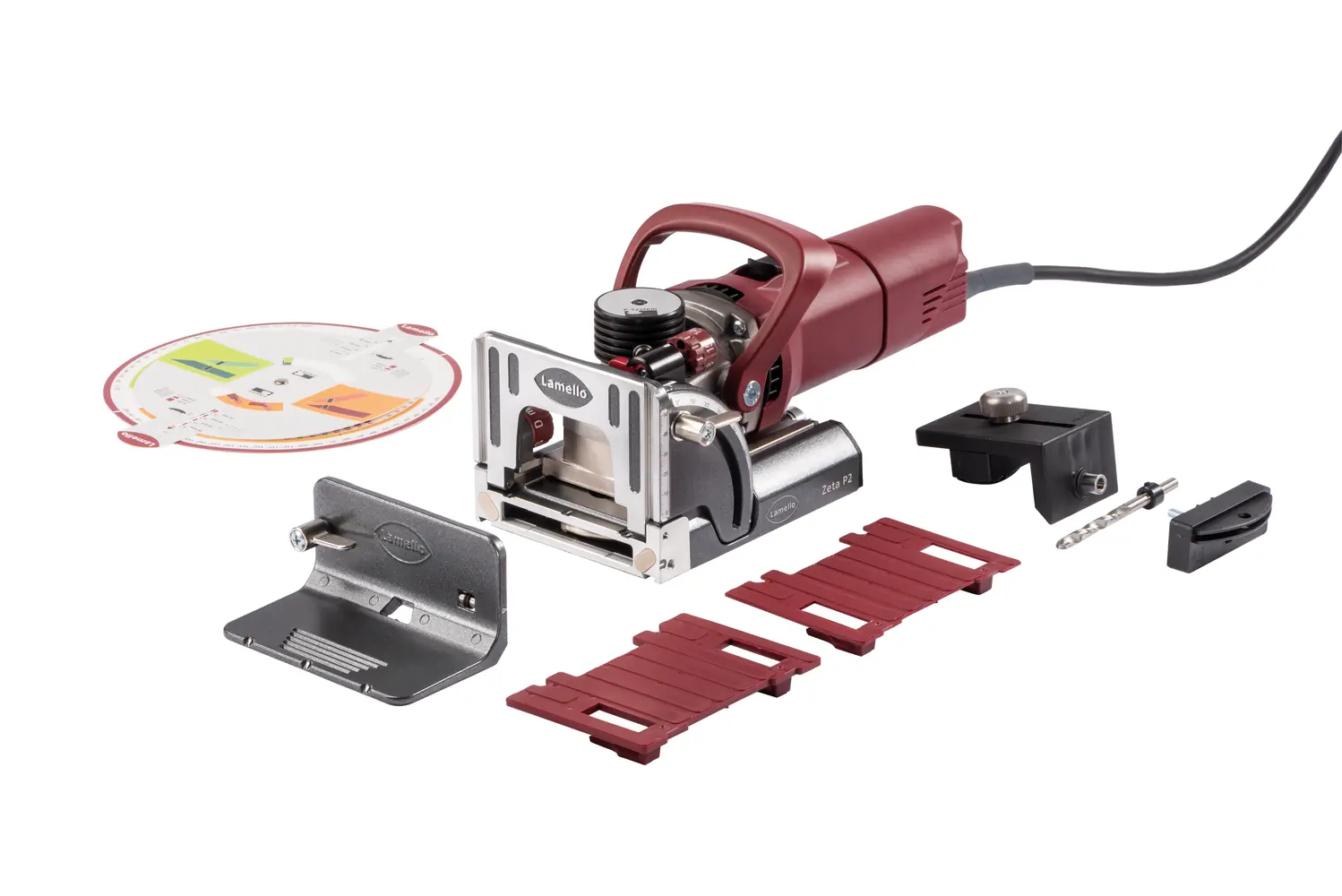
The Lamello Zeta P2 and Festool Domino DF 500 are both biscuit-style joiners, but they solve different problems.
The Zeta P2 cuts Lamello P-System grooves. A cutter plunges into the workpiece, then a mechanical indexing action creates the profile that accepts P-System connectors. With the right hardware, such as Clamex P connectors, panels can be aligned, clamped and later disassembled.
As an Amazon Associate we earn from qualifying purchases at no extra cost to you.

The DF 500 cuts oval mortises for loose tenons called Dominos. You glue a beech, sipo or other compatible tenon into matching mortises in two parts. The result is a strong, repeatable joint, but it is normally permanent once the glue cures.
For simple alignment during assembly, both tools work well. For knock-down cabinets, removable partitions or accurately joined panels without visible fasteners, the Zeta has a major advantage.
Key Differences at a Glance
| Feature | Lamello Zeta P2 | Festool Domino DF 500 |
|---|---|---|
| Joint system | P-System grooves and connectors | Oval loose tenons |
| Main strength | Panel alignment and knock-down construction | Fast, strong glued joinery |
| Typical panel use | Cabinet sides, shelves, removable assemblies | Cabinet frames, carcases, furniture |
| Joint reversibility | Yes, with compatible connectors | Usually no after gluing |
| Consumable cost | Higher; requires P-System connectors | Moderate; uses loose tenons and glue |
| Learning curve | Higher because groove and connector choices matter | Lower for conventional glued joints |
| Best material range | Sheet goods and solid wood panels | Solid wood, sheet goods and frame parts |
Panel Alignment Performance
The Zeta P2 is purpose-built for edge and face alignment. A P-System connector pulls two workpieces together while its angled elements help bring the surfaces flush. This is particularly useful when assembling a tall cabinet alone, where clamps cannot easily hold a shelf and side panel in position.
It also avoids a common problem with ordinary biscuits: a biscuit can help alignment, but it does not mechanically draw a joint tight. You still need clamps, screws, confirmat fasteners or another clamping method. The Zeta can provide the pull-in action through the connector itself.
The DF 500 is excellent at alignment when you cut one mortise in each mating part and insert a Domino. The tenon stops the pieces from sliding around, and glue provides the permanent bond. However, the Domino is not a built-in clamp. You need pressure during assembly, and wide panels can shift if the joint is not clamped promptly.
For a glued cabinet, this is rarely a serious disadvantage. For a large panel assembled on site, or a project that must come apart later, it matters considerably.
Strength and Joint Design
A DF 500 joint generally offers more useful structural strength than a single conventional biscuit because the Domino is thicker, longer and made from a dense tenon material. The mortise also provides substantial long-grain gluing area. Use multiple tenons where required, keep adequate edge distance and match the tenon size to the stock.
The Zeta’s P-System groove is not intended to replace every structural joint. Its connectors are excellent for pulling panels together and resisting movement, but the system’s strength depends on the specific connector, material and groove orientation. A connector designed for a removable cabinet joint is not automatically the right choice for a heavily loaded chair or structural frame.
For 18 mm plywood cabinets, either tool can produce accurate results. The Domino usually makes more sense when the joint will be glued permanently. The Zeta makes more sense when the hardware’s alignment and disassembly features are central to the design.
Speed, Setup and Consumables
The DF 500 is straightforward: select the cutter, set the mortise depth and height, position the fence, and plunge. Its width setting lets you create a tight reference mortise and wider mortises for assembly adjustment. That adjustment is useful when several parts must meet without forcing every cut to be perfect.
The Zeta P2 requires more planning. You must choose the connector, use the matching cutter setting and understand which workpiece receives which half of the joint. A wrong depth or reversed part can leave the connector proud, loose or impossible to engage. Test cuts in scrap are cheap insurance.
Consumables also change the cost calculation. Domino tenons are relatively simple and available in several sizes, while P-System connectors are specialized hardware. A cabinet with dozens of removable joints can consume a noticeable amount of connector stock. If you only need alignment for glued panels, Domino tenons are usually the less expensive consumable.
Accuracy and Common Failure Modes
Both machines reward a consistent reference face. Mark the face side of every panel and keep the fence registration identical. A one-millimeter height error may be visible on a flush cabinet, even if the joint itself remains strong.
With the Zeta, the most common failure is using the wrong groove depth or connector orientation. Another is assuming every P-System part provides the same pull-in force. Clean chips from the groove before assembly; debris can prevent a connector from seating fully.
With the DF 500, common mistakes include setting the fence too low, plunging at an angle, or using a mortise that is too close to a panel edge. A loose tenon can also split narrow stock. On 18 mm material, keep the mortise centered and avoid aggressive spacing near corners. Always check the cutter is sharp: a dull cutter can burn edges and make the machine harder to control.
Which One Should You Buy?
Choose the Zeta P2 if you build knock-down cabinets, retail fixtures, transportable furniture or high-end sheet-good projects where clean, invisible, removable connections justify the tool and connector expense. It is the better panel-alignment specialist.
Choose the DF 500 if you need one joiner for general furniture, cabinet frames, carcases, doors and solid-wood assemblies. It is easier to apply across many joint types, and glued Domino joints are strong, familiar and economical enough for regular shop work. The loose-tenon joiner category also offers lower-cost alternatives if you do not need the Festool’s fit and dust extraction system.
The cheaper option is fine when your panels will be glued and clamped during assembly. Buy the Zeta only when its mechanical alignment and disassembly functions will save real time or enable a construction method the Domino cannot provide. For most permanent furniture joinery, the DF 500 is the more versatile first purchase; for repeatable removable panel systems, the Zeta P2 is the more specialized and capable tool.