What's inside
As an Amazon Associate I earn from qualifying purchases. This post may contain affiliate links at no extra cost to you.
For repeated hole-saw cuts in plywood, a brushless drill is usually the better choice if the holes are large, the work comes in batches, or you are buying a drill for other demanding jobs too. A decent brushed drill can still do the job—and may be the smarter buy for occasional cuts—if you use a sharp hole saw, keep the speed down, and give the motor breaks.
The difference is less about whether either drill can make one hole and more about heat, runtime, and how well the drill holds up over a series of cuts. Hole saws load a drill much harder than ordinary twist bits, especially in thick plywood or with diameters above about 2 inches.
As an Amazon Associate we earn from qualifying purchases at no extra cost to you.


Our Top Picks
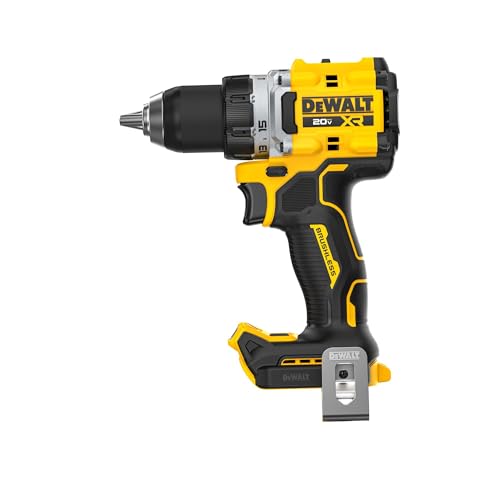 DEWALT 20V MAX XR Brushless Cordless 1/2 in.9 x 3.5 x 7.1 inches9 x 3.5 x 7.1 inches0.86 poundsCheck on Amazon


What the motor difference means
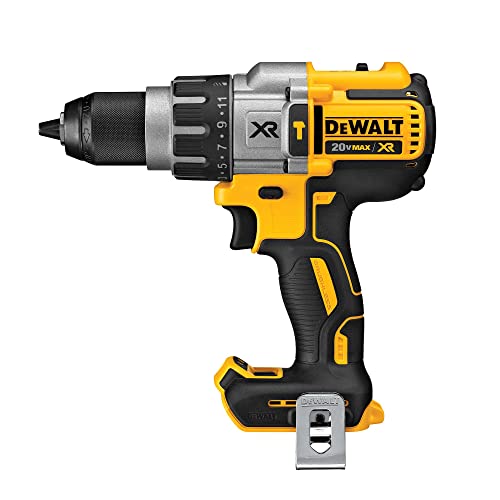
A brushed drill uses carbon brushes to transfer power to the motor’s rotating part. Those brushes wear over time and create friction and heat. A brushless drill uses electronic controls instead, which generally reduces internal friction and makes better use of the battery’s energy.
In practice, brushless drills often run longer per battery charge and stay cooler during sustained work. They also tend to cost more. That does not mean every brushless drill has more torque than every brushed drill: gearing, electronics, battery voltage, and overall design matter. Compare the actual drill’s stated torque and clutch or speed settings, not just the word “brushless.”
Why hole saws are demanding
A hole saw cuts around the edge of a wide circle, so it puts more resistance on the drill than a small bit. A 3-inch saw has much more cutting edge in contact with the plywood than a 1-inch saw. Repeated cuts add heat in the saw, arbor, drill, and battery, particularly when the saw is dull, the plywood is thick, or the operator pushes hard.
For most hole saws in plywood, use the drill’s low-speed setting and let the teeth cut rather than forcing the tool. The correct speed depends on the saw diameter and manufacturer’s instructions; larger saws generally need slower speeds. Pause if the drill slows sharply, the motor smells hot, or the battery becomes unusually warm. Continuing to lean on a stalled drill can overheat it, damage the workpiece, or twist the drill in your hands.
Brushless vs. brushed for repeated cuts
| Factor | Brushless drill | Brushed drill |
|---|---|---|
| Repeated cuts | Usually handles longer batches with less heat buildup | Can handle batches, but may need more frequent cooling breaks |
| Battery runtime | Often more cuts per charge with the same battery capacity | Typically uses more battery energy for comparable work |
| Purchase price | Usually higher | Often cheaper, especially for basic drills |
| Maintenance | No motor brushes to replace | Brushes wear eventually, though this may take years in light use |
| Best fit | Frequent jobs, larger saws, or other heavy-duty drilling | Occasional holes and a tight budget |
These are general tendencies, not guarantees. A compact brushless drill with a small battery may run out of power sooner than a larger brushed drill with a high-capacity battery. For a batch of holes, battery size matters: a 4.0 Ah battery stores roughly twice the energy of a 2.0 Ah battery at the same voltage, though real runtime varies with load and tool efficiency.
Match the drill to the job
If you need a handful of holes—say six 1½-inch openings in ½-inch plywood—a sound brushed drill is often enough. Use a sharp saw and avoid holding the trigger continuously after the cut is complete. For dozens of holes, thicker panels, or larger saws around 3 inches and up, a brushless drill is a more comfortable choice because it is less likely to bog down or heat up as quickly.
For large hole saws, check that the drill has a side handle and a suitable low-speed gear. A high-torque drill can still wrench your wrist if the saw binds. Secure the plywood, keep both hands on the drill, and avoid loose sleeves or gloves near rotating parts. If the work is production-scale, a drill press or other purpose-built setup may be safer and more consistent than a handheld drill.
Setup matters as much as the motor
Choose a hole saw rated for wood or plywood, and inspect its teeth before starting. Dull or pitch-clogged teeth cause extra drag and heat. Clear chips from the kerf periodically; packed sawdust can make the saw bind. If the saw has a pilot bit, make sure it is seated and sharp. Clamp the panel so it cannot spin or lift.
To reduce tear-out, place scrap wood behind the plywood when possible. For a clean opening on both faces, drill partway from one side until the pilot point comes through, then finish from the other side. This takes more setup but often leaves cleaner edges than forcing the saw all the way through from one face.
What to buy
For regular batches, compare a brushless drill with a side handle and enough battery capacity for the job. A second battery is useful if you cannot pause to recharge. Avoid choosing on motor type alone: check that the drill has low gear, a firm grip, and a chuck that accepts your hole-saw arbor.
If this is an occasional project, a basic brushed drill can be a reasonable purchase, particularly if you already own compatible batteries. Put some of the savings toward a sharp, appropriately sized wood hole-saw kit. A worn-out saw can make a capable drill feel weak and turn a simple cut into an overheating problem.
The practical choice
Buy brushless if repeated cutting is routine, the holes are large, or you want one drill for other sustained work. Choose brushed if the cuts are occasional, the saws are modest in size, and the lower price matters more than runtime. Either way, a sharp saw, low gear, secure clamping, and cooling breaks will do more for clean, reliable cuts than pushing harder on the trigger.