What's inside
As an Amazon Associate I earn from qualifying purchases. This post may contain affiliate links at no extra cost to you.
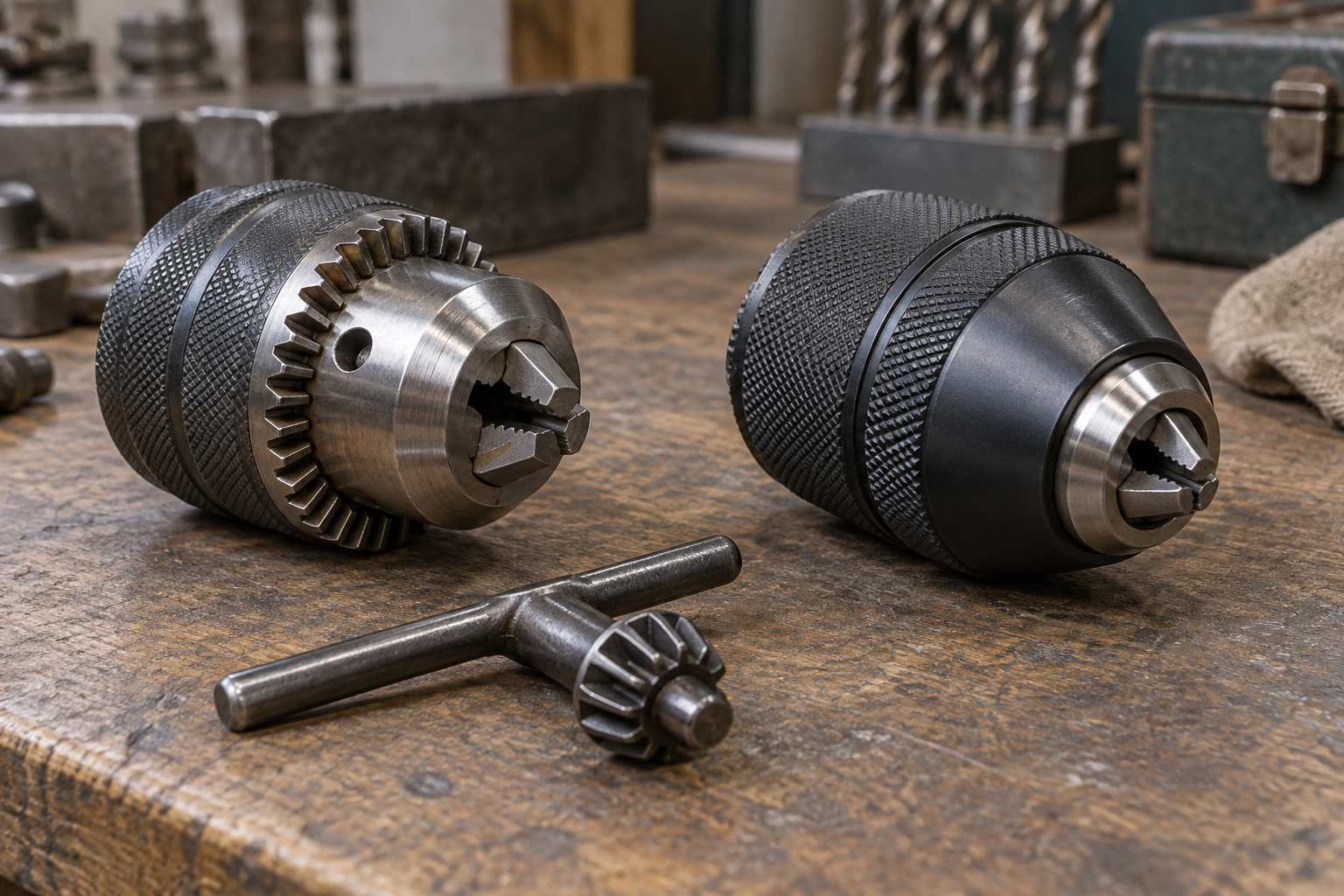
A keyed chuck generally holds a large bit more securely than a keyless chuck when the drill is under heavy torque, especially with smooth-shank bits or repeated starts and stops. The trade-off is slower bit changes and the need to keep track of the chuck key. For ordinary drilling, a good keyless chuck is often secure enough; for large holes, demanding materials, or work where a slipping bit could cause damage, the keyed chuck is the safer bet.
As an Amazon Associate we earn from qualifying purchases at no extra cost to you.


Our Top Picks


What the chuck grips—and why it matters
Most drill chucks use three jaws that move inward to grip the bit’s shank. A keyed chuck tightens those jaws with a toothed key, giving you mechanical leverage. A keyless chuck tightens by hand, usually by turning the chuck sleeve while holding the drill’s rear grip or a locking spindle.
Large bits raise the stakes because they can demand substantial torque. A hole saw, large spade bit, or auger can catch suddenly in wood. If the bit binds, it may stop while the drill body keeps turning. That can twist your wrist, stall the motor, or make the bit spin inside the chuck. A firm grip reduces the chance of slippage, but it does not prevent kickback: use the side handle when supplied, hold the drill with both hands, and avoid forcing a bit that has jammed.
Keyed vs. keyless at a glance
| Factor | Keyed chuck | Keyless chuck |
|---|---|---|
| Clamping force | Usually higher; the key gives more tightening leverage | Depends on hand force and chuck design |
| Changing bits | Slower; insert and turn the key | Fast; tighten or loosen by hand |
| Large bits under load | Better choice for high torque or frequent binding | Can work well, but is more prone to slipping if not tightened firmly |
| Common downside | Key can be misplaced; jaws can be damaged by overtightening | May loosen during demanding work; hand tightening varies |
| Best fit | Shop drilling and tough, repetitive jobs | General-purpose work and frequent bit changes |
When a keyed chuck is the better choice
Choose a keyed chuck if you regularly drill large holes in wood or metal, use hole saws, or run bits that are likely to bind. The key lets you apply more controlled tightening force than most people can manage by hand. Many keyed chucks also have multiple key positions around the chuck, letting you tighten the jaws more evenly rather than relying on one spot.
That extra grip has limits. A chuck is only as secure as its condition and the fit between the jaws and bit shank. Worn or contaminated jaws may not hold properly, and tightening excessively can damage the chuck or the bit. Seat the shank centrally, keep it clear of the bottom of a blind chuck, and tighten at more than one key position if the chuck design allows it. Remove the key before starting the drill—leaving it in place can turn it into a dangerous projectile.
If you’re buying a drill mainly for heavy drilling, look for a model with a keyed chuck and a side handle rather than choosing on chuck type alone. Compare corded drills with keyed chucks and side handles for sustained work where you do not need cordless portability.
When a keyless chuck is enough
A quality keyless chuck is a sensible choice for general home and workshop use: pilot holes, screws, ordinary twist bits, and occasional larger holes in softer materials. It saves time when you change bits often, and there is no separate key to misplace. On drills with an effective spindle lock, one hand can hold the spindle while the other tightens the sleeve.
For large bits, tighten the chuck deliberately rather than giving it a quick twist. Make sure the jaws contact the shank evenly, then check the bit by pulling and twisting it by hand before powering up. If the chuck slips, stop immediately, let the drill come to a full stop, and retighten. Continuing to run a slipping bit can polish or score the shank and make future slipping more likely.
Bit design matters, too. A round shank depends on jaw pressure and can slip more readily under sudden torque. Hex-shank bits are less likely to rotate inside compatible chucks, though a three-jaw chuck still needs to grip them securely. For very large augers or hole saws, follow the bit maker’s speed guidance and use a drill built for the load. A chuck upgrade cannot compensate for an underpowered drill or poor technique.
How to choose for your jobs
For occasional holes up to about 1 inch in wood with a sharp bit and a capable drill, a keyless chuck is usually adequate when tightened properly. That is a practical guide, not a universal limit: bit geometry, wood species, drill torque, and feed pressure all change the load. For larger diameters, dense material, or frequent bind-ups, favor a keyed chuck—or choose a drill with a chuck designed for heavy-duty work. Check the drill’s stated chuck capacity as well; many common drills accept shanks up to 1/2 inch, but capacity varies.
If convenience matters most and your jobs are moderate, shop 1/2-inch keyless chuck drills. If you already own a drill that accepts a removable chuck, replacement options are available, but confirm the mounting thread or taper before buying. A chuck that fits the drill but does not match its mount is not an upgrade.
Use either chuck safely with large bits
Set the drill to low speed and high torque when the bit manufacturer recommends it, and keep the workpiece clamped. Do not grip the bit or chuck while the drill is powered. If a bit stalls, release the trigger rather than trying to muscle through the bind. A clutch, side handle, and secure stance help manage reaction torque, but they do not eliminate it.
In short, keyed chucks offer a meaningful security advantage when large bits face high torque, while keyless chucks are faster and entirely reasonable for less demanding work. Buy for the hardest job you do regularly—not the biggest bit you might use once—and keep the chuck, shank, and workpiece clean and properly seated.