What's inside
As an Amazon Associate I earn from qualifying purchases. This post may contain affiliate links at no extra cost to you.
Installing pulls, knobs, hinges, shelf pins, and drawer hardware inside a finished cabinet is a different job from general drilling. You need control more than raw power. The drill must fit between shelves and face frames, start a clean hole without skating, and stop before the bit damages the cabinet interior or breaks through the front.
As an Amazon Associate we earn from qualifying purchases at no extra cost to you.


Our Top Picks
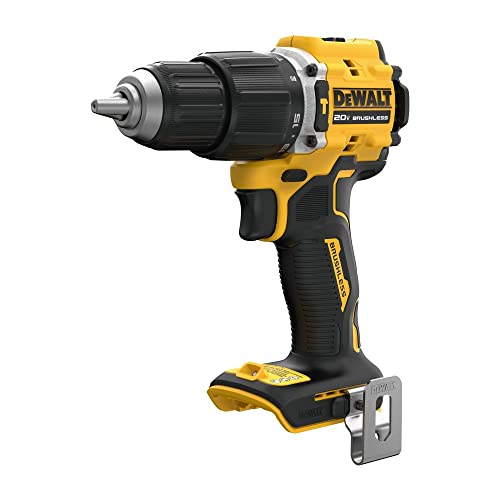
 Dewalt DCD794B 20V MAX ATOMIC COMPACT SERIES BrushlessOne Size6.61 x 3.32 x 8.39 Inches2.51 PoundsCheck on Amazon
 ATOMIC 20-Volt Lithium-Ion Cordless Compact 1/2 in. Drill/DriverOne Size7.97 x 2.49 x 7.97 inches0 PoundsCheck on Amazon

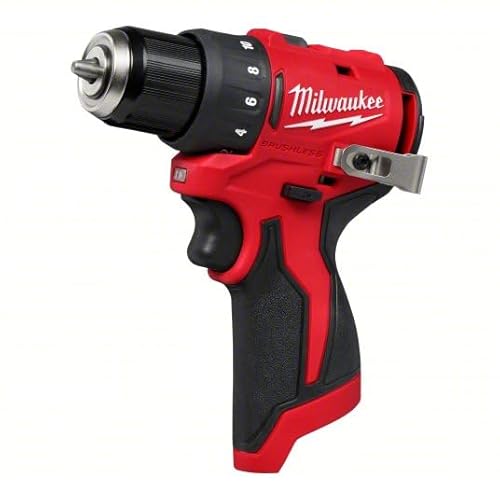

The best overall choice: a compact 12V drill/driver
For most cabinet hardware work, buy a compact 12V drill/driver with a clutch, variable-speed trigger, and a keyless chuck. These drills are shorter and lighter than 18V models, but they still have enough torque for common cabinet materials and small bits.
A typical compact drill is about 6 to 7 inches long from the back of the motor to the chuck and weighs roughly 2 to 2.5 pounds with its battery. That size matters when you are working inside a 12-inch-deep wall cabinet or reaching around a drawer box. A bulky drill may fit the first hole but force you to hold it at an angle for the second, producing a crooked handle.
Choose a model with at least 15 clutch settings, a two-speed gearbox, and a low-speed range near 400 to 500 rpm. The low gear gives better control when drilling through thin cabinet sides or installing screws. A built-in work light is useful, although it does not replace a headlamp when the cabinet interior is dark.
Features that prevent cabinet damage
A clutch is essential. Set it low when driving hardware screws. Start around the middle of the clutch range and increase only if the screw will not seat. The correct setting allows the screw to tighten without stripping the screw head, crushing a soft MDF panel, or pulling a decorative knob too far into the door.
Variable speed matters more than maximum rpm. Start the bit slowly until its point establishes a hole. High speed can burn laminate, wander on melamine, or grab a thin panel and chip the opposite surface. For a 3/16-inch pilot hole in wood or MDF, moderate speed and light pressure are safer than full trigger.
A short chuck helps, but chuck quality matters too. A 3/8-inch chuck is adequate for cabinet hardware bits and keeps the drill compact. A 1/2-inch chuck adds little practical value here and often comes on a larger, heavier drill. Check that the chuck grips small bits securely; a bit that slips can enlarge the hole or leave marks on the cabinet.
Use a slim battery. A compact 2.0Ah battery is usually the best balance. Larger batteries can make a small drill top-heavy and add several inches below the handle. Battery capacity is rarely the limiting factor: drilling a few dozen pilot holes uses very little energy.
Compact drill options compared
| Tool type | Best use | Main advantage | Main drawback |
|---|---|---|---|
| 12V compact drill/driver | Most cabinet hardware and pilot holes | Small, controllable, clutch-equipped | Less power for large hole saws |
| 18V compact drill/driver | Mixed cabinet work and general DIY | More torque and broader accessory range | Heavier and often longer |
| Right-angle drill | Very tight spaces and rear corners | Reaches where a standard drill cannot | Less comfortable for accurately controlled face drilling |
| Electric screwdriver | Driving existing screws | Light and easy to handle | Usually poor for drilling clean holes |
An 18V compact drill is worthwhile if you already own that battery platform or expect to drill larger holes for plumbing, cable pass-throughs, or shelf-pin jigs. Otherwise, it is usually unnecessary for knobs and pulls. The cheaper 12V option is fine when the job is limited to 1/8- to 3/16-inch pilot holes and hardware screws.
When a right-angle drill or attachment makes sense
A standard compact drill is easier to control when drilling through a cabinet door or drawer front because the chuck points directly at the work. For holes inside a narrow cabinet, however, the handle may hit the opposite side before the bit reaches the panel. In that situation, use a compact right-angle drill or a 90-degree attachment.
Right-angle attachments are the cheaper solution, but they introduce play. Even 1 to 2 degrees of wobble can be visible on a handle hole. Use one for hidden screw driving or utility holes, not as your first choice for precisely spaced decorative hardware. A dedicated right-angle drill is sturdier, but it costs more and is less versatile outside tight spaces.
Do not use an impact driver for this job unless you have no alternative. Its hammering action can strip small Phillips screws, crack brittle plastic anchors, and overdrive hardware before you can react. An impact driver is excellent for construction fasteners, not delicate cabinet installation.
How to drill without chipping or breaking through
Measure the hardware twice and make a drilling template from scrap cardboard or thin plywood. Clamp or tape the template in place, then mark the centers with an awl. The small dimple keeps the bit from skating across laminate. For finished doors, cover the drilling area with painter’s tape and mark on the tape.
Use a sharp brad-point bit for wood or MDF. For melamine and laminate, a carbide-tipped laminate bit or a sharp twist bit can reduce chipping. Keep the drill square to the panel; a small torpedo level attached to the drill can help, but sighting from two directions is often enough.
Set a depth stop or wrap tape around the bit. If the panel is 3/4 inch thick, limit the bit to roughly 5/8 inch of penetration unless the hardware requires a through-hole. For a handle mounted through a door, place a scrap block tightly against the back of the door. It supports the fibers as the bit exits and prevents blowout.
What to buy for your particular job
For a one-time kitchen hardware installation, a basic cordless 12V drill/driver kit is the sensible buy if you do not already own batteries. Look for a kit with two batteries, a charger, a clutch, and a compact case. A second battery is more useful than extra torque.
If you already have an 18V system, buy the shortest compact drill in that platform rather than starting over. If the only issue is access behind a face frame, add a right-angle drill attachment after confirming that its chuck accepts your bits without excessive wobble.
The best compact drill for finished cabinets is the one you can hold square, run slowly, and stop precisely. Power is secondary. A good clutch, short body, sharp bits, and a depth stop will prevent more expensive mistakes than a larger motor ever will.