What's inside
As an Amazon Associate I earn from qualifying purchases. This post may contain affiliate links at no extra cost to you.
Our Top Picks
 VEVOR 1/2" Drive Impact Socket Set 65 Piece1/2" 65 PCS21.06 x 16.85 x 2.68 inches31.99 PoundsCheck on Amazon


The short answer
Use an impact-rated socket on an impact wrench or impact driver with a socket adapter. Use a chrome-plated hand socket on a ratchet or breaker bar. The two can look nearly identical, but they are built for different loading: impact sockets are designed to tolerate repeated blows, while ordinary chrome sockets are not.
That does not mean every job needs an expensive impact set. If you only turn fasteners by hand, a well-fitting chrome socket is usually the sensible buy. If a powered tool will drive the socket, choose one marked impact-rated and sized for that tool’s anvil.
As an Amazon Associate we earn from qualifying purchases at no extra cost to you.


Why the materials and finish differ
Most chrome sockets are made from hardened steel and finished with a shiny chromium coating. Hardness helps resist wear and rounding under hand-tool use. Under the sharp, repeated torque pulses from an impact wrench, however, a hard socket can crack or break. A fragment can fly, especially if the socket is damaged, poorly fitted, or used outside its intended application.
Impact sockets are generally made from tougher, less brittle alloy steel and are often finished in black oxide or another dark coating. They are designed to flex slightly and absorb repeated impacts rather than resist every blow as rigidly as a typical chrome socket. Their walls are often thicker, which can make them too bulky for tight clearances.
Impact socket vs. chrome socket
| Feature | Impact socket | Chrome socket |
|---|---|---|
| Intended drive | Impact wrench or other powered impact tool | Ratchet, breaker bar, or hand torque wrench |
| Typical finish | Black oxide or another dark finish | Bright chrome plating |
| Construction trade-off | Tougher and usually thicker-walled | Often slimmer, but not designed for impact blows |
| Best reason to buy | Powered fastening and repeated impact use | Affordable everyday hand-tool work |
| Common limitation | Can be bulky; usually costs more | Can crack or shatter if driven by an impact tool |
Finish alone is not a reliable safety test. Check the product packaging or markings for “impact” or “impact-rated,” and confirm the drive size. A black socket is not automatically suitable for an impact wrench just because it looks the part.
What to use with powered tools
For an impact wrench, fit an impact socket with the correct square-drive size—commonly 1/4, 3/8, 1/2, or 3/4 inch. Also check that the socket is designed for the fastener: a six-point socket generally gives more contact on a standard hex head than a twelve-point socket, which can be useful when access or positioning is tight but is more prone to slipping on rounded or damaged fasteners.
A cordless impact driver needs an extra check. Its hex quick-change holder does not accept every square-drive socket directly; you may need a hex-to-square socket adapter. Use an impact-rated adapter as well as impact-rated sockets. A suitable socket does not make a weak adapter safe.
For a homeowner buying a set for wheel changes, suspension work, or general automotive jobs, compare 1/2-inch-drive impact socket sets by size range, six-point design, and included retention pins or rings. Keep the socket firmly seated on the anvil and use any manufacturer-specified retaining hardware. Do not hold a loose socket in place while the tool is running.
When chrome is the right choice
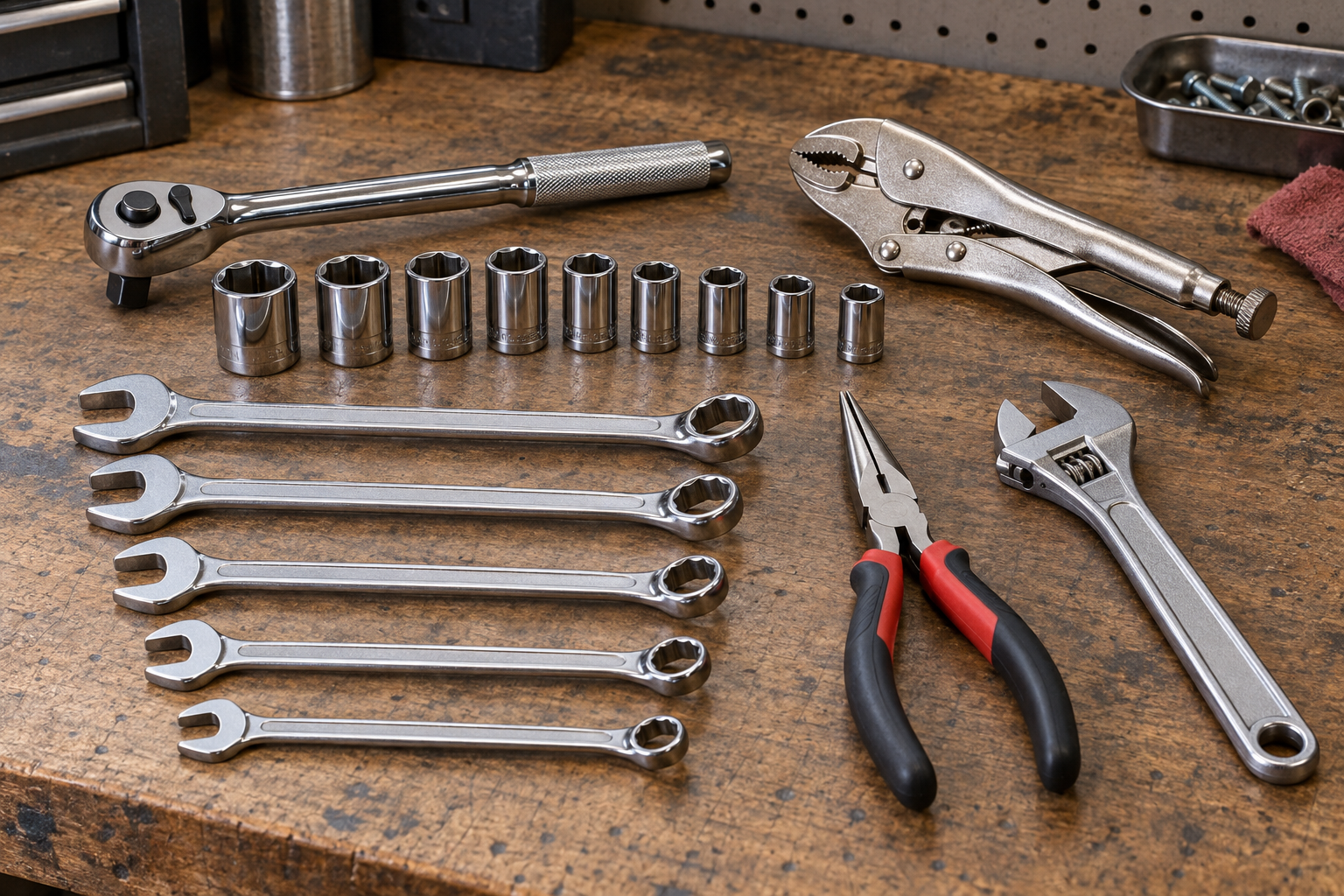
Chrome sockets are fine for hand tools: loosening a nut with a ratchet, tightening a fastener by hand, or using a torque wrench within the tool’s rating. They are often thinner than impact sockets, a useful advantage around recessed nuts and crowded engine bays. A basic chrome set can be a good value if your work is limited to hand-driven fasteners.
Do not confuse “strong enough for a breaker bar” with “safe for an impact wrench.” A long hand lever applies force differently from rapid impact pulses. If you want both hand and powered use, buy impact sockets for powered work and keep chrome sockets for hand tools rather than swapping a chrome socket onto the wrench for a quick turn.
Choosing the right set
Start with your tool’s drive size and the fasteners you actually service. A 1/2-inch impact wrench paired with a 3/8-inch socket set needs an appropriate adapter, which adds length and another possible failure point. Buy the matching drive when practical. For occasional household jobs, a small, correctly sized set is often more useful than a large assortment full of sizes you never use.
For lug nuts, check the vehicle manual for the correct socket size and final tightening torque. A typical passenger-car lug nut may be tightened to roughly 80–100 lb-ft, but specifications vary widely; use the vehicle’s stated value, not that range as a universal setting. An impact wrench can remove or run down lug nuts, but finish tightening with a calibrated torque wrench. Do not rely on an impact wrench’s setting or sound to establish final torque.
Deep sockets reach nuts on long studs; shallow sockets are shorter and often fit better in tight spaces. Thin-wall impact sockets can help with recessed wheel nuts, but confirm that the product is specifically impact-rated and that its outside diameter clears the wheel. For hand-only work, a metric and SAE chrome socket set can cover general maintenance without the added cost of impact construction.
Safe use and care
Inspect sockets before use. Stop using any socket with a crack, chipped edge, badly rounded opening, or visibly damaged drive end. A worn socket can slip and damage the fastener; a cracked socket can fail under load. Keep impact sockets clean enough to seat fully, and replace damaged retaining rings or pins according to the tool manufacturer’s instructions.
Wear eye protection when using an impact tool, keep your hands clear of the rotating socket, and support the work so the fastener is not the only thing holding a part in place. Do not put a pipe over a ratchet or use an extension as a lever unless the tool is designed for that use. If a fastener will not move, check for the correct socket, corrosion, thread direction, and access before applying more power.
The practical rule is simple: chrome for hand-driven work, impact-rated sockets and accessories for powered impact work. The cheaper chrome socket is a perfectly reasonable choice when it stays on a ratchet; it is the wrong place to save money when an impact wrench is doing the driving.