What's inside
As an Amazon Associate I earn from qualifying purchases. This post may contain affiliate links at no extra cost to you.
For hanging drywall, a dedicated drywall screw gun is usually the better tool: its depth-setting nose helps sink screws consistently without breaking the paper face. An impact driver can do the job, especially for a small repair or occasional project, but it takes a lighter touch and more checking. The right choice depends on how much drywall you have to hang and whether you’ll use the tool again.
As an Amazon Associate we earn from qualifying purchases at no extra cost to you.


Our Top Picks
 DEWALT 20V Max Drywall Screwgun11.2 x 3.4 x 7.2 Inch11.2 x 3.4 x 7.2 inches2.6 PoundsCheck on Amazon


Quick comparison
| Factor | Drywall screw gun | Impact driver |
|---|---|---|
| Depth control | Adjustable nose sets screw depth consistently | Depends on trigger control and practice |
| Best fit | Multiple sheets or frequent drywall work | Small jobs and general construction tasks |
| Typical screw handling | Often accepts collated screw attachments or strips | Usually uses individual screws and a bit holder |
| Common mistake | Setting the nose too deep or using the wrong screw length | Overdriving and tearing the paper |
| Use beyond drywall | Limited, though useful for some repetitive fastening | Broadly useful for driving screws and other fasteners |
Why screw depth matters
A drywall screw should sit just below the surface, leaving a shallow dimple while keeping the paper intact. The paper is part of the panel’s strength. If the head breaks through it, the screw loses much of its holding power and may need a second screw nearby. A head left proud, meanwhile, can show through the finished surface or catch a taping knife.
For typical 1/2-inch drywall on wood framing, 1 1/4-inch coarse-thread drywall screws are common. For 5/8-inch panels on wood, 1 5/8-inch screws are often used. Metal studs generally call for fine-thread screws. Check the panel and fastener recommendations for your particular framing rather than treating these lengths as universal.
Where a drywall screw gun wins
A screw gun’s depth-sensitive nose makes repeatable fastening much easier. Set it on a scrap piece first, drive several screws, and adjust until each head makes a small dimple without cutting the paper. That consistency matters on a full room, where a few hundred screws can turn uneven depth into a lot of extra filling and sanding.
Many screw guns also run at high speed and can take a collated attachment that feeds screws from a strip. Collation saves time on larger jobs, but it adds cost and bulk; it isn’t necessary for a single wall. If you expect to hang several rooms or do drywall regularly, a drywall screw gun is generally the more controlled choice.
The trade-off is versatility. A dedicated screw gun is less convenient for general-purpose work than an impact driver, and it can feel like needless extra gear for a patch or a few sheets. It also doesn’t eliminate the need to check your setup: the wrong bit, screw length, or nose setting can still cause bad fasteners.
When an impact driver is good enough
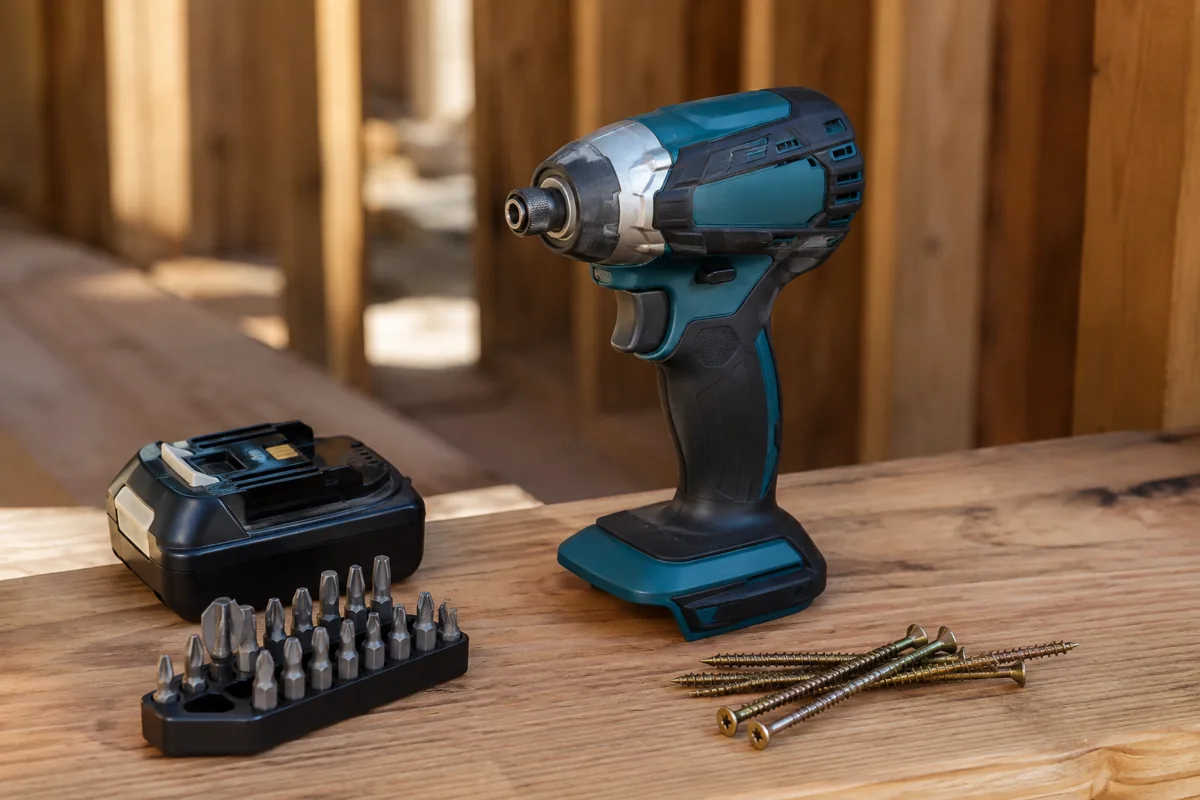
An impact driver is a reasonable choice for a repair, a small ceiling, or occasional hanging if it’s already in your toolbox. It’s compact and useful for many other jobs, and you avoid buying a tool you may rarely use. Pair it with a drywall screw dimpler bit—a bit with a stop intended to help limit depth—and practice on a scrap offcut before working on the wall. Search for a drywall screw dimpler bit if you want a little more help controlling depth.
Without a stop, use the lowest practical speed and squeeze the trigger gently. Impact drivers deliver rotational blows as resistance rises; that’s useful for driving stubborn fasteners, but it can make drywall screws jump from not quite seated to overdriven in a moment. If the paper tears, don’t count that screw as secure. Drive another screw about 1 1/2 inches away into sound material, then leave the damaged one in place or remove it if it interferes with finishing.
A clutch-style drill can sometimes offer finer control than an impact driver, particularly for inexperienced users. Neither tool has the same built-in depth-setting advantage as a screw gun, so a stop bit and a test run remain useful.
Which should you buy?
Choose a drywall screw gun if you’re hanging multiple rooms, working overhead for long stretches, or care about fast, consistent screw depth. For a one-time project of a few sheets, the cheaper option is often to use an impact driver you already own and spend a little time dialing in your technique. Buying a dedicated tool for one small job is hard to justify unless you value the consistency or expect to reuse it.
For a larger job, a collated screw gun can save repetitive handling. A standalone screw gun with individual screws is less expensive and simpler if you don’t need strip feeding. Compare the tool’s depth adjustment, compatibility with the screws or attachment you plan to use, and battery platform if you’re buying cordless; battery and charger costs can change the real price considerably.
Technique that prevents rework
Fasten panels to framing, not just to the neighboring sheet. A common layout puts screws about 12 inches apart on ceilings and 16 inches apart on walls, with closer spacing sometimes required by the board maker, local code, or the framing layout. Keep screws roughly 3/8 inch from panel edges to reduce crumbling. On ceilings, use framing spacing and fastening guidance appropriate to the panel thickness and installation.
Drive a test screw before starting, then inspect each area as you work. A proud head needs another controlled turn. A broken paper face needs a nearby replacement screw into solid framing. Avoid placing screws so close that the board edge crumbles, and don’t rely on joint compound to fix a fastener that missed the stud. These checks matter more than raw driving speed: a screw gun makes consistent results easier, but careful setup is what keeps the drywall firmly attached.