What's inside
As an Amazon Associate I earn from qualifying purchases. This post may contain affiliate links at no extra cost to you.
For most deck-screw work, an impact driver is faster and less tiring, especially when you’re driving long screws into dense or pressure-treated lumber. A drill driver can do the job too—and is often the better choice for smaller screws, delicate work, or anyone who already owns one and is building a modest deck.
As an Amazon Associate we earn from qualifying purchases at no extra cost to you.


Our Top Picks
 BLACK+DECKER 20V MAX* POWERCONNECT Cordless Drill Driver KitDrill Project Kit15.5 x 5.6 x 14.4 inches6.1 PoundsCheck on Amazon


The quick answer
Choose an impact driver if you’ll drive hundreds of deck screws, use screws roughly 2½ inches or longer, or need to work in tough material. Its rotational hammering helps keep the bit turning under load, so you’re less likely to stall or twist your wrist.
Choose a drill driver if you’re driving a limited number of screws, working near edges where control matters, or want one tool for drilling pilot holes and fastening. A drill’s adjustable clutch can limit torque; an impact driver typically has no comparable clutch, so it can bury a screw head or damage the board if you don’t ease off.
What’s different about the tools?
A drill driver turns the bit continuously and uses a clutch to slip when resistance reaches a selected level. That makes it easy to set a repeatable depth on lighter fastening jobs. Many drill drivers have a chuck that accepts round-shank drill bits and driver bits.
An impact driver adds rapid rotational blows when resistance rises. Those blows help it drive fasteners without demanding as much steady force from your hand. Most impact drivers use a ¼-inch hex collet, which accepts hex-shank bits; ordinary round-shank drill bits need a compatible adapter. The pulsing action is loud, and it can feel abrupt when a screw suddenly breaks through or seats.
Impact driver vs drill driver for deck screws
| Factor | Impact driver | Drill driver |
|---|---|---|
| Driving long screws | Usually faster and less prone to stalling | Works, but may stall or need more hand pressure |
| Depth control | Depends on trigger control; easy to overdrive | Clutch helps, though final depth still needs attention |
| Small or delicate fasteners | Can snap screws or strip heads if used aggressively | Generally easier to control at low speed |
| Drilling holes | Needs suitable hex-shank bits or an adapter | Chuck accepts a wider range of bits directly |
| Noise and feel | Louder, with a pulsing action | Smoother and usually quieter |
| Best fit | High-volume fastening and long screws | Mixed drilling and fastening, small jobs, controlled work |
When an impact driver is the better buy
For a full deck, speed adds up. If each board takes several screws and the job runs into the hundreds, an impact driver can save repeated stalls and reduce the effort of holding the tool against the work. It’s particularly useful with long structural or decking screws in hard, wet, or dense lumber.
That advantage doesn’t mean every screw should be driven at full speed. Start slowly, keep the bit straight, and let the head seat just below the surface without crushing the wood fibers. If the screw head strips, the bit may be worn, the wrong size, or poorly seated. Stop and replace the bit rather than continuing to hammer at the damaged head.
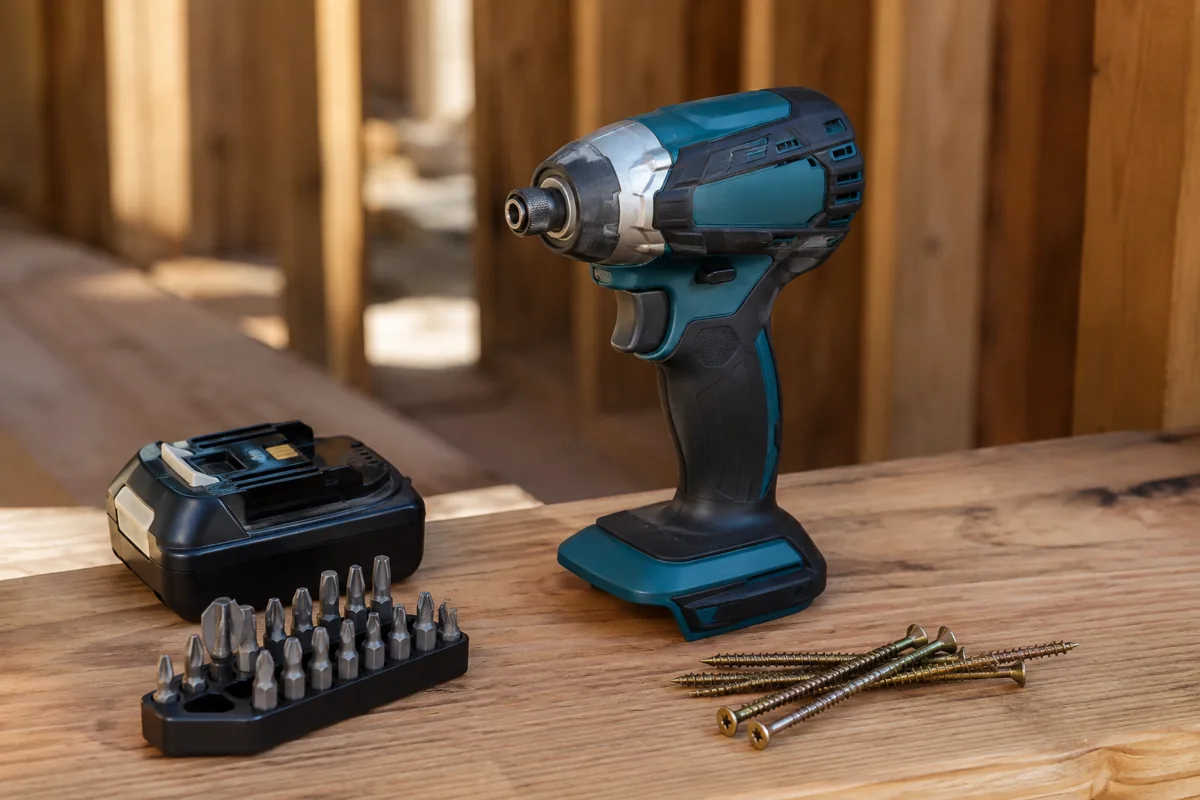
If you’re buying for a deck project, a cordless impact driver is a sensible category to consider. Tool-only is cheaper if you already own compatible batteries; if not, compare the kit price with the cost of buying a battery and charger separately.
When a drill driver is enough
A drill driver is a reasonable choice for repairing a few loose boards, building a small landing, or fastening shorter screws into relatively soft lumber. If you already have one, try it before buying another tool. Use a sharp driver bit that fully matches the screw head, select a low gear for control, and set the clutch conservatively. Increase the setting only if the clutch slips before the screw is seated.
For screws near board ends or edges, predrilling is often more useful than switching tools. A pilot hole helps reduce splitting, especially in dry lumber, narrow boards, and hardwood. Use a drill bit sized for the screw’s core rather than its outside thread diameter; consult the screw maker’s guidance where available. Don’t assume a pilot hole eliminates the need to keep the screw centered and maintain adequate edge distance.
A cordless drill driver also makes more sense if you’ll drill holes regularly and want one tool for general household work. Its clutch is useful, but it is not a depth stop: board density, screw coating, and bit condition all affect how deeply a screw seats.
Avoid stripped heads and overdriven screws
Use deck-rated, corrosion-resistant screws appropriate for the lumber and exposure. Ordinary interior screws can corrode outdoors, and some treated lumber requires specific fastener coatings or materials. Follow the lumber and fastener manufacturers’ compatibility instructions rather than relying on appearance alone.
Match the driver bit exactly to the screw recess. A bit that rocks or slips will round the head, and continuing can turn a simple fastening job into a difficult extraction. Keep the tool square to the screw, apply steady pressure, and stop when the head reaches the intended depth. With an impact driver, feather the trigger as the head approaches the board; a countersink or deck-screw depth guide can help make a row more consistent.
For repetitive work, use a fresh bit when the tip wears and clear sawdust from the screw path. If a screw repeatedly stalls, check for a knot, a misaligned hole, a damaged bit, or a fastener that is too long for the application. More trigger pressure won’t fix a poor match between screw, board, and bit.
A practical buying decision
If you’re starting a substantial deck, buy an impact driver for fastening and keep a drill driver available for pilot holes. If the budget only covers one tool, an impact driver is the stronger choice when the job is mostly driving long deck screws; a drill driver is the more versatile choice for a small project that includes both drilling and light fastening.
Check whether the tool’s battery platform matches equipment you already own, and budget for a spare battery if you’ll be working through a large deck. A second battery can matter more to uninterrupted progress than a small difference in tool power. If the project is only a handful of screws, use the drill driver you have and spend the money on suitable fasteners and a good bit.