What's inside
As an Amazon Associate I earn from qualifying purchases. This post may contain affiliate links at no extra cost to you.
Deep and shallow sockets do the same basic job, but their different lengths affect whether you can reach a fastener, keep the tool aligned and finish a repair without switching tools. For most automotive work, neither replaces the other. A useful set starts with shallow sockets for ordinary access and adds deep sockets in the sizes your vehicle actually uses.
As an Amazon Associate we earn from qualifying purchases at no extra cost to you.


Our Top Picks


The basic difference
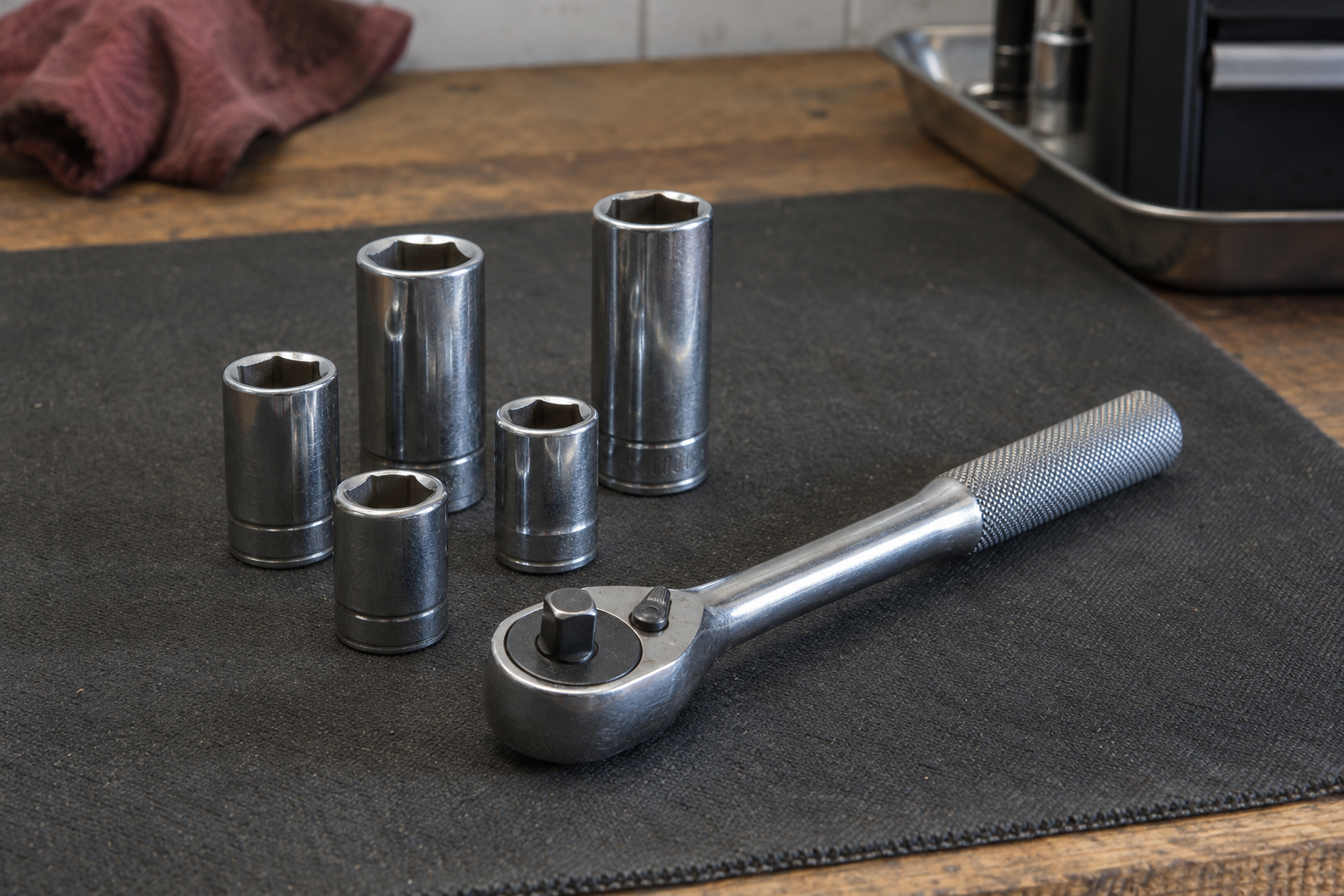
A shallow socket is short, so it fits into tight spaces and keeps the ratchet close to the fastener. A deep socket has a longer barrel that can extend over a protruding stud or reach a nut set down a longer threaded section. Both are available in common drive sizes, such as 1/4-inch, 3/8-inch and 1/2-inch.
Socket depth is not the same as socket size. A 14 mm shallow and a 14 mm deep socket fit the same size fastener; the difference is how far the socket extends around it. Manufacturers’ exact dimensions vary, so check the clearance around the fastener—not just its size—when choosing.
When shallow sockets save time
Shallow sockets are usually quicker on exposed fasteners because they take up less room. They are handy on many brake, suspension, interior and engine-bay jobs where a deep socket would hit a bracket, hose, body panel or neighboring bolt. Their shorter profile also lets you keep an extension or ratchet closer to the work, which can make it easier to control the tool in a cramped space.
They are often the better choice when a bolt head or nut sits on a flat surface without a long stud sticking through it. A shallow socket typically uses less material and costs less than a comparable deep one, so a budget set of shallow sockets can be perfectly sensible for occasional repairs. The trade-off is simple: if the fastener’s threaded end protrudes too far into the socket, the socket bottoms out before it fully seats on the nut.
That partial engagement is a failure mode, not just an inconvenience. A socket that catches only the outer edges of a nut can slip, round its corners or damage your hand when it lets go. Stop if the socket rocks or does not sit fully down; use a deep socket instead.
When deep sockets save time
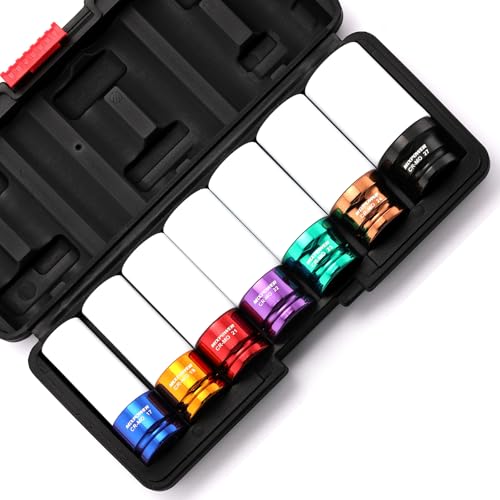
Deep sockets are useful when a nut sits on a long stud or the fastener is recessed below surrounding parts. Common examples include wheel lug nuts on vehicles with exposed studs, some exhaust hardware and certain suspension or engine-bay fasteners. They can also reach past a small obstruction that would prevent a shallow socket from reaching the nut squarely.
A deep socket is not automatically the faster choice just because it reaches farther. Its extra length can make it collide with nearby components, and it may reduce clearance for a ratchet swing. In a narrow gap, you may need a wobble extension, a different access route or a shallower tool. Deep sockets can also flex more than short ones under high torque, particularly in long, thin-wall designs. For stubborn fasteners, use a correctly sized impact-rated socket with an impact wrench, not a chrome hand socket.
Deep vs. shallow at a glance
| Factor | Shallow socket | Deep socket |
|---|---|---|
| Best access | Tight spaces with limited clearance | Long studs, recessed nuts and deeper reach |
| Typical advantage | Compact, easy to control and often cheaper | Can fully engage a nut when a stud protrudes |
| Common drawback | May bottom out on a stud before seating | May hit nearby parts or restrict ratchet movement |
| Good starting use | General automotive fasteners with no long projection | Wheel nuts and other fasteners with substantial projection |
What to buy for automotive work
If you are buying your first set, prioritize the sizes and drive you will actually use, then add the other depth where a job requires it. Many DIY mechanics get regular use from metric 3/8-inch-drive sockets; larger or high-torque fasteners may call for 1/2-inch drive, while 1/4-inch drive is useful for smaller fasteners and limited-clearance work. Check your vehicle’s service information for fastener sizes, and do not assume every fastener is metric.
A metric shallow 3/8-inch-drive socket set is a reasonable low-cost starting point for routine jobs. If your work often involves lug nuts or long studs, add a metric deep 3/8-inch-drive socket set in the sizes you use. You do not need two complete sets in every drive size just in case; buying duplicates of rarely used sizes ties up money and drawer space.
For wheel work with an impact wrench, choose a metric impact-rated deep socket set if the nuts need the extra reach. Impact sockets are designed for the repeated shock of powered tools; their thicker walls can make them too bulky for tight spaces. Confirm the socket fits the lug nut and wheel recess before applying power.
A quick fit check before turning
First identify the fastener size and make sure the socket is fully seated. Then check whether the bolt or stud extends into the socket, and whether the socket body clears nearby parts through the ratchet’s full working arc. If a shallow socket seats fully and clears the area, use it. If it bottoms out, switch to a deep socket. If the deep socket will not fit, do not force it at an angle; look for a suitable thin-wall socket or another access method.
For lug nuts, use the correct socket and follow the vehicle maker’s torque specification with a torque wrench for final tightening. A deep socket can make removal easier on a protruding stud, but it does not replace correct torque. On any stubborn fastener, keep the socket square and stop if it starts to slip. A rounded nut usually costs more time than swapping sockets at the start.
The practical answer
Shallow sockets save time when space is tight and the fastener has no long projection. Deep sockets save time when a stud or recess prevents a shallow socket from seating. If you do automotive work regularly, keep both depths in the sizes you encounter most. If you only handle occasional maintenance, start with a good shallow set and buy deep sockets for a specific job rather than paying for a large assortment you may never use.