What's inside
As an Amazon Associate I earn from qualifying purchases. This post may contain affiliate links at no extra cost to you.
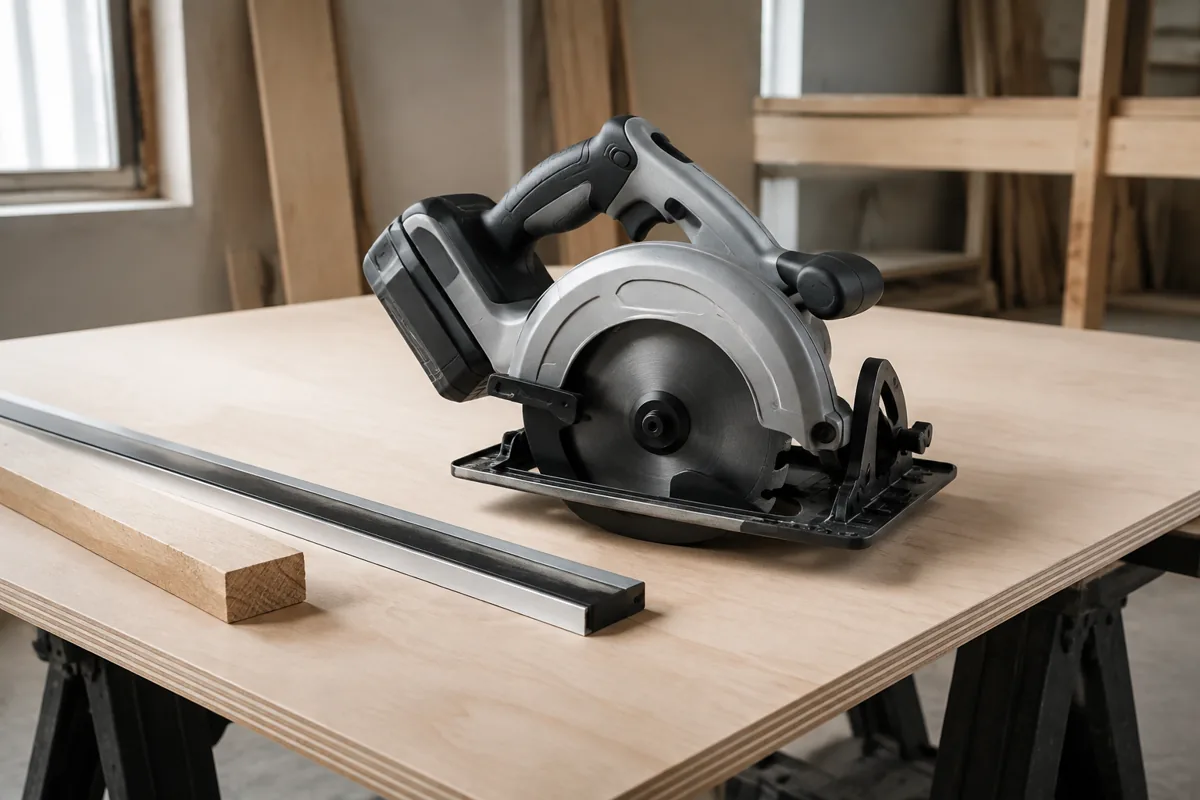
Flush-trimming a door jamb is a small job, but it exposes the weaknesses of a compact circular saw quickly. The cut is short, close to the floor, and often made in an awkward position. You need a saw with a small blade, predictable depth adjustment, a base that sits flat, and enough visibility to keep the cut level. The best choice for most DIY flooring work is a 4-1/2-inch compact circular saw, although a 5-3/8-inch cordless saw can be better when you also want to cut plywood and dimensional lumber.
As an Amazon Associate we earn from qualifying purchases at no extra cost to you.


Our Top Picks
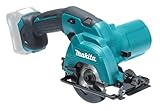
 Makita SH02R1 12V max CXT® Lithium-Ion Cordless 3-3/8"3-3/8"14.5 x 8 x 10.2 inches3.5 poundsCheck on Amazon
 Makita XSH04ZB 18V LXT® Lithium-Ion Sub-Compact Brushless Cordless1 Count (Pack of 1)9 x 13.5 x 9 inches4 poundsCheck on Amazon
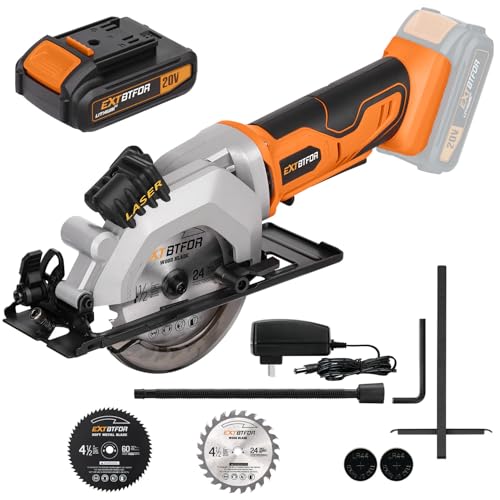
 WORKPRO 20V 4-1/2" Cordless Mini Circular Saw with18.31 x 4.53 x 10.43 inches9.6 poundsCheck on Amazon


What Makes a Good Jamb-Trimming Saw
For undercutting a door jamb, blade diameter matters less than control. A compact saw should weigh roughly 4 to 6 pounds with its battery or cord, have a narrow front of the shoe, and allow depth adjustment in small increments. A depth range of at least 1-1/2 inches is useful, but you normally set the blade to cut only about 1/8 inch deeper than the flooring or underlayment.
Blade visibility is critical. Some small saws put the blade on the left side, others on the right. Neither arrangement is automatically better, but the guard and shoe should not block your view of the tooth entering the jamb. A dust port is helpful indoors, though many compact saws produce chips that still escape around the guard.
For this specific task, look for a 4-1/2-inch compact circular saw with a carbide blade. A 24-tooth or 36-tooth blade is a practical choice for wood jambs. A fine-finish blade cuts more cleanly but feeds slower and can clog with painted material.
Compact Saw Types Compared
| Saw type | Best use | Strengths | Limitations |
|---|---|---|---|
| 4-1/2-inch corded compact saw | Occasional flooring and jamb work | Light, inexpensive, no battery concerns | Cord gets in the way; usually less refined |
| 4-1/2-inch cordless compact saw | Quick trim cuts and punch-list work | Very maneuverable; easy to use indoors | Shorter runtime; small blades lose depth quickly |
| 5-3/8-inch cordless saw | Jambs plus plywood, decking, and framing | More cutting depth and general usefulness | Heavier and less convenient near the floor |
| Small sidewinder or trim saw | Repeat work and shop use | Better shoe stability and stronger motor options | Often costs more than a one-job tool needs to |
Best Overall: A 4-1/2-Inch Cordless Compact Saw
A cordless 4-1/2-inch saw is the best balance for most homeowners installing laminate, engineered wood, or thin hardwood flooring. It is small enough to hold against the floor without fighting the jamb, and there is no power cord to drag across a finished surface. Most versions cut roughly 1-1/2 inches at 90 degrees, which is ample for a typical 3/4-inch flooring board.
The trade-off is battery cost and runtime. A small saw may cut many jambs on a compact battery, but it is not the right tool for ripping dozens of long boards. If you already own batteries in a compatible system, this is usually the sensible purchase. If you do not, compare the tool-only price with a corded saw and an oscillating tool before committing.
Choose a cordless compact circular saw with a positive depth lever, a rigid metal shoe, and a blade guard that retracts smoothly. Avoid a model whose shoe flexes when you press it against the floor. That flex can turn a level undercut into a tapered cut that leaves a visible gap beneath the flooring.
When a 5-3/8-Inch Saw Is Better
A 5-3/8-inch cordless saw is the better buy if jamb trimming is only one part of a larger project. It normally provides around 1-11/16 inches of cutting depth at 90 degrees, and it handles plywood, shelving, fence boards, and some 2x material more comfortably than a 4-1/2-inch saw.
It is not quite as nimble. The larger blade and wider shoe can be awkward when the saw must sit flat beside a wall or slide under a low cabinet. For one or two doorways, the added capacity is unnecessary. For a flooring installation involving many rooms, the larger saw may justify its extra weight.
A 5-3/8-inch cordless circular saw is also preferable when you need to make long rip cuts. Use a fresh blade and support the workpiece properly; compact saws can bog down when forced through thick hardwood or wet lumber.
How to Undercut the Door Jamb
Place a piece of the actual flooring, plus its underlayment, upside down against the jamb. Set the saw depth so the blade projects about 1/8 inch below that combined thickness. This leaves clearance without creating an unnecessarily deep cut into the jamb or drywall.
Put the saw shoe flat on the flooring or on a thin sacrificial board of the same thickness. Start the saw before the blade touches the wood, then push steadily through the jamb. Do not twist the saw to finish the cut. Twisting can pinch the blade, kick the saw backward, or chip the jamb at the exit point.
Most compact saws cannot cut fully into a corner because the front of the shoe or blade guard contacts the wall. Stop before the corner and finish the last inch with a flush-cutting hand saw or an oscillating tool. A flush-cut hand saw is the cheaper option and is perfectly adequate for one doorway. An oscillating tool is faster for multiple jambs, but its blades are consumable and can cost more than expected.
Common Failure Modes
The most common mistake is setting the blade too deep. Cutting 1/2 inch into a jamb when 1/8 inch of clearance was needed can expose fasteners, damage adjacent trim, or make later repairs difficult. A second mistake is using the saw freehand without a flooring spacer. The shoe can rock on the uneven transition between the floor and jamb.
Painted jambs may splinter even with a sharp blade. Score the cut line with a utility knife first, or apply low-tack tape and cut through it. If the blade binds, release the trigger and wait for it to stop before pulling the saw out. Never back a spinning saw out of a partial cut.
Buying Verdict
Buy a 4-1/2-inch cordless compact saw if you want the easiest tool for a few flooring cuts and already own compatible batteries. Buy a 5-3/8-inch cordless saw if you need a more versatile general-purpose saw. Choose a corded compact saw when the job is occasional and low cost matters most.
For the cleanest result, use the circular saw only for the accessible straight portion of the jamb. Finish corners with a flush-cut saw, vacuum the kerf, and test-fit a flooring offcut before installing the full board.