What's inside
As an Amazon Associate I earn from qualifying purchases. This post may contain affiliate links at no extra cost to you.
Our Top Picks


Why the Cutting Angle Matters
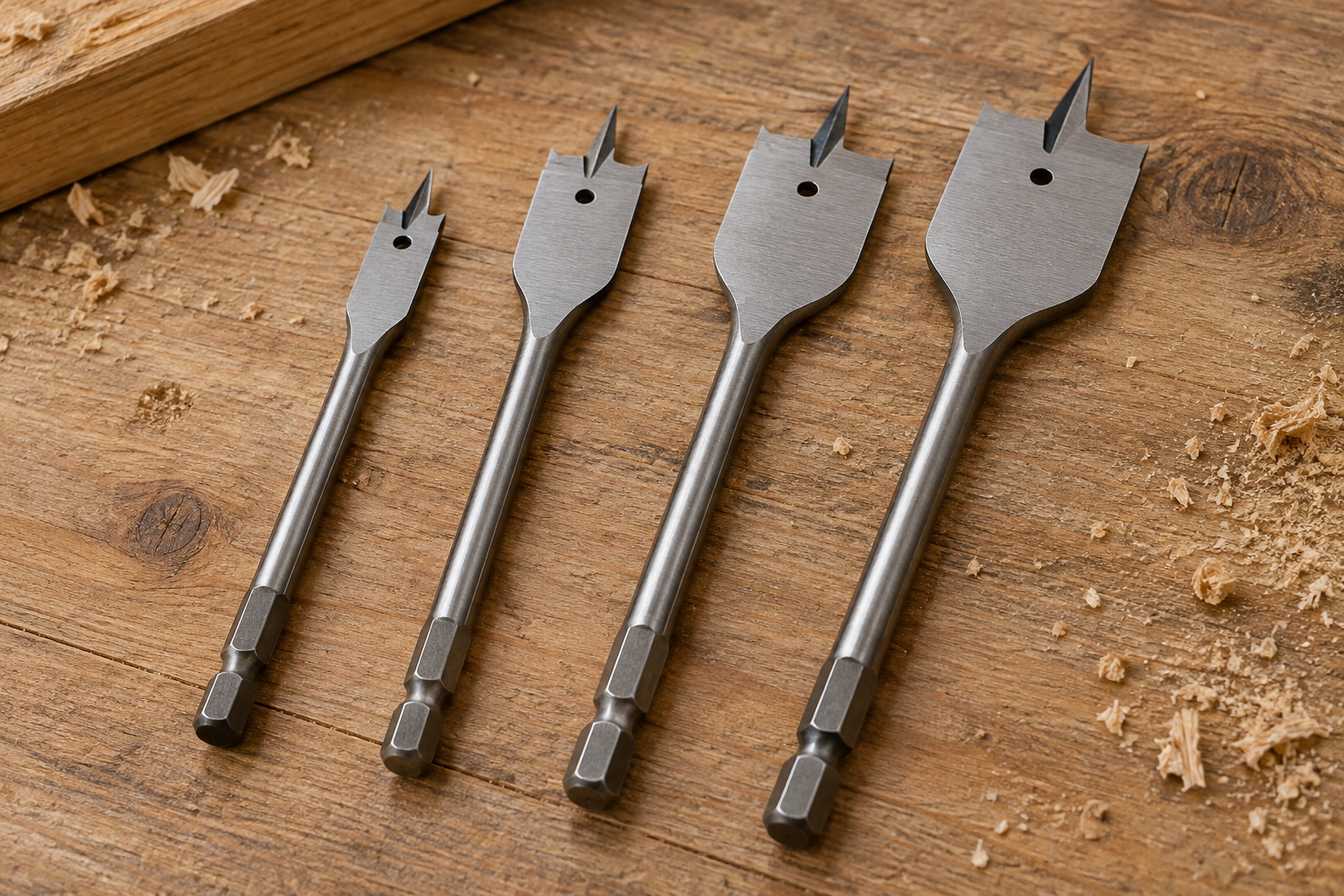
A spade bit is simple, but its cutting geometry is easy to ruin. Each side has a cutting lip, and the outer point or spur helps guide the bit through the hole. If you grind a steeper or shallower bevel onto the lips, the bit may cut more aggressively, wander, leave a rough hole, or require noticeably more pressure.
The goal is not to make the edge razor-thin. The goal is to restore the existing bevel while removing nicks and dull metal. Most ordinary wood spade bits have a bevel around 20 to 30 degrees, but the exact angle varies by manufacturer and size. Use the bevel already on the bit as your guide rather than forcing every bit to one measured angle.
Before sharpening, inspect the bit. If one wing is badly bent, cracked, or shorter than the other, replacement is usually the sensible choice. A cheap bit with badly damaged geometry can take longer to repair than it is worth.
Tools and Supplies
For most spade bits, a small, fine-cut file or diamond file is the safest sharpening tool. A file gives you control and removes little metal at a time. A narrow triangular file can reach tight corners, while a flat needle file works well on the broad cutting lips. A clamp or bench vise, a marker, and safety glasses are also useful.
A diamond needle file set is a good general purchase if you sharpen drill bits, knives, or other small tools. Diamond files cut hardened steel without needing much pressure, and their narrow profiles make it easier to avoid the center point and side spur.
| Sharpening method | Best use | Main advantage | Main risk |
|---|---|---|---|
| Fine hand file | Occasional sharpening and small bits | Maximum control and low metal removal | Slower on deep damage |
| Diamond file | Harder steel and clean touch-ups | Fast, precise cutting | Can remove too much if pressed hard |
| Bench grinder | Large bits with serious damage | Quick metal removal | Easy to change the angle or overheat the edge |
A small bench vise makes the job easier, but do not clamp the cutting wings directly against bare jaws. Use thin cardboard, leather, or wood scraps to prevent new dents.
Mark the Existing Geometry
Clean resin and dust from the bit, then use a permanent marker to color the beveled face of both cutting lips. The marked area shows exactly where the file is removing steel. This is more reliable than judging the angle by eye, especially on small bits.
Compare both wings from the front and side. Their cutting edges should be similar in length and height. Also check the center point. The point should remain slightly ahead of the cutting lips, not filed down flush with them. If the point is shorter on one side, the bit will tend to pull or cut unevenly.
Sharpen the Lips Without Changing the Angle
-
Secure the bit with the cutting face accessible. Keep the bit horizontal or at the same orientation you will use for every stroke. Stability matters more than the exact vise position.
-
Place the file against the original bevel on one cutting lip. Match the existing angle across the entire bevel. Do not lay the file flat against the broad top surface, and do not lift the handle higher with each stroke.
-
Push the file along the cutting edge in one controlled direction, from near the center toward the outside edge. Use light pressure and three to six strokes at first. The file should remove the marker evenly, not dig a new secondary bevel.
-
Repeat the same number of strokes on the opposite lip. Alternate sides rather than completing one side entirely. This helps keep the point centered and the two wings equal.
-
Stop when the edge is continuous and the major nicks are gone. A sharp spade bit may still show a small flat behind the edge; that is normal. Chasing a mirror finish often removes useful metal and changes the profile.
Use a fine flat diamond file for the main bevel and a smaller file only where necessary. Keep the file away from the outside spurs unless they are visibly damaged. The spurs score the hole perimeter; filing them shorter can make the exit side rougher and can increase breakout.
Deal With Spurs and Burrs Carefully
If a spur has a light burr, use one or two gentle strokes on its existing inside face. Do not reshape the outside diameter. The outside edge determines the hole size, so removing it can make the bit cut undersize or leave an uneven rim.
After sharpening, feel for a burr on the underside of each lip. Remove it with a single light pass using the file or a fine sharpening stone. This is deburring, not grinding a new bevel. Excessive work on the underside changes the cutting angle and can make the bit grab more aggressively.
When a Grinder Makes Sense
A bench grinder is acceptable for a large, badly nicked bit, but it is the easiest way to change the cutting angle. Use the grinder only to remove damaged metal, then finish with a hand file. Touch the lip to the wheel for one or two seconds at a time, cool it in water, and never allow the steel to turn blue. Blue discoloration indicates overheating and can soften the edge.
If you sharpen spade bits frequently, a variable-speed bench grinder provides more control than a fast, fixed-speed unit. For occasional household work, however, buying a replacement bit or using a hand file is usually cheaper and safer than learning on a grinder.
Test the Result
Test the sharpened bit in scrap wood, not in the finished workpiece. Run the drill at a moderate speed with firm, even pressure. The bit should produce two similar chips and advance without excessive force. Check the exit side of the hole for tearing, then compare the hole diameter with an undamaged bit of the same size.
If the bit wanders, one lip is probably longer or sharper than the other. If it burns the wood, the edge may be too blunt, the speed too high, or the bit clogged with resin. If it grabs suddenly, inspect the underside for an overly aggressive secondary bevel. Return to the original bevel with light, equal strokes rather than removing more metal at random.