What's inside
As an Amazon Associate I earn from qualifying purchases. This post may contain affiliate links at no extra cost to you.
Our Top Picks


The short answer
For occasional holes in ordinary softwood joists, a spade bit is usually the better buy. It costs less, cuts quickly, and is easy to find in the sizes used for common cable and pipe work. Choose an auger bit when you need a deeper, straighter hole, expect to drill many holes, or want its screw point to pull the bit through the wood with less pressure.
Neither bit makes an unsafe joist cut acceptable. Check the rules that apply to your building and the location of pipes, cables, knots, and existing holes before drilling. Joist-hole limits vary with joist type, span, and local code; don’t rely on a bit choice to make an oversized or badly placed hole safe.
As an Amazon Associate we earn from qualifying purchases at no extra cost to you.


How the bits differ
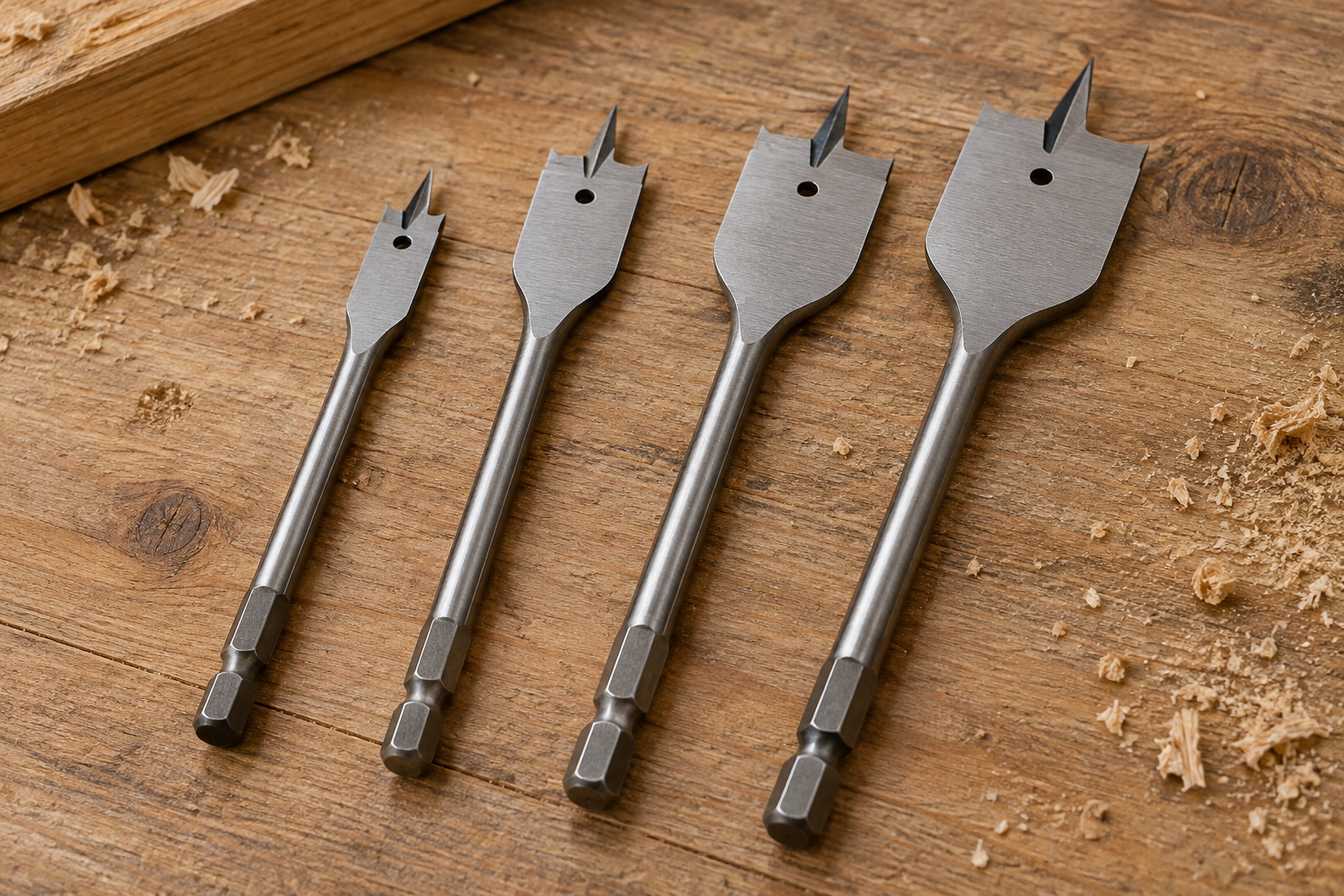
A spade bit has a flat blade, a pointed center, and cutting spurs at the edges. Its broad face removes wood fast, but it can wander at the start and leave a rough exit unless you manage the cut. A brad-point version, sometimes sold as a wood-boring bit, has a sharper center and rim spurs; it is not the same as a flat spade bit, though it is another option for cleaner holes.
An auger bit has a screw-shaped lead point, a long fluted body, and a cutting lip. The lead screw bites into the wood and draws the bit forward. That makes it easier to keep feeding through thick stock, but it also means the bit can pull a drill hard, especially if it catches or the drill is not held firmly.
Spade bit vs auger bit
| Factor | Spade bit | Auger bit |
|---|---|---|
| Typical cost | Low; practical for occasional work | Higher, especially for a full size range |
| Cutting speed | Fast in softwood with a suitable drill | Steady; the screw point feeds itself |
| Hole quality | Often rougher, particularly at the exit | Usually more controlled, though wood can still tear |
| Depth and reach | Shorter working length on many common bits | Longer options suit thick members and deep holes |
| Power and handling | Can chatter or snag; needs firm control | Can produce strong self-feed torque and bind |
| Best fit | Small batches and budget drilling | Repeated, deeper, or more controlled boring |
When a spade bit makes sense
Buy a spade bit set for wood if the job is a few holes in accessible, dry softwood and a slightly rough finish is acceptable. It is a sensible choice for routing a cable through a joist where the hole will be hidden and the bit length is enough to reach cleanly through the member.
Spade bits are compact and quick to swap, and a blunt or damaged one is inexpensive to replace. Their weakness is control: the flat blade can skate before the center point starts, and a large diameter can make a drill twist sharply if the edge catches. Use a drill with a side handle when available, keep both hands on it, and avoid forcing a bit that is binding. A high-speed, low-torque drill is not automatically safer just because the bit is cheap.
For a cleaner exit, stop when the center point just breaks through, then finish from the other side using the small pilot opening as a guide. If you cannot reach the far side, clamp a scrap backing board there when possible. These steps reduce breakout, but they do not fix a hole that is too large or too close to a joist edge.
When an auger bit is worth the extra cost
Choose an wood auger bit set when you have a run of holes to drill, need a longer bit, or want the lead screw to help advance through the timber. Its flutes carry chips out of the hole, which is useful in deeper drilling where a short bit may clog or overheat.
That self-feeding action is also the main hazard. If the cutting edge catches a knot or the flutes pack with chips, the bit may stop while the drill keeps turning. The reaction can wrench your wrist or spin the drill. A drill with a clutch or a proper side handle helps with control, but do not treat either as a substitute for a firm grip and a clear stance. Back the bit out periodically to clear chips, especially in deep holes.
An auger is not automatically the right choice for every softwood joist. For one or two ordinary holes, the extra price and aggressive feed may bring little benefit. In loose, knotty, or wet timber, either bit can wander, tear fibers, or jam; inspect the timber and slow down rather than forcing the cut.
Practical drilling checks
Confirm the required hole diameter and location before buying a bit. A 1-inch hole is not interchangeable with a 1-1/4-inch hole simply because the larger bit is available. Follow applicable building requirements for the particular joist; engineered I-joists and other manufactured members have their own permitted hole zones and restrictions. Never notch or bore them by applying solid-sawn joist rules.
Mark the center carefully, hold the drill square to the joist face, and use a bit sharp enough to cut rather than burn. Check the drill’s chuck capacity and the bit’s shank size: a bit that does not fit securely is a poor choice, whatever its cutting style. If you hit metal, stop. Don’t push through concealed nails, plates, or possible services.
What to buy
For a homeowner doing a small amount of cable or pipe work in regular softwood, start with the correct-size spade bit and spend the savings on a sound drill, secure bit, and careful layout. If the holes are deep, numerous, or need more consistent tracking, an auger is worth considering. Compare the useful sizes and working lengths rather than buying a large assortment you may never use.
Choose the bit for the wood, depth, drill, and finish the job actually requires. In many routine joist jobs, the cheaper spade bit is fine; the safe hole location and controlled drilling matter more than the premium bit.