What's inside
As an Amazon Associate I earn from qualifying purchases. This post may contain affiliate links at no extra cost to you.
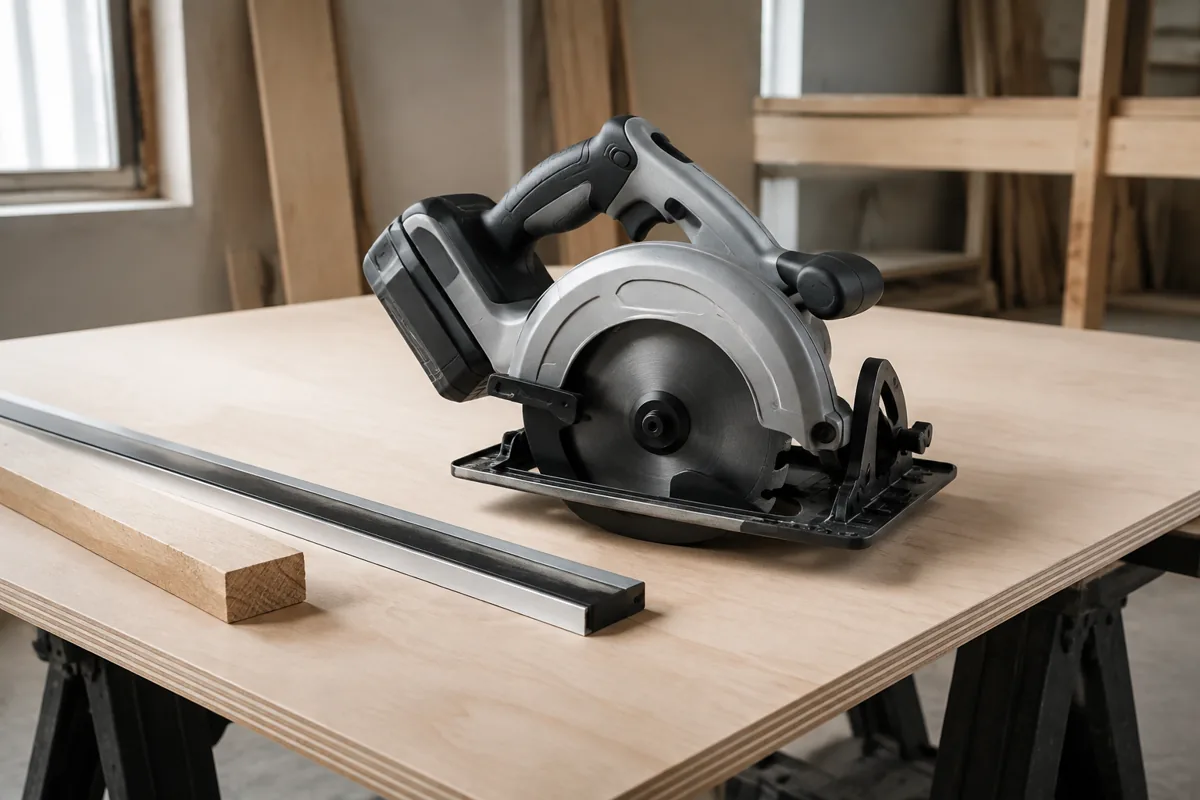
When a deck project calls for dozens of boards cut at the same angle, a miter saw is usually the faster and more accurate choice. A circular saw can do the work, and it may be the better buy if you only build decks occasionally, but repeated angle cuts expose its weaknesses: setup takes longer, stock can shift, and small errors compound across the deck.
As an Amazon Associate we earn from qualifying purchases at no extra cost to you.


Our Top Picks
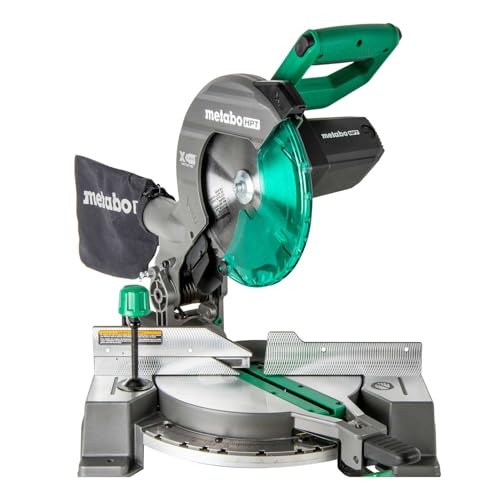
 SKIL 10" Dual Bevel Sliding Compound Miter Saw-MS6305-0010''35.43 x 22.44 x 14.17 inches39.4 poundsCheck on Amazon



Quick answer
Choose a 10-inch compound miter saw if you need repeated 15-, 22.5-, 30-, or 45-degree cuts and want consistent results with minimal layout. Choose a cordless circular saw if your cuts are mostly crosscuts, the boards are already installed, or you want one tool that handles more general construction work.
For most deck-board angle work, the miter saw wins on repeatability. The circular saw wins on portability, cutting capacity, and price.
Circular saw vs. miter saw
| Factor | Circular saw | Miter saw |
|---|---|---|
| Repeated angle accuracy | Good with a guide or jig; mediocre freehand | Very good once the fence and stop are set |
| Setup time | Higher; each board needs alignment | Low after initial setup |
| Portability | Excellent | Fair to poor, especially with a stand |
| Cut capacity | Handles wide boards and sheet goods easily | Limited by blade diameter and sliding travel |
| Typical cost | Lower if you already own one | Higher, plus stand or support may be needed |
| Best use | Occasional cuts, installed boards, rough carpentry | Batch-cutting loose boards to the same angle |
Why the miter saw is better for repeated angles
A miter saw holds the work against a fence while the blade pivots to the selected angle. Set the miter scale, clamp or hold the board firmly, and every piece starts from the same reference surface. Add a stop block and you can repeat both the angle and the length.
That matters on a deck because a small error is easy to repeat. If every board is cut two degrees off, the mistake may not be obvious on the first board, but the outside edge can drift noticeably across a run. A stop block also prevents the common problem of boards gradually becoming a fraction shorter as you work through the stack.
A 10-inch saw is generally enough for standard 5/4 deck boards and many 2×6 boards, depending on the saw’s stated crosscut capacity. A 12-inch saw gives more capacity for wide stock, but costs more and takes up more room. For ordinary decking, the larger saw is not automatically more accurate.
A compound miter saw is useful when the cut needs both a miter angle and a bevel, such as fitting boards around angled posts or stair components. For a simple plan-view angle, a standard miter saw is sufficient.
When a circular saw is the better choice
A circular saw is the cheaper option when the job involves only a handful of angle cuts. If you already own one, buying a miter saw for eight cuts is hard to justify. A sharp 40-tooth or 60-tooth finish blade can leave a clean enough edge on composite decking and wood, provided the saw is guided properly.
It is also better when the deck boards are already fastened. A miter saw cannot reach across an installed board, but a circular saw can cut it in place with a straightedge and careful support. The same applies to trimming a long overhang along the deck edge.
The limitation is repeatability. A circular saw has no built-in fence that references every board identically. Marking an angle with a speed square works for a few cuts, but small layout and handling differences can produce inconsistent ends. A shop-made crosscut jig or a commercial circular saw crosscut guide improves this substantially.
How to get repeatable cuts with a circular saw
Use a sacrificial work surface and support the board continuously on both sides of the cut. Set the blade depth so it extends only about 1/8 to 1/4 inch below the board. Excess blade exposure increases tear-out and makes kickback more severe.
Make one accurate template from scrap decking. Use it to mark the angle and position on each board, or build a jig that registers against the board’s edge. Clamp a straight guide so the saw’s shoe follows the same path every time. Do not rely on the printed angle marks on the saw’s shoe for precision; they are useful for rough work, not close-fitting trim.
Cut a test board first. Check it against the actual rim joist, picture-frame border, or adjoining board before cutting the entire stack. Pressure-treated lumber can vary in width and may not sit flat, so inspect each board rather than assuming every piece is identical.
Common failure modes
Board movement: A board that shifts during a circular-saw cut produces an angle that looks correct at one corner but leaves a gap at the other. Clamp the guide and support long stock.
Wrong reference edge: Deck boards are not always perfectly parallel. Mark from the edge that will actually meet the adjoining piece, and keep the board orientation consistent.
Blade deflection: Pushing too hard, especially through wet treated lumber, can bend the blade off the line. Let the blade reach full speed and use steady feed pressure.
Splintered ends: A dull or coarse blade tears fibers at the exit side. Put the finished face up or down according to the saw’s cutting direction, and use painter’s tape over the cut line if necessary.
Pinching and kickback: Never let the offcut close against the blade. Support both sections, keep your hands outside the marked danger area, and wait for the blade to stop before lifting the saw.
Which one should you buy?
Buy the miter saw if you have more than roughly 15 to 20 identical cuts, need tight-fitting border or picture-frame joints, or expect to repeat this type of work. A basic saw with a stable fence and accurate detents is more useful than an expensive model with features you will not use. Add a miter saw stand with material supports if the boards are long; poor support can ruin otherwise accurate cuts.
Keep using the circular saw if the cuts are occasional, the boards are installed, or the budget is tight. Spend the savings on a quality blade, clamps, and a reliable guide. For a one-time deck repair, that setup is often entirely adequate.
Whichever saw you use, cut two test pieces before processing the full pile. Confirm the angle, length, and finished-face orientation at the deck itself. That short check prevents a stack of accurately made—but unusable—boards.