What's inside
As an Amazon Associate I earn from qualifying purchases. This post may contain affiliate links at no extra cost to you.
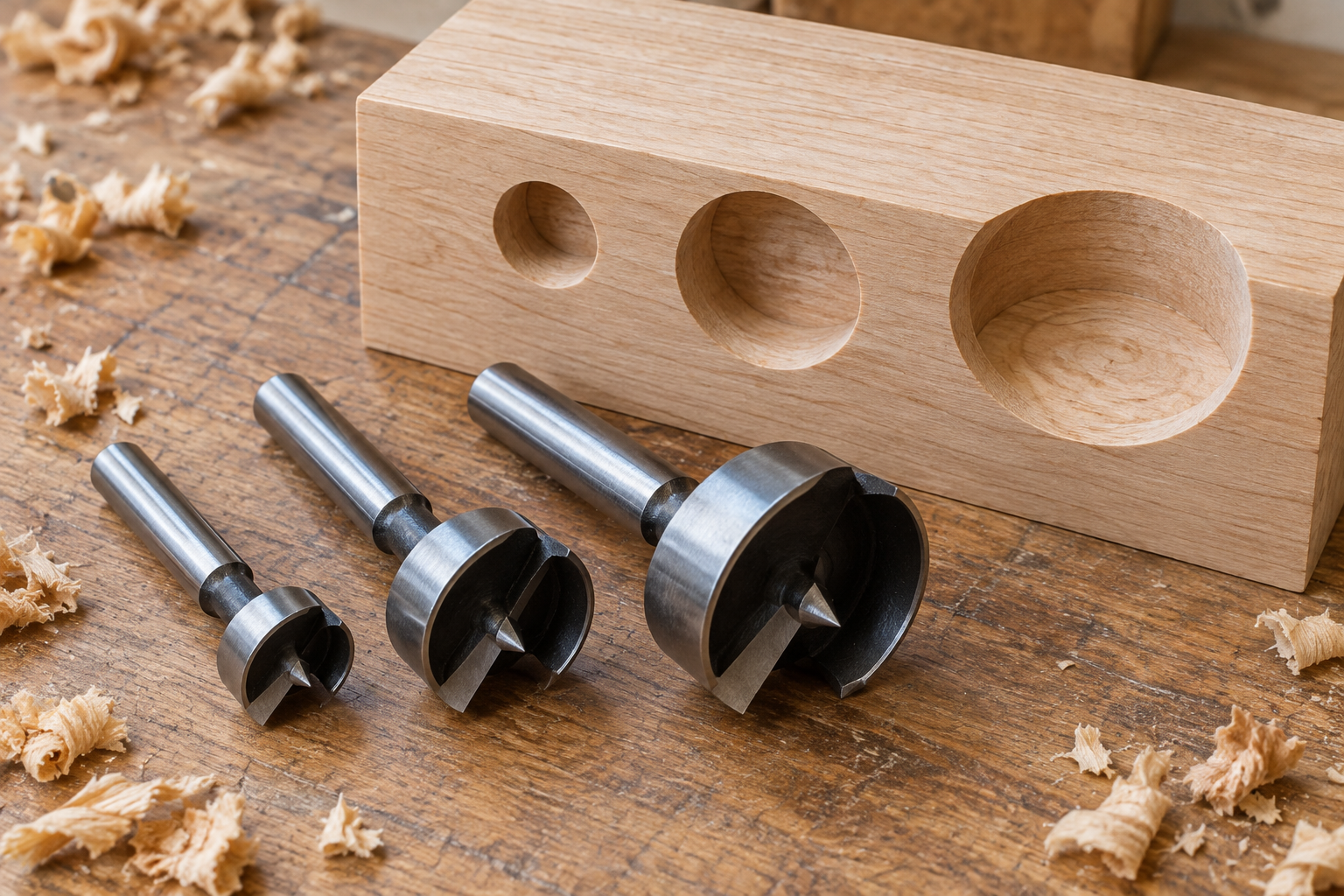
A 35 mm hinge cup hole is shallow, wide, and unforgiving: a little runout or a wandering bit can leave a visible crescent in a cabinet door. For hardwood, the best choice for most DIYers is a sharp, carbide-tipped 35 mm Forstner bit used in a drill press or a well-supported plunge jig. A quality high-speed-steel bit can work, too, especially for a small number of doors, but it dulls sooner and needs more patience.
As an Amazon Associate we earn from qualifying purchases at no extra cost to you.


Our Top Picks


What the hinge cup hole needs
Most European-style concealed hinges use a 35 mm cup. The hole is commonly about 12–13 mm deep, but check the hinge maker’s drawing before drilling; the cup and door thickness determine the safe depth. Many cabinet doors are around 18–20 mm thick, leaving little margin for error. Set a depth stop rather than relying on eye judgment.
The hinge’s mounting plate and adjustment range can accommodate small placement differences, but they cannot hide a ragged rim or a hole drilled too close to the door edge. Follow the hinge instructions for setback and hole position. Mark the center carefully, clamp the door, and test the setup on scrap of the same thickness and species.
Carbide, HSS, and cheaper sets
| Bit type | Best for | Trade-off |
|---|---|---|
| Carbide-tipped, 35 mm | Repeated holes, abrasive hardwood, longer service life | Costs more; can chip if dropped or used carelessly |
| HSS, 35 mm | A few doors, occasional repairs, controlled drilling | Usually needs sharpening sooner, especially in hard or abrasive stock |
| Budget multi-bit set | Infrequent work when the 35 mm cutter is reasonably sharp | Quality varies; a dull or poorly balanced cutter may burn or wander |
For a kitchen’s worth of doors, a dedicated 35 mm carbide-tipped Forstner bit is a sensible upgrade. Carbide holds an edge longer in dense maple, oak, or beech, but it is not immune to damage. Avoid striking the rim against metal and do not twist the bit sideways in the hole.
If you are fitting one or two hinges, a sharp 35 mm HSS Forstner bit may be all you need. The cheaper option is fine when it cuts cleanly and you can control speed and depth. Replace or sharpen it if the cut becomes smoky, takes excessive pressure, or leaves a fuzzy edge.
Choose the setup with the bit
A drill press gives the most repeatable perpendicular hole, especially across several doors. Use a fence or stop block to keep the edge setback consistent, and a depth stop to limit the cut. The bit’s center spur can still tear through the back of a thin door if you drill too deep, so do not treat the press stop as optional.
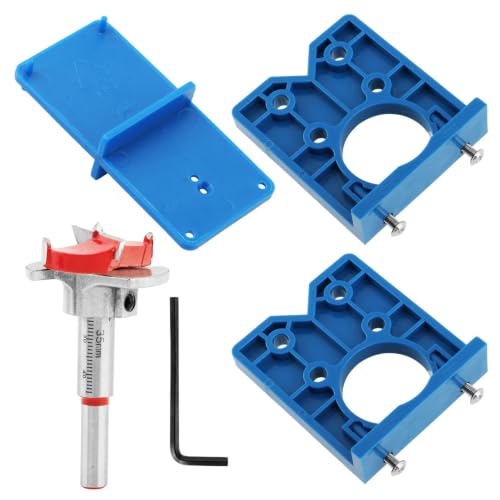
If you do not own a press, a hinge-boring jig is a practical way to keep a handheld drill aligned. Look for a jig designed for a 35 mm cup bit and clamp it firmly. A freehand drill can work for a one-off repair, but it is the least reliable choice in hardwood: the bit can tilt, the hole can become oval, and the rim may break out if the door is poorly supported. A 35 mm hinge-boring jig can be cheaper than correcting a damaged door.
Drill cleanly without burning the wood
Clamp the door flat against a backer board, with the face to be bored upward. Confirm the bit is seated straight in the chuck and that the work cannot shift. Start at a moderate speed; for a 35 mm bit in hardwood, roughly 500–800 rpm is a useful range for many setups. Follow the bit maker’s guidance and reduce speed if you see smoke or darkening. High speed and heavy pressure generate heat, dull the edge, and can scorch the cup wall.
Let the rim cut rather than forcing the drill. Clear chips regularly, particularly in deep or dense stock. If the bit stops cutting, do not lean harder on it: inspect for packed chips, a loose chuck, or a dull edge. Stop when the depth is reached, then check the hole with the actual hinge cup. The cup should seat without force and sit close to flush with the door surface.
Common mistakes and fixes
Burn marks: Usually a dull cutter, excessive speed, or chips trapped in the hole. Clean the bit, lower the speed, and clear chips during the cut. Chipped entry edge: Often caused by a tilted bit or a door that can move. Clamp the work and use a guide. A sharp bit and a sacrificial backer help, though the backer matters most if a cut risks breaking through.
Hole too deep: Set a positive depth stop and test it on scrap. If the hole is misplaced, a hinge’s adjustments may not correct it; do not enlarge the hole casually, since that can weaken the remaining wood around the cup. Measure the door edge setback and cup depth before drilling each batch, and keep the same reference edge for every door.
What to buy
For frequent cabinet work, choose a sharp carbide-tipped 35 mm bit and a drill press or clamped hinge jig. For a small project, a good HSS bit is a reasonable, lower-cost choice if you verify the cut on scrap and stop when it dulls. In either case, accurate layout, a depth stop, and steady support matter more than buying an expensive bit and drilling freehand.