What's inside
As an Amazon Associate I earn from qualifying purchases. This post may contain affiliate links at no extra cost to you.
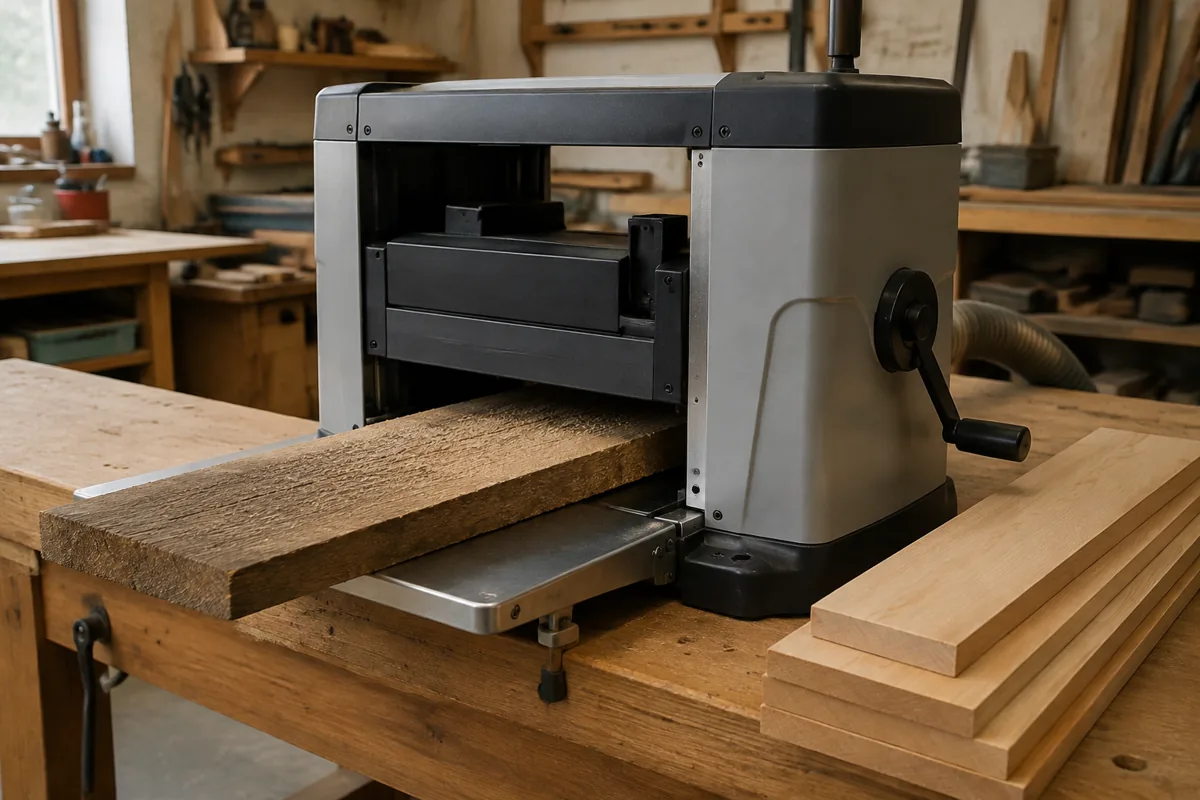
If you can buy only one machine, a thickness planer is usually the better first purchase for a small shop. It gives you predictable thickness, removes milling marks, and can turn rough boards into usable stock. But it does not flatten a twisted or cupped board by itself. For that job, you need a jointer, a router sled, hand planes, or a local milling service.
The right choice depends on the lumber you use. If you buy kiln-dried boards that are already flat on one face, start with a planer. If you regularly buy rough-sawn hardwood and need to make one face flat before thicknessing, the jointer may come first.
As an Amazon Associate we earn from qualifying purchases at no extra cost to you.


Our Top Picks
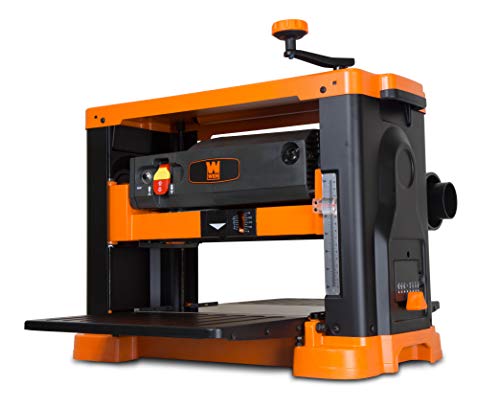 WEN PL1326 15-Amp 13-Inch Spiral Benchtop Thickness PlanerSpiral, 13-Inch, Single Speed81 poundsCheck on Amazon
 Cutech 40180HI 8-Inch Spiral Cutterhead Benchtop Jointer with8 inch34 x 19.75 x 13.25 InchesCheck on Amazon


What each machine actually does
A jointer flattens one face and can make one edge square to that face. The infeed table supports the board before the cutterhead; the outfeed table supports it afterward. By taking more material from the high spots, it creates a flat reference face.
A thickness planer cuts the opposite face parallel to the reference face. It does not know whether the first face is flat. If you feed a board with a bow, cup, or twist into a planer, the rollers press it down temporarily. The cutterhead follows that distorted shape, and the board often springs back after it exits.
This distinction causes most buying mistakes. A planer makes a board thinner and more consistent. A jointer makes a board flat and can square an edge. Neither machine completely replaces the other.
Thickness planer vs jointer
| Job or concern | Thickness planer | Jointer |
|---|---|---|
| Primary purpose | Makes the second face parallel and sets thickness | Flattens one face and squares an edge |
| Typical small-shop width | 12 to 13 inches | 6 to 8 inches |
| Best first use | Dimensioning prepared or partly flat stock | Starting with genuinely rough, warped boards |
| Common failure | Snipe, tear-out, and boards that remain bowed | Uneven faces, taper, and difficulty flattening wide boards |
| Space and dust | Compact footprint; produces heavy chips | Long tables; also produces heavy chips |
Why the planer usually comes first
For many small-shop projects, a planer is used more often. It lets you buy rough or partially dressed boards and bring them to a consistent dimension. It is also useful for gluing panels: boards do not need to be perfectly flat initially, but their finished faces and edges need to meet cleanly.
A portable planer is generally less expensive and easier to store than a jointer. A 12- or 13-inch capacity also covers most furniture parts, while a small jointer may be limited to 6 inches. That width matters when you make cabinet sides, shelves, or wide table components.
Look for a 12-inch thickness planer with sturdy infeed and outfeed support, a replaceable or reversible knife system, and a reliable depth-stop mechanism. A dust collector is strongly preferred. Planers can fill a shop with chips in seconds, and a nearly full dust bag can cause poor chip evacuation and extra tear-out.
There is a practical workaround for boards that are slightly uneven: attach the board to a flat sled with shims or hot-melt glue, then plane the exposed face. After that face is flat, remove the sled, flip the board, and plane the second face parallel. This works well for moderate cup or twist, but it is slower than using a jointer and is a poor solution for production quantities.
When the jointer should come first
Choose a jointer first if your material is genuinely rough and distorted, or if you routinely mill slabs and wide hardwood directly from the sawmill. A planer cannot establish a trustworthy flat face without help. A jointer can, provided the board fits its capacity.
That last condition is important. A 6-inch jointer cannot flatten a 9-inch board in one pass. You can flatten one side with a router sled, hand plane, or careful table-saw technique, but then the machine is no longer doing the job you bought it for. If wide stock is common, consider an 8-inch jointer, if your space and budget allow it.
Jointer tables need enough length to support the board. Short benchtop jointers can flatten small parts, but they are less forgiving with long boards. A board 6 feet long may require infeed and outfeed support, careful pressure placement, and several test passes. Pressing down hard over a hollow section can reproduce the hollow instead of removing it.
Cost, space, and the cheaper option
A planer-first setup is often cheaper because you can buy surfaced lumber for critical parts and use the planer for adjustments. This is a sensible choice when you build occasional projects, work mostly with boards under 6 inches wide, or have a nearby hardwood dealer that sells flat, milled stock.
Buying surfaced-two-sides lumber is more expensive per board foot, but that extra cost may be lower than buying, storing, and maintaining two machines. A local cabinet shop or lumber supplier may flatten and thickness boards for a fee. For a few projects each year, paying for milling is often the cheapest complete solution.
Do not ignore machine placement. A planer may be compact when stored, but it needs several feet of clear space for long boards. A jointer needs clear infeed and outfeed paths permanently or semi-permanently. In a one-car garage, a mobile planer paired with a folding stand is usually easier to live with than a jointer with long tables.
The best buying order for different workflows
For general furniture and DIY work, buy a planer first, then add a jointer when you find yourself flattening sleds repeatedly or paying for milling on every project. Pair the planer with a planer sled setup and a good straightedge.
For rough lumber preparation, buy both when possible, but prioritize the jointer if you can only afford one immediately. You can thickness stock with a router sled and careful layout, though it is slower and less pleasant. For edge jointing, a track saw, table saw, or hand plane can cover occasional work; for flattening faces, there is no equally quick substitute.
Whichever machine comes first, leave room in the budget for sharp knives, dust collection, push blocks, and accurate measuring tools. Dull cutters and poor support create more frustration than a modest machine. The cheapest option is fine when it matches your lumber and project volume; the wrong machine is expensive even when its sticker price is low.