What's inside
As an Amazon Associate I earn from qualifying purchases. This post may contain affiliate links at no extra cost to you.
Kreg ACS and Festool’s guide-rail system can both help a small shop break down sheet goods and make repeatable straight cuts. The key difference is the workflow: Kreg sells a broader, table-like cutting setup centered on its Adaptive Cutting System track saw and Project Table, while Festool’s system is built around a saw, rail, and accessories that can be configured for different jobs. Your space, the way you handle full sheets, and what tools you already own matter more than a small difference in advertised cutting capacity.
As an Amazon Associate we earn from qualifying purchases at no extra cost to you.



Our Top Picks


Two different approaches to breaking down sheet goods
Kreg’s ACS Project Table gives you a rigid support surface with a grid of dog holes and tracks for positioning work and accessories. Set up the saw and rail, support the panel, and cut it where it lies. That can be useful in a shop where a dedicated cutting station stays assembled. The table also makes it easier to clamp smaller parts securely, though its footprint and setup still need to fit your shop.
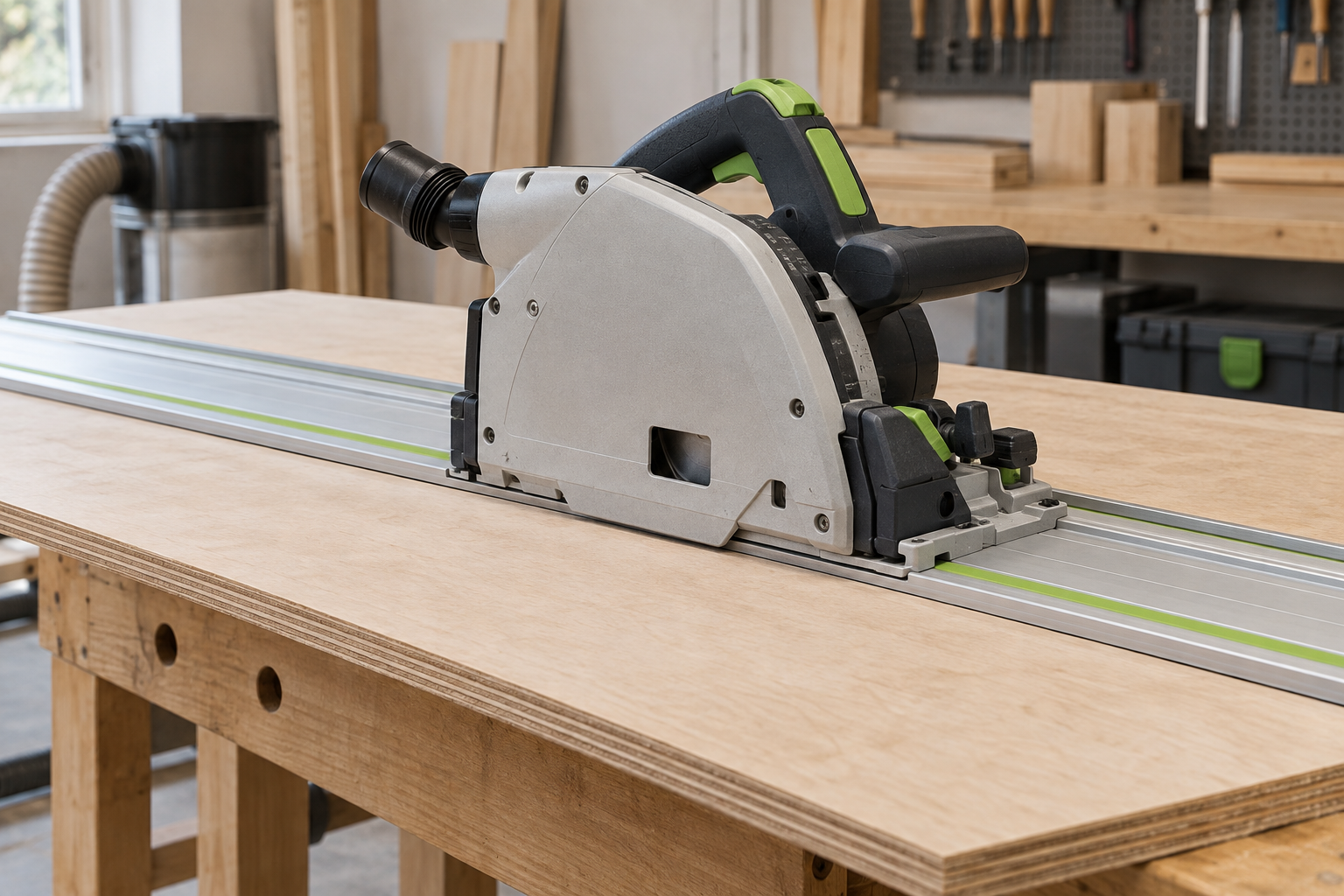
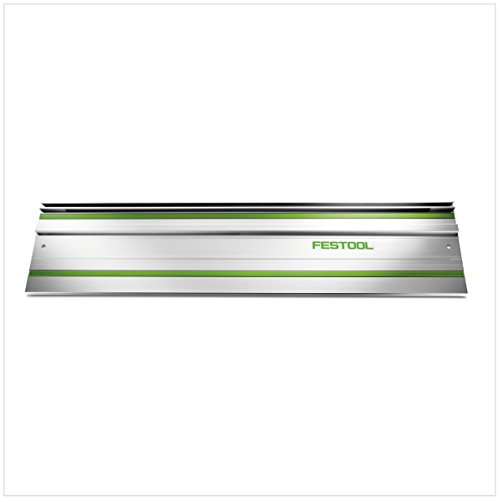
Festool’s guide-rail approach is more modular. Put a compatible saw on a rail, support the sheet on foam or a breakdown surface, and move the rail to suit the cut. Rails are available in multiple lengths, so the system can adapt to different panel sizes and shop layouts. This is convenient when you need to store the components between jobs or take them to a site, but you must provide a stable surface under the work.
At-a-glance comparison
| Factor | Kreg ACS | Festool guide-rail system |
|---|---|---|
| Basic workflow | Saw and rail used with a dedicated Project Table setup | Saw and rail used on a supported panel or work surface |
| Shop footprint | More convenient if the table can stay assembled; takes dedicated floor space | Rails store flat; needs a separate breakdown surface |
| Work support | Table provides a repeatable support and clamping setup | Depends on your surface, foam, and clamps |
| Best fit | Small shops that value a defined cutting station | Shops that want a flexible, portable rail system |
| Potential snag | Table size and accessory setup can limit where it works | Long cuts require careful rail alignment and reliable panel support |
Accuracy, tear-out, and common failure modes
Either system can produce clean, accurate cuts, but neither makes a crooked setup impossible. For a straight cut, the rail must be aligned with the mark and held firmly, and the panel must not sag or shift. A sheet that overhangs an undersized support surface can flex as the saw passes; that can pinch the blade, spoil the cut, or leave a tapered edge. Support the offcut as well as the piece you are keeping, without placing a support where the blade will hit it.
Both systems use a splinter guard at the rail edge to help limit tear-out. A damaged or poorly seated guard can make the cut line less reliable, especially when switching between blades or materials. Test the setup on scrap, check the blade is sharp and appropriate for the material, and keep the rail’s reference edge consistent with your measurement. For repeat cuts, use a stop or a reliable measuring routine instead of assuming the rail will land in exactly the same place each time.
Track saws are not a substitute for good dust control. Cutting a full sheet can produce substantial fine dust, so use compatible dust extraction where possible and wear suitable respiratory protection when conditions require it. Also check that the chosen rail length covers the cut with room for the saw’s start and finish; a rail that is just long enough can be awkward to position securely.
Space, setup, and what the price buys
The Kreg table’s main advantage is built-in organization: the work surface, clamping points, and cutting workflow are designed to work together. Its trade-off is space. Measure the table footprint and leave enough room to feed full-size sheet goods through the cut. If the table has to be assembled and cleared for every job, the convenience advantage shrinks.
With Festool, the rail itself stores easily, but the rest of the workflow is your responsibility. A pair of foam sheets on a stable floor or a suitable work surface can be a relatively low-cost way to break down panels. You will still need to manage the panel, rail, and offcut safely. A track-saw guide-rail system is worth considering if you want to build a flexible setup around rails rather than a dedicated table.
Do not compare only the saw prices. Add up the rail, clamps, dust extraction, support surface, and any accessories needed for your cuts. Also check compatibility before buying: rails and saws from different brands are not automatically interchangeable in every detail. If you already own compatible Festool equipment, adding a rail or accessory may be more sensible than buying into a second platform. If you have no system yet, compare the complete working setup, not just the headline tool.
Which one makes sense for a small shop?
Choose Kreg ACS if you have room for a dedicated cutting station and expect to break down panels regularly at that spot. The table can reduce the number of improvised supports and make clamping small workpieces more straightforward. It is less compelling if you mostly need to cut one sheet occasionally and cannot leave the table set up.
Choose Festool’s guide-rail workflow if you value modular storage, portability, or the ability to cut panels in different locations. It asks for more planning around support and alignment, but that is manageable with a stable breakdown surface and careful setup. A foam sheet breakdown surface can be enough for occasional sheet work; you do not need to buy a large table just to make accurate cuts.
For either system, buy for the work you actually do. A shop that cuts several sheets a week may benefit from a permanent station. A hobby shop making cabinets a few times a year can get excellent results with a rail, a sound support surface, and disciplined setup. In both cases, safe support and a sharp blade will affect the result more than brand loyalty.