What's inside
As an Amazon Associate I earn from qualifying purchases. This post may contain affiliate links at no extra cost to you.
Our Top Picks


Quick answer
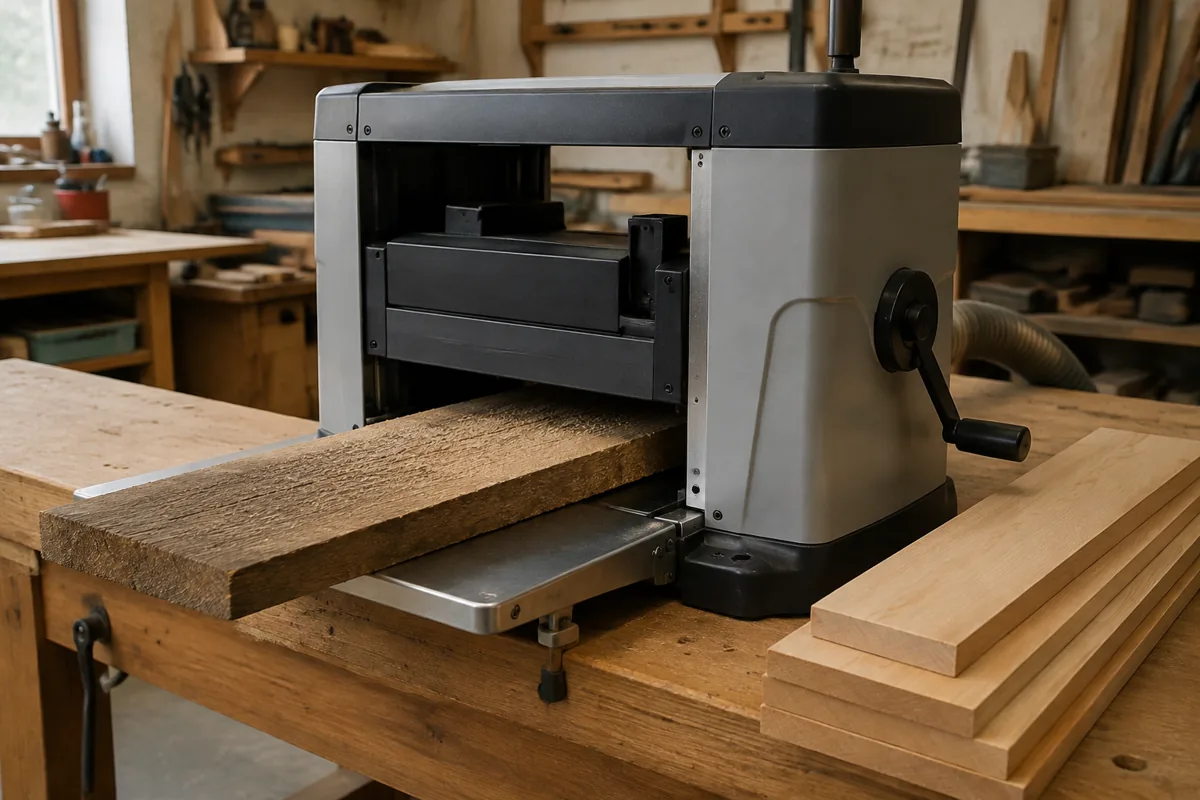
The DeWalt DW734 and DW735 are 12½-inch benchtop planers built for the same basic job: bringing boards to a consistent thickness. The DW734 is the simpler, lighter choice for occasional work and tighter budgets. The DW735 costs more and takes up more room, but its two-speed feed and fan-assisted chip ejection make it better suited to repeated milling and difficult chip management.
Neither is a replacement for a dust collector, and neither can make a badly cupped or twisted board flat by itself. If you mainly need to dimension a few boards for furniture or shop projects, the DW734 can be enough. If you expect long sessions, value a slower finish feed, or need to move chips away from the cutterhead efficiently, the DW735 earns its premium.
As an Amazon Associate we earn from qualifying purchases at no extra cost to you.


DW734 vs DW735 at a glance
| Feature | DW734 | DW735 |
|---|---|---|
| Maximum board width | 12½ inches | 12½ inches |
| Maximum depth of cut | ⅛ inch | ⅛ inch |
| Cutterhead knives | Three, reversible | Three, disposable and reversible |
| Feed speeds | One speed, about 96 cuts per inch | Two speeds: about 96 or 179 cuts per inch |
| Chip handling | Chip ejection through the cutterhead | Fan-assisted chip ejection |
| Approximate weight | 80 pounds | 92 pounds |
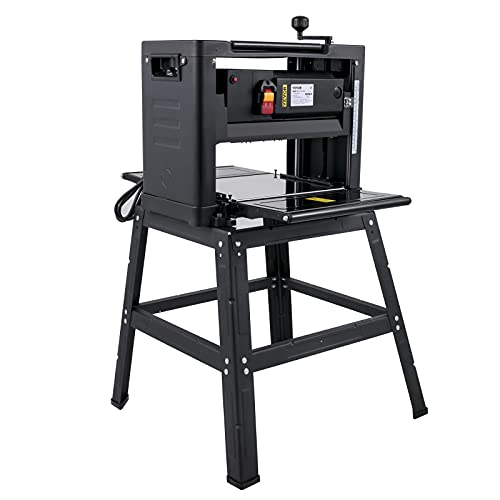
| Stand included | No | No; a stand is available separately |
Specifications can vary by market or package, so check the listing for the exact kit. Both machines use three knives, not a helical cutterhead. Their 12½-inch capacity is a maximum width, not a guarantee that every wide board will feed smoothly or finish without snipe.
Finish quality and feed speed
The DW734’s single feed rate produces a fine cut under normal conditions. For typical shop lumber, sharp knives, and sensible passes, it can leave a surface that needs only sanding or a light finishing pass. The DW735’s slower feed setting makes more cuts per inch—about 179 instead of 96—so it can reduce visible scallops on figured or demanding stock. That does not make it immune to tearout: grain direction, knife sharpness, cut depth, and board support still matter.
The DW735’s faster setting is useful when production matters more than the finest planed surface. The DW734 has no speed choice, which is a fair trade if you are processing a small batch now and then. On either planer, avoid taking the full ⅛-inch cut across a wide, hard board. A lighter pass reduces strain and often improves the finish. For rough stock, take successive shallow cuts and check thickness rather than trying to remove everything at once.
Chips, setup, and shop space
Chip handling is one of the clearest differences. The DW735’s blower pushes chips out of the machine, which helps prevent buildup during longer runs. It can also send chips forcefully across a small shop if you do not connect a hose and manage the outlet. The DW734 ejects chips too, but it lacks the same fan-assisted system. Either way, plan for a large volume of shavings: a planer can fill a small shop vacuum or collection bin quickly.
Both are heavy benchtop tools, and the DW735 is heavier. They need a stable support surface with enough room for long infeed and outfeed. In practice, that means a dedicated stand, a stout bench, or a mobile cart that locks securely. Add a planer stand or stable mobile base to the budget if your bench is too small. Do not balance either machine on a narrow or flexible table; vibration and poor board support can worsen snipe and make feeding less predictable.
Snipe and board preparation
Snipe is a shallow depression near the leading or trailing end of a board. It can show up on either planer as the rollers lift or lower the workpiece at entry and exit. Support long stock level with the planer bed, keep hands clear of the cutterhead, and feed boards with a steady motion. When the project allows, leave a little extra length and trim off the affected ends. Neither model eliminates snipe automatically.
A thickness planer makes opposite faces parallel; it does not reliably flatten a twisted board. Flatten one face first with a jointer or a suitable sled, then plane the opposite face. Feeding warped stock without preparing it can produce a board that is still warped but evenly thick, or one that rocks and feeds poorly. For a small shop without a jointer, a planer sled for flattening boards can help, but it adds setup time and does not turn the planer into a jointer.
Knives, maintenance, and ownership cost
Both machines use three knives, and dull or nicked edges show up as rough finish, extra noise, or raised lines on the board. A small chip in one knife can leave a repeated ridge along the wood. Rotate or replace knives according to the machine’s instructions, and disconnect power before servicing. Budget for replacement knives rather than treating them as a one-time purchase. The DW735’s knives are disposable and reversible; the DW734’s knives are also reversible, so check the replacement part and sharpening options for the exact model before buying.
Keep the bed clean and waxed as recommended, and clear chips from the machine and collection path. Excessive feed resistance, burning, or repeated breaker trips are reasons to stop and check the cut depth, stock condition, knife sharpness, and electrical supply—not to push harder. A suitable set of compatible replacement planer knives is a practical shop spare if the planer sees regular use.
Which one should you buy?
Choose the DW734 if you plane occasionally, mostly process ordinary stock, and want a capable machine without paying for the DW735’s extra speed and chip-ejection system. It is not a compromised choice for a hobbyist who can work in shorter batches, take light cuts, and handle dust collection sensibly. Its lower weight also helps if you must move the planer, though 80 pounds is still not casual one-person lifting.
Choose the DW735 if you routinely dimension multiple boards, want a slower finish feed for demanding stock, or value its fan-assisted chip removal. The added weight and cost are real drawbacks, and the blower still needs a place to send the chips. For a woodshop where planer work is frequent, those features can save time and reduce cleanup interruptions; for occasional weekend projects, they may not justify the premium.
Before ordering either model, compare the delivered price, knife availability, stand or cart cost, and the space needed to support long boards. The best choice is the one that fits your actual milling volume—not the one with the longer feature list.