What's inside
As an Amazon Associate I earn from qualifying purchases. This post may contain affiliate links at no extra cost to you.
Our Top Picks
 DEWALT 20V Max Drywall Screwgun11.2 x 3.4 x 7.2 Inch11.2 x 3.4 x 7.2 inches2.6 PoundsCheck on Amazon

Drywall Screw Gun vs Impact Driver for Installing Board on Metal Studs
For hanging drywall on light-gauge metal studs, a drywall screw gun is usually the better tool. It is faster to control, less likely to damage the gypsum board, and designed to stop at a repeatable depth. An impact driver can do the job, and it may be the cheaper choice if you already own one, but it demands more attention and produces more failed fasteners.
The important distinction is not simply power. Metal studs need screws driven through the board and into a thin steel flange without stripping the hole, tearing the paper, or burying the screw head too deeply.
As an Amazon Associate we earn from qualifying purchases at no extra cost to you.


How Each Tool Drives Screws
A drywall screw gun runs at high speed, commonly around 3,500 to 4,500 rpm, with a clutch and adjustable nose cone that limits driving depth. You press the nose against the board, pull the trigger, and the clutch disengages when the screw head reaches the set position. This makes repeated fastening relatively consistent.
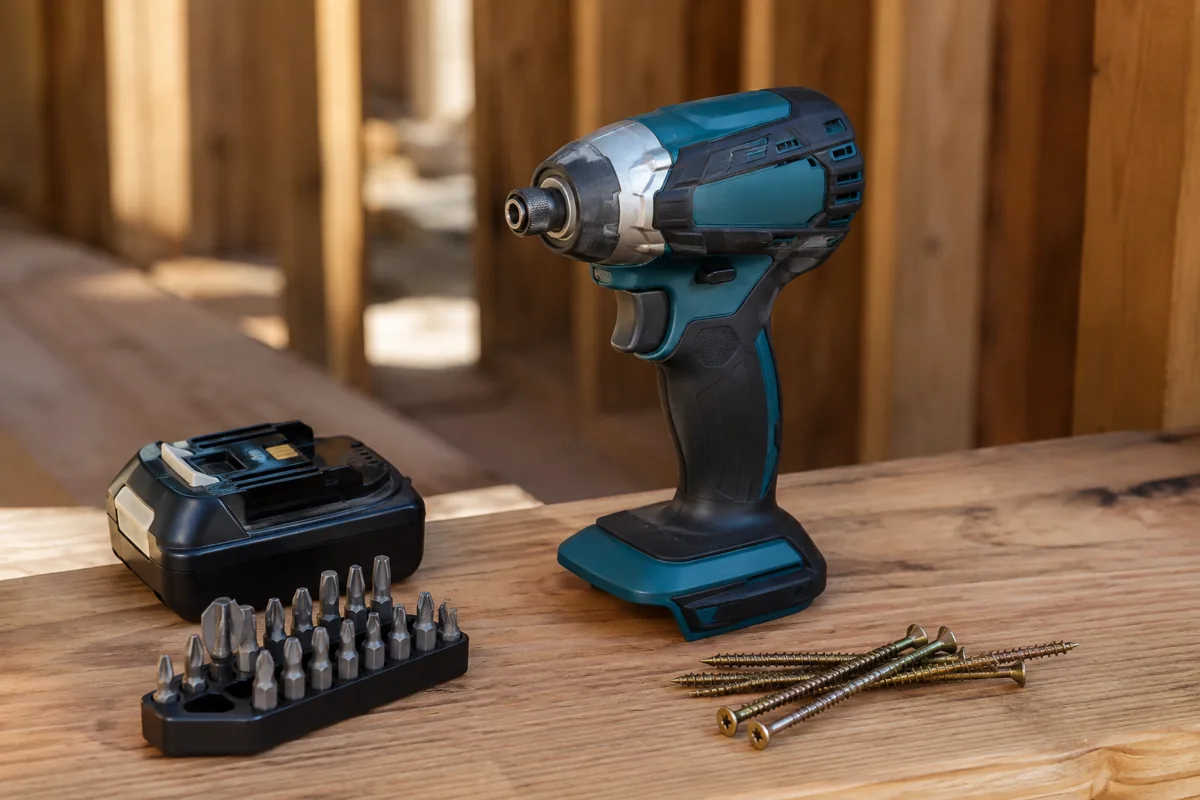
An impact driver typically runs at a lower free speed, often around 2,500 to 3,500 rpm, then adds hammering when resistance increases. That impact action is excellent for long structural screws, lag screws, and stubborn fasteners. For drywall, however, it can continue driving after the head has reached the correct depth. The result may be a torn paper face or a screw head driven below the surface.
Most drywall screw guns use a standard bit holder and can accept a collated attachment. A collated setup is useful on a large ceiling or a full room because it reduces the constant handling of individual screws. For one small wall, a manual-loading screw gun is less expensive and perfectly adequate.
Why Control Matters on Metal Studs
Steel studs do not provide the same resistance as wood. A screw may pierce the flange quickly, then suddenly lose resistance as the threads pass through the metal. If you keep pushing the trigger, the screw can spin, enlarge the hole, and lose holding power. Impact pulses make that failure easier to cause.
The screw should seat with the head slightly below the drywall surface, but the paper facing should remain intact. A crushed ring around the head is a warning that the fastener has been overdriven. If the paper tears, the screw has much less ability to hold the board against the stud and may need to be replaced nearby.
For ordinary 1/2-inch drywall over light-gauge studs, 1 1/4-inch fine-thread drywall screws are a common starting point. Use the fastener length and type specified by the drywall manufacturer or local code, particularly with fire-rated assemblies or multiple layers. Fine-thread screws are generally intended for metal framing; coarse-thread drywall screws are made for wood and can perform poorly in thin steel.
Drywall Screw Gun vs Impact Driver
| Factor | Drywall screw gun | Impact driver |
|---|---|---|
| Depth consistency | Excellent with the nose correctly adjusted | Dependent on trigger control |
| Speed on many sheets | Very high, especially with collated screws | Good, but slower when checking every screw |
| Risk of torn paper | Low when properly set | Moderate to high |
| Risk of stripped metal stud | Lower because it stops quickly | Higher if the trigger is held too long |
| Other uses | Mostly drywall installation | Useful for many construction and repair tasks |
| Typical buying value | Best for repeated drywall work | Best if already owned or needed for other jobs |
When a Drywall Screw Gun Is Worth Buying
Buy a drywall screw gun if you are boarding several rooms, installing ceilings, or doing drywall regularly. The depth stop reduces rework, and the tool is easier on your wrist during hundreds of repetitive fasteners. A variable-speed model with a lock-on switch is useful, but a high maximum speed is not a substitute for correct depth adjustment.
A collated attachment can be worthwhile when installing many sheets. It improves speed but adds cost, weight, and occasional jams. It also does not eliminate the need to check screw depth. Some users prefer individual screws because they can correct placement more easily around corners, outlets, and board edges.
For a small renovation, the cheaper option is often fine. If you already have a drill or impact driver, buying a separate drywall tool for 20 or 30 sheets may not pay back. Set the driver to a low-to-medium speed, use a sensitive trigger, and stop as soon as the head is flush with the paper surface.
How to Use an Impact Driver Without Ruining the Board
Use a sharp, correctly sized Phillips drywall bit, preferably with a depth-stop collar. A drywall screwdriver bit with depth stop costs little and makes an impact driver more manageable, although it cannot fully prevent impact force from overdriving a screw.
Start on a scrap piece of the same drywall and metal stud. Adjust the tool until the head creates a shallow dimple without breaking the paper. Drive at a controlled speed rather than pulling the trigger fully. When the screw breaks through the steel flange, release the trigger immediately. If the screw spins without tightening, stop; move the replacement screw at least an inch away so it has fresh metal.
Keep screws centered on the stud flange. Avoid placing them too close to board edges, where the gypsum can crumble. Common installation patterns use screws about 8 inches apart on supported edges and 12 inches apart in the field, but the panel manufacturer, framing system, and local code may require different spacing.
Which Tool Should You Choose?
Choose the drywall screw gun for speed, repeatable depth, and the lowest failure rate on a substantial metal-stud project. Choose the impact driver when the project is small, your budget is tight, or you need one multipurpose tool for other construction work. In that case, pair it with fine-thread drywall screws for metal studs and practice the depth on scrap first.
Neither tool fixes the wrong screw or poor framing. Use the specified fastener, keep the stud flange aligned, and replace any screw that tears the paper or spins in an enlarged hole. Those few habits matter more than maximum torque.