What's inside
As an Amazon Associate I earn from qualifying purchases. This post may contain affiliate links at no extra cost to you.
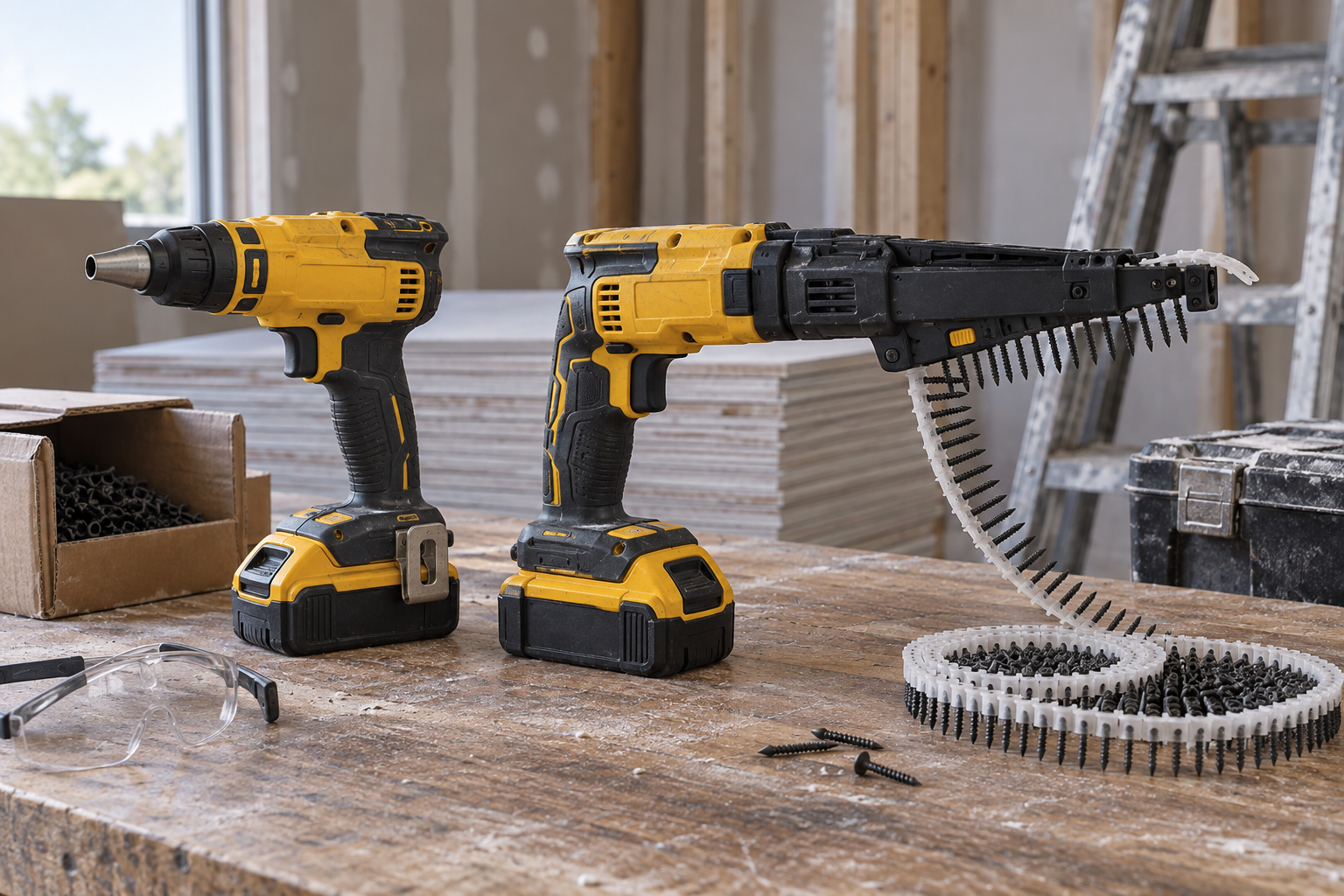
Installing subfloor panels on a large job is where a regular drill or impact driver becomes the wrong tool. Driving hundreds or thousands of screws one at a time wastes time, creates inconsistent depth, and leaves you bending over constantly to pick up fasteners. The better choice is a collated screw gun with an automatic feed attachment, preferably a cordless model if the building has limited power or several crews are moving between rooms.
As an Amazon Associate we earn from qualifying purchases at no extra cost to you.


Our Top Picks
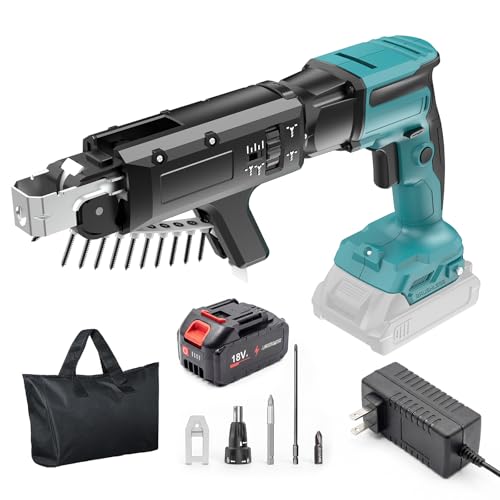
 Makita XRF02Z 18V LXT Lithium-Ion Cordless Autofeed ScrewdriverOne Size3.6 x 18.8 x 7.3 inches4.6 poundsCheck on Amazon
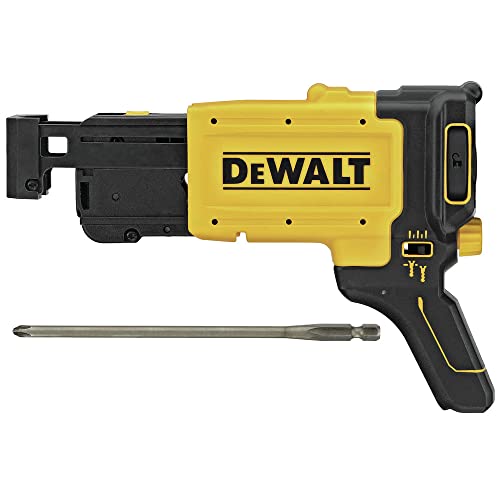 DEWALT Drywall Screw Gun Collated AttachmentOne Size6.38 x 2.63 x 9.25 inches1.4 PoundsCheck on Amazon


Best choice for most large jobs
For typical 3/4-inch tongue-and-groove plywood or OSB subfloor, I would choose a cordless auto-feed screw gun that accepts 1-1/4- to 2-1/4-inch collated screws. A 1-5/8-inch screw is a common starting point for fastening 3/4-inch panels to wood joists, but the correct length depends on the panel thickness, underlayment, and local code. You need enough penetration into the framing without risking plumbing, wiring, or overdriving into a thin joist.
For a high-volume floor, start with a cordless collated screw gun for subfloor work from the same battery platform your crew already uses. A tool with a brushless motor, adjustable depth stop, and an auto-feed magazine is the most practical setup. Battery compatibility matters more than a small difference in advertised speed.
| Tool type | Typical use | Strengths | Drawbacks |
|---|---|---|---|
| Cordless auto-feed screw gun | Large residential or commercial subfloor jobs | Fast, portable, no hose, consistent depth | Higher cost; batteries add weight |
| Corded auto-feed screw gun | Large open floors with reliable power | Light, continuous runtime, lower operating cost | Cord management and limited mobility |
| Collated attachment on a drill or impact driver | Occasional repairs and smaller floors | Cheaper if you own the driver | More tiring; less refined depth control |
| Standard drill or impact driver | Small rooms and punch-list work | Uses existing tools and loose screws | Slowest option; inconsistent depth |
What to look for before buying
Depth control is essential. The screw head should finish flush with the panel surface, not buried in the face. A head driven too deep breaks the paper or wood fibers and reduces holding power. A proud head can interfere with flooring and may not clamp the panel tightly. Look for a positive depth adjustment that stays put when the tool vibrates.
Check the screw range. Do not assume every magazine accepts the fasteners you need. Collated systems are usually limited to a specified length range and screw head style. Buy fasteners made for the magazine and tool; poorly matched strips can jam, misfeed, or leave a screw partly driven. For wood subfloor, use a structural or subfloor-rated screw where required, not ordinary drywall screws.
Consider nose design and access. Auto-feed guns are quickest when the tool is held square to the panel. A narrow nose helps near walls and joists, while a longer magazine can reduce reloads but may be awkward in corners. Some tools are designed for standing work with an extension pole. That can be worthwhile on a very large floor, but it adds cost and makes the tool less useful for walls, stairs, and repairs.
Runtime is measured in fasteners, not marketing claims. A battery may drive several hundred screws, but dense framing, cold temperatures, long screws, and repeated jams reduce that number. For production work, plan on at least two charged batteries per active tool. A rapid charger and three or four battery packs are often more useful than buying the most powerful tool in the lineup.
Corded versus cordless
A corded auto-feed gun remains a sensible choice when you are covering a wide, open floor and have dependable power. It is usually lighter and can run all day without battery changes. The failure mode is simple: the operator drags the cord across fresh panels, catches it on framing, or accidentally cuts it. Use a proper extension cord, keep the connection off the floor, and route the cord behind the work.
Cordless tools cost more up front but are easier to move from room to room. They also eliminate the cord that can mark adhesive, snag on framing, or slow panel placement. The trade-off is weight. A battery, magazine, and long strip of screws can make the tool tiring after several hours. If you are choosing between a corded collated screw gun and cordless equipment, choose corded for one large, accessible floor and cordless for multiple rooms, upper levels, or unfinished sites.
When a cheaper option makes sense
A collated attachment fitted to an existing drill or impact driver can be fine for one small addition, a repair, or a room under a few hundred square feet. It avoids buying another motor and may use inexpensive screw strips. It is not as comfortable or consistent as a purpose-built screw gun. Many attachments also require a separate nose adjustment and can be frustrating when the driver clutch, bit holder, or trigger does not work smoothly with the feed mechanism.
If the job is large enough that several people are installing panels, buy a dedicated tool or rent one. The cost difference is quickly offset by fewer reloads, fewer missed screws, and less time spent kneeling. For occasional work, a collated screw-gun attachment for a drill is the cheaper option that still improves speed.
Fastening practice that prevents problems
Lay out the fastening pattern before starting. A common approach is closer spacing around panel edges and wider spacing in the field, but follow the panel manufacturer’s instructions, the project specification, and local code. Mark joist locations with chalk so screws do not miss the framing. Keep the gun perpendicular to the panel and apply steady pressure; tilting the tool is a common cause of misfeeds and proud heads.
Check the first dozen screws with a straightedge and a quick visual inspection. If heads are sinking, adjust the depth stop immediately. Keep spare bits, a cleaning brush, and at least one replacement feed strip or nose component on site. Most lost production comes from small interruptions: an empty magazine, a worn bit, a jammed strip, or screws that do not match the tool.
For the best balance of speed and control, buy a brushless cordless auto-feed screw gun with adjustable depth, a compatible 1-5/8-inch screw supply, and batteries already used by your crew. That setup costs more than a drill attachment, but on a large subfloor job it is the option least likely to slow the work or create avoidable fastening problems.