What's inside
As an Amazon Associate I earn from qualifying purchases. This post may contain affiliate links at no extra cost to you.
For installing deck boards, a collated screw gun is usually faster than an impact driver—but only when the job is large enough to justify setup and you use compatible collated screws. An impact driver is slower on repetitive fastening, but it is cheaper, more versatile, and often the better choice for a small deck or occasional repairs.
As an Amazon Associate we earn from qualifying purchases at no extra cost to you.



Our Top Picks



The short answer
A collated screw gun can install roughly 300 to 500 deck screws per hour in favorable conditions. That includes picking up the tool, positioning it, driving the screw, and moving to the next board. An impact driver may manage around 150 to 300 screws per hour when the screws are fed individually and the operator maintains a steady rhythm.
Those figures are practical ranges, not manufacturer ratings. Board condition, screw length, joist spacing, awkward edges, and the operator’s experience matter more than the tool’s advertised speed. A collated tool does not make drilling pilot holes, laying out boards, or cutting boards any faster.
For a typical 12-by-20-foot deck with 16-inch joist spacing, you might install 1,000 to 1,500 visible deck screws. Saving even two seconds per screw can reduce fastening time by 30 to 50 minutes. On a small landing with 100 screws, the time saving may be only a few minutes.
How the two tools work
A collated screw gun uses strips or coils of screws joined together. Its nose positions the next screw automatically, while a depth-sensitive mechanism drives each fastener to a consistent depth. Many decking models are designed to be used while standing, with an extension pole or adjustable nose.
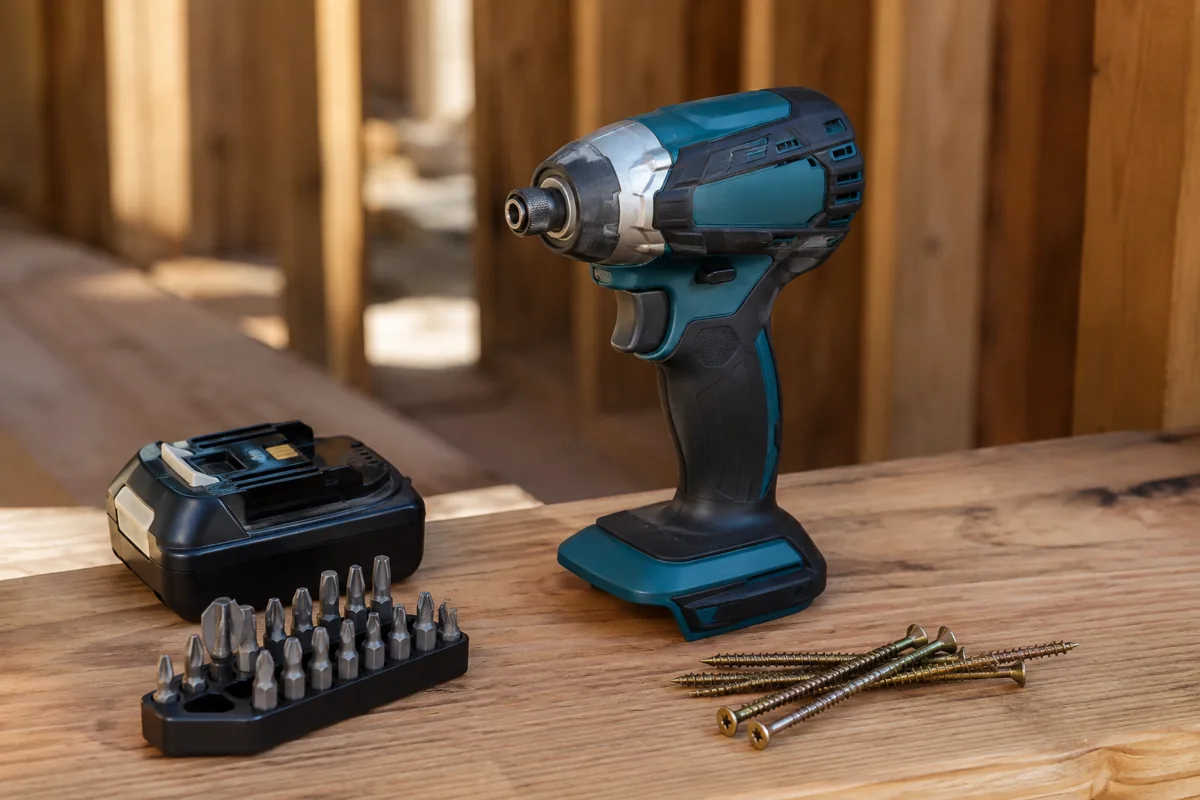
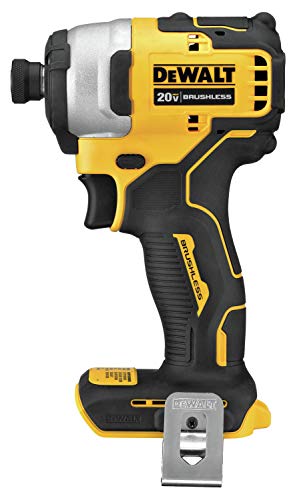
An impact driver accepts one screw at a time in a hex chuck. It delivers rotational impacts when resistance increases, helping drive long screws without stalling as easily as a conventional drill. The user must place each screw on the bit, position it, and start the drive.
Both tools can drive deck screws effectively. The main difference is not raw motor power. It is the time spent handling fasteners and controlling screw depth.
Collated screw gun vs impact driver
| Factor | Collated screw gun | Impact driver |
|---|---|---|
| Fastening speed | Fastest for hundreds or thousands of screws | Slower because screws are loaded individually |
| Screw handling | Feeds automatically from strips or coils | Requires one screw per fastening point |
| Depth consistency | Generally excellent after adjustment | Depends on trigger control and operator technique |
| Deck-board access | Best on open, repetitive surfaces | Better around edges, stairs, blocking, and repairs |
| Tool cost | Higher, especially for dedicated decking models | Lower if you already own batteries and bits |
| Versatility | Limited to compatible collated fasteners | Useful for framing, hardware, repairs, and general driving |
| Learning curve | Short once depth and nose pressure are set | Requires more consistent trigger control |
Where a collated screw gun wins
The biggest advantage is continuous operation. Load a strip, set the nose on the board, and press down. You do not repeatedly reach into a pouch or hold a screw against the bit. This matters most when fastening two screws at every joist across dozens of boards.
Depth control is another important advantage. Deck screws should sit flush or slightly below the surface, but they should not be driven deeply enough to crush the wood fibers. A collated decking gun lets you set the nose or clutch so each screw stops at approximately the same depth.
That consistency reduces common failures: proud screw heads that catch shoes, overdriven heads that collect water, and uneven rows that look careless. Some models can be used with an extension attachment, which reduces back strain when working over a large deck.
If you are buying specifically for a large deck installation, compare collated deck screw guns with the exact screw system you plan to use. Collation type and screw compatibility are not universal.
Where an impact driver is the better choice
An impact driver is the sensible option for a small deck, porch repair, or homeowner who will use the tool for other projects. It can drive structural screws, ledger fasteners, brackets, trim screws, and ordinary wood screws with a bit change. A dedicated collated gun may sit unused after the deck is finished.
It also handles situations where a collated gun becomes awkward. You may need to install screws close to a wall, beside a post, at an angle near stairs, or into narrow blocking. With an impact driver, you can use a shorter bit, a right-angle adapter where appropriate, or a different fastener without fighting the feed nose.
The cheaper option is fine when the project has fewer than about 300 to 500 screws, when you already own the impact driver, or when the deck layout includes many interruptions. The time saved by a collated gun may not recover its purchase price.
For a general-purpose battery tool, a 20V or 18V impact driver kit with two batteries is usually more useful than a specialized screw gun.
Failure modes to watch for
Collated systems can jam if a screw strip is damaged, loaded incorrectly, or paired with the wrong screw length. A misadjusted nose can also leave screws proud or bury them too deeply. Test five or ten screws on scrap decking before starting the main surface, then recheck the depth when wood species or board thickness changes.
Impact drivers have a different problem: inconsistent countersinking. Pulling the trigger too hard can bury the head, especially in cedar, redwood, or soft pressure-treated pine. Starting at low speed and finishing with a short burst gives better control. Keep the bit straight and replace it when the tip begins to cam out.
Neither tool eliminates splitting. Keep screws far enough from board ends, stagger fasteners when the manufacturer recommends it, and use corrosion-resistant deck screws rated for the wood and exposure. A screw gun is fast, but it cannot correct poor spacing or a bad fastener choice.
Which should you buy?
Choose a collated screw gun if you are installing a full-size deck, regularly build decks, value uniform screw depth, or need to reduce repetitive bending and hand motion. A pole-style decking gun can be particularly useful for a large ground-level surface.
Choose an impact driver if this is a one-time project, the deck is small, the work includes many repairs or tight spots, or you want one tool for several jobs. Buy a spare battery and quality bits; interruptions for charging or stripped bits erase much of its practical speed advantage.
For the fastest workflow on a major build, many contractors use both: the collated gun for the open field of the deck and an impact driver for perimeter boards, stairs, blocking, and corrections. If you need compatible consumables, check collated deck screws before choosing the gun. The fastest tool is only fast when its screws feed reliably.