What's inside
As an Amazon Associate I earn from qualifying purchases. This post may contain affiliate links at no extra cost to you.
Our Top Picks
 DEWALT 20V Max Drywall Screwgun11.2 x 3.4 x 7.2 Inch11.2 x 3.4 x 7.2 inches2.6 PoundsCheck on Amazon
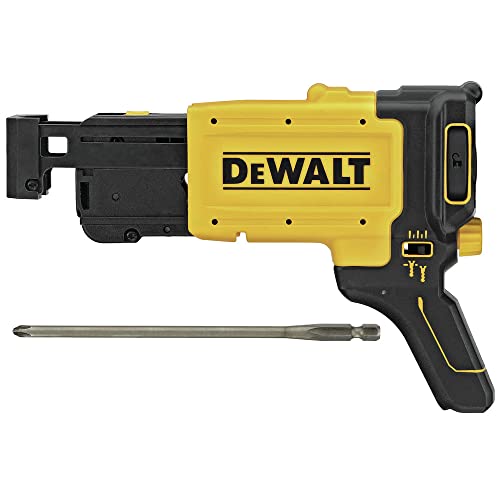 DEWALT Drywall Screw Gun Collated AttachmentOne Size6.38 x 2.63 x 9.25 inches1.4 PoundsCheck on Amazon


The short answer
For hanging drywall all day, a cordless screw gun is usually the better choice if you have enough batteries and a charger on site. It avoids a trailing cord across the floor, which matters when you’re moving sheets, working from a lift, or sharing space with other trades. A corded gun remains a sensible, cheaper pick for a fixed work area, occasional jobs, or a crew that doesn’t want to manage batteries.
The difference is less about whether either tool can drive drywall screws—they both can—and more about interruptions, cord management, and how reliably you can keep screw depth consistent. A dedicated drywall screw gun with an adjustable depth nosepiece is more important than choosing cordless over corded.
As an Amazon Associate we earn from qualifying purchases at no extra cost to you.


What hanging all day demands
Drywall screws need to seat just below the paper surface without breaking through it. A screw that tears the paper loses much of its holding strength and may need a second screw nearby. One left proud can keep the next sheet from sitting flat. The depth stop does the repeatable work; your hand pressure and the gun’s clutch or nosepiece setting still need to be dialed in on scrap.
For typical 1/2-inch wallboard on wood framing, crews often use 1 1/4-inch drywall screws. Ceiling assemblies, thicker board, and metal framing can call for different fasteners, so follow the board and framing requirements rather than treating that length as universal. A gun that spins fast is useful only if it drives the right screw to the right depth without chewing up the face paper.
Cordless vs. corded at a glance
| Factor | Cordless screw gun | Corded screw gun |
|---|---|---|
| Mobility | No cord to snag or drag; useful on lifts and across large rooms | Limited by outlet location and cord routing |
| Runtime | Depends on battery capacity, condition, and workload | Runs as long as power is available |
| Work interruptions | Battery swaps or charging can pause production | Usually none, except when power or extension cords cause trouble |
| Upfront cost | Higher if you need batteries and a charger | Often cheaper if you already have a safe power supply |
| Best fit | Room-to-room work, ceilings, lifts, and busy sites | Fixed work zones, occasional use, or tight budgets |
Where cordless earns its keep
When you’re hanging across several rooms, the lack of a cord is more than a convenience. You don’t have to keep moving an extension lead, avoid running it under a sheet, or watch for it catching on a ladder or lift. That can make cordless the calmer option in a crowded room, especially for overhead work.
The trade-off is battery planning. A battery’s advertised capacity doesn’t tell you exactly how many screws it will drive; screw length, material, temperature, battery age, and how hard the gun is working all affect runtime. For a full day, bring at least one charged spare and keep the charger where it can work between swaps. If the crew only owns one battery, a dead pack can turn the cord-free advantage into a long wait.
Choose a platform you already use if its batteries fit a suitable drywall gun. If you’re starting from scratch, compare the cost of the tool, two batteries, and charger—not just the bare tool. A cordless drywall screw gun kit makes sense when its included battery setup can support your pace.
When corded is the smarter buy
A corded gun avoids battery swaps and is ready to run whenever there’s reliable power. On a single room with a nearby outlet, or in a workshop where you hang board now and then, that may be all you need. Spending extra on a battery platform makes little sense if the gun will come out a few times a year and the cord won’t get in the way.
But the cord needs managing. Use a properly rated extension cord, keep connections out of puddles and away from sharp sheet edges, and route it so nobody steps on it or pulls it across a lift. A cord that snags mid-drive can interrupt your rhythm; one that’s damaged or poorly connected is a safety problem. If your work area is spread out or crowded, those annoyances add up over a day.
Before buying, check that the corded tool is actually designed for drywall screw depth control. A general-purpose drill may drive screws, but it is less convenient for repetitive work and easier to overdrive without a suitable nosepiece and consistent technique. A corded drywall screw gun is the budget-friendly choice when the work stays near power.
Depth control and screw feeding matter more
For either type, set the nosepiece on a piece of the same board and framing you’ll use. Drive several screws, then check each one: the head should make a shallow dimple while leaving the paper intact. If you can see torn or lifted paper, back off the depth or reduce pressure. If the head stands proud, adjust deeper and test again. Recheck after changing screw length, board thickness, or substrate.
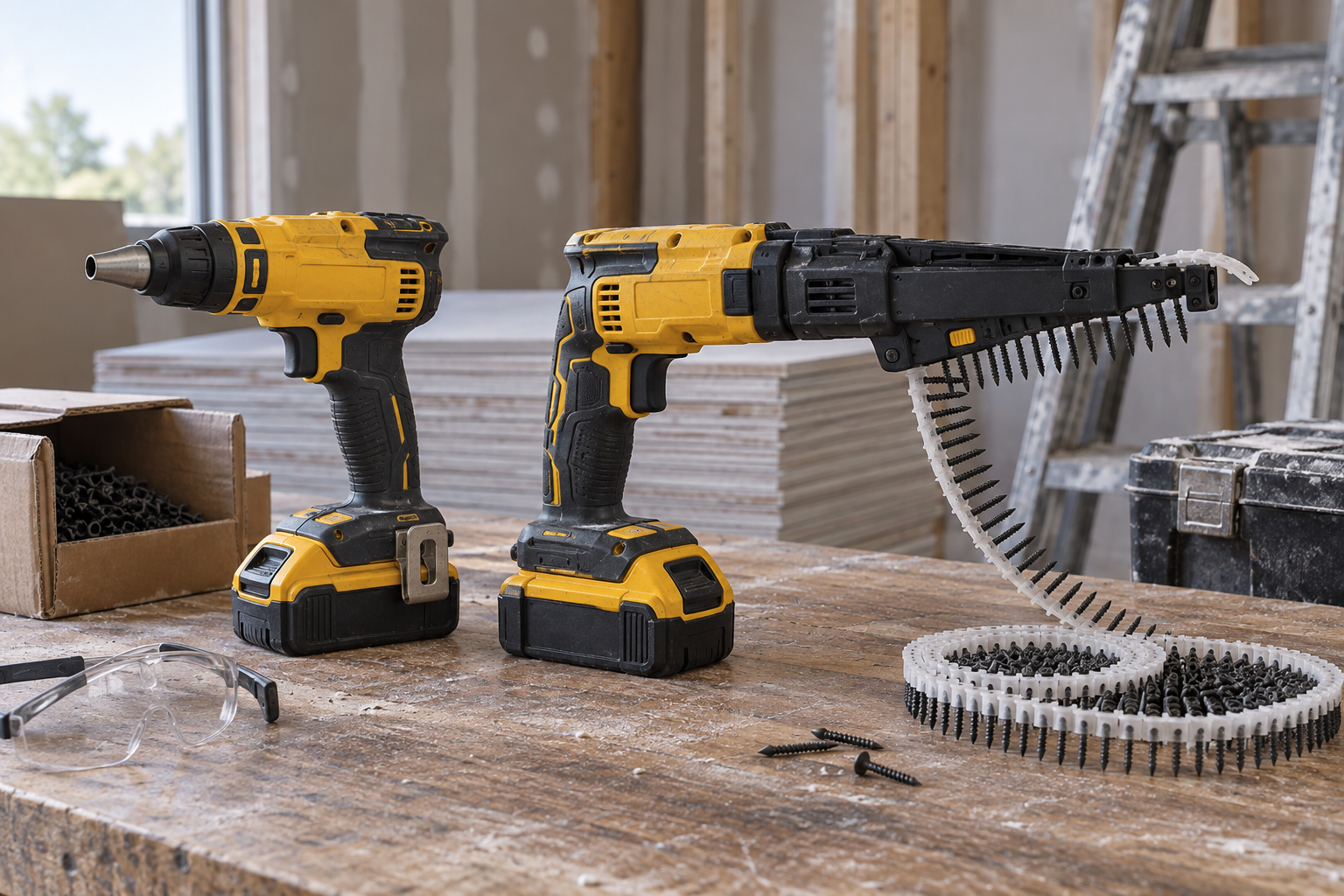
Collated screw attachments can speed up production on large jobs by feeding a strip of screws, but they add weight and need compatible screws. That can be helpful when you’re driving many fasteners overhead; for smaller jobs, loading individual screws may be simpler. Don’t assume a collated attachment fits every gun. If speed is a priority, compare a collated drywall screw gun against a standard gun and verify the fastener system before ordering.
Which one should you buy?
Choose cordless if you move between rooms, work overhead or from a lift, or regularly share a site where a cord would be in the way. It’s also the better fit if you already own compatible batteries and can keep a charged spare available. For all-day work, that mobility often outweighs the battery-management chore.
Choose corded if the work is occasional, confined to one area, and close to a reliable outlet. It’s a practical way to keep the initial cost down, and it avoids buying batteries you may not use elsewhere. If you’re uncertain, prioritize a proper drywall gun with an adjustable depth stop, a comfortable grip, and a trigger you can control. A well-set corded gun beats an underpowered or poorly managed cordless setup; a charged cordless gun beats a cord dragged through a busy room.