What's inside
As an Amazon Associate I earn from qualifying purchases. This post may contain affiliate links at no extra cost to you.
Our Top Picks
 DEWALT DCH293B 20V Max XR Brushless 1-1/8” L-ShapeOne Size15.3 x 4 x 10.6 inches8.7 poundsCheck on Amazon
 DEWALT DCH273P2 20V Max Brushless SDS Rotary HammerOne Size19.29 x 11.93 x 4.72 inches11.68 poundsCheck on Amazon

Choosing for overhead work
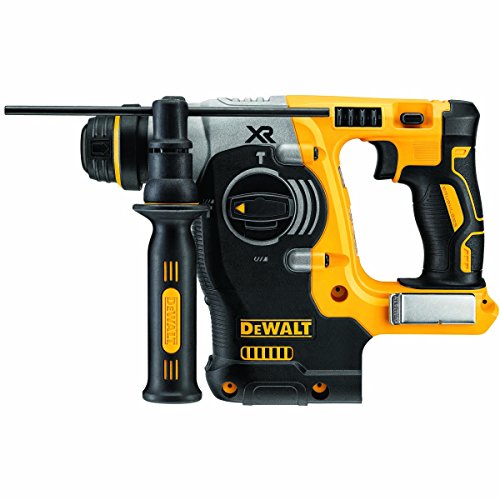
The Bosch Bulldog Xtreme and DeWalt DCH273 are 20 mm-class cordless rotary hammers built for drilling anchor holes in concrete and masonry. Both use an SDS-Plus chuck and offer hammer drilling, hammer-only chiseling, and rotation-only modes. For overhead drilling, the deciding factors are less about headline impact energy than about weight, vibration, battery position, and how often you need to stop and clear dust.
The Bulldog Xtreme name covers several Bosch tools, including corded and cordless versions. This comparison focuses on Bosch’s cordless 20 mm Bulldog Xtreme rotary hammer, commonly sold as the 18V GBH18V-20. Check the tool’s model number before buying: specs and batteries differ among Bulldog Xtreme variants. The DCH273 is DeWalt’s 20V MAX cordless model.
As an Amazon Associate we earn from qualifying purchases at no extra cost to you.


Specifications that matter
| Feature | Bosch cordless Bulldog Xtreme (GBH18V-20) | DeWalt DCH273 |
|---|---|---|
| Chuck and modes | SDS-Plus; hammer drill, hammer-only, rotation-only | SDS-Plus; hammer drill, hammer-only, rotation-only |
| Maximum concrete drilling capacity | 20 mm (about 3/4 in.) | 24 mm (about 15/16 in.) |
| Impact energy | About 1.7 J | About 2.1 J |
| Tool weight | About 2.6 kg (5.7 lb), bare tool | About 2.5 kg (5.4 lb), bare tool |
| Vibration control | Standard handle arrangement; no comparable active system | SHOCKS active vibration control in the handle |
| Battery platform | Bosch 18V | DeWalt 20V MAX |
Published weights vary with the market, configuration, and whether a battery is included. A battery adds weight at the rear of either tool, so compare complete setups if you can. The DeWalt’s extra capacity and impact energy give it more headroom for larger holes, but neither tool is meant to replace a heavy SDS-Max hammer on sustained large-diameter work.
Which is easier overhead?
The bare-tool weight difference is small; balance and vibration matter more. DeWalt’s active vibration control reduces vibration at the grip during hammer drilling. That can make a noticeable difference over a run of overhead holes, where forearms and shoulders tire quickly. It does not eliminate vibration or make a hammer safe to hold indefinitely. Take breaks, use a sharp bit, and avoid pushing hard enough to stall the tool.
The Bosch is a sensible choice if you already own compatible Bosch 18V batteries and mostly drill modest anchor holes. Its lower maximum capacity is not a practical penalty for common 6–12 mm holes for fixings, conduit supports, or light brackets. If you will drill many holes at shoulder height or above, compare the actual grip and battery balance in store if possible; a compact battery can be easier to manage than a high-capacity pack.
Drilling speed and limitations
For overhead work, use a sharp SDS-Plus masonry bit and let the hammer mechanism do the work. Leaning heavily on the tool adds fatigue and can slow drilling. Start square to the surface, keep the bit from wandering, and withdraw it periodically to clear concrete dust. Dust trapped in a deep hole can bind the bit, overheat it, or leave an anchor short of its required embedment depth.
The DCH273 is the stronger choice when your work includes holes near its 24 mm limit or repeated drilling in harder concrete. That extra capacity is useful, but it is not a promise of fast drilling in every slab: aggregate, rebar, bit quality, and concrete age all affect progress. If a bit stops abruptly on rebar, release the trigger rather than twisting the tool against the obstruction. Do not use either hammer to drill through steel reinforcement; switch to an appropriate metal-drilling method once the obstruction is identified.
For occasional holes under 20 mm, the Bosch can be the better buy if it costs less in the battery system you already own. The DeWalt’s added capacity is wasted if your regular work is a few small anchors a month. Conversely, if you are buying a tool for a full day of overhead anchors, the vibration control and larger drilling range make the DCH273 easier to justify.
Dust and overhead safety
Concrete dust is a serious hazard, and overhead holes send debris toward your face. Wear properly fitted eye protection, hearing protection, and suitable respiratory protection. Use dust extraction or a compatible hollow bit and extractor where practical, especially indoors. A dust-catching cup can help with a few holes but is not a substitute for extraction on a larger job.
Before drilling, check for wiring, pipes, post-tension cables, and embedded services. Use a detector where appropriate, follow building plans, and stop if the bit hits something unexpected. Set the depth stop to the anchor’s specified hole depth, not just the anchor length: many anchors need extra room for dust and installation.
Buying guidance
Choose the Bosch cordless SDS-Plus rotary hammer if you are already on Bosch 18V, mostly drill smaller holes, and want to keep the tool purchase modest. Confirm whether the listing includes a battery and charger; bare tools are often cheaper but are no bargain if you need a new battery system.
Choose the DeWalt DCH273 if overhead drilling is frequent, vibration control matters, or you need the larger capacity. If neither platform fits your existing batteries, compare the complete kit price and warranty support rather than the bare-tool price alone. For a few small holes, the cheaper Bosch is fine; for repeated overhead work, the DeWalt’s vibration control is the more meaningful upgrade.