What's inside
As an Amazon Associate I earn from qualifying purchases. This post may contain affiliate links at no extra cost to you.
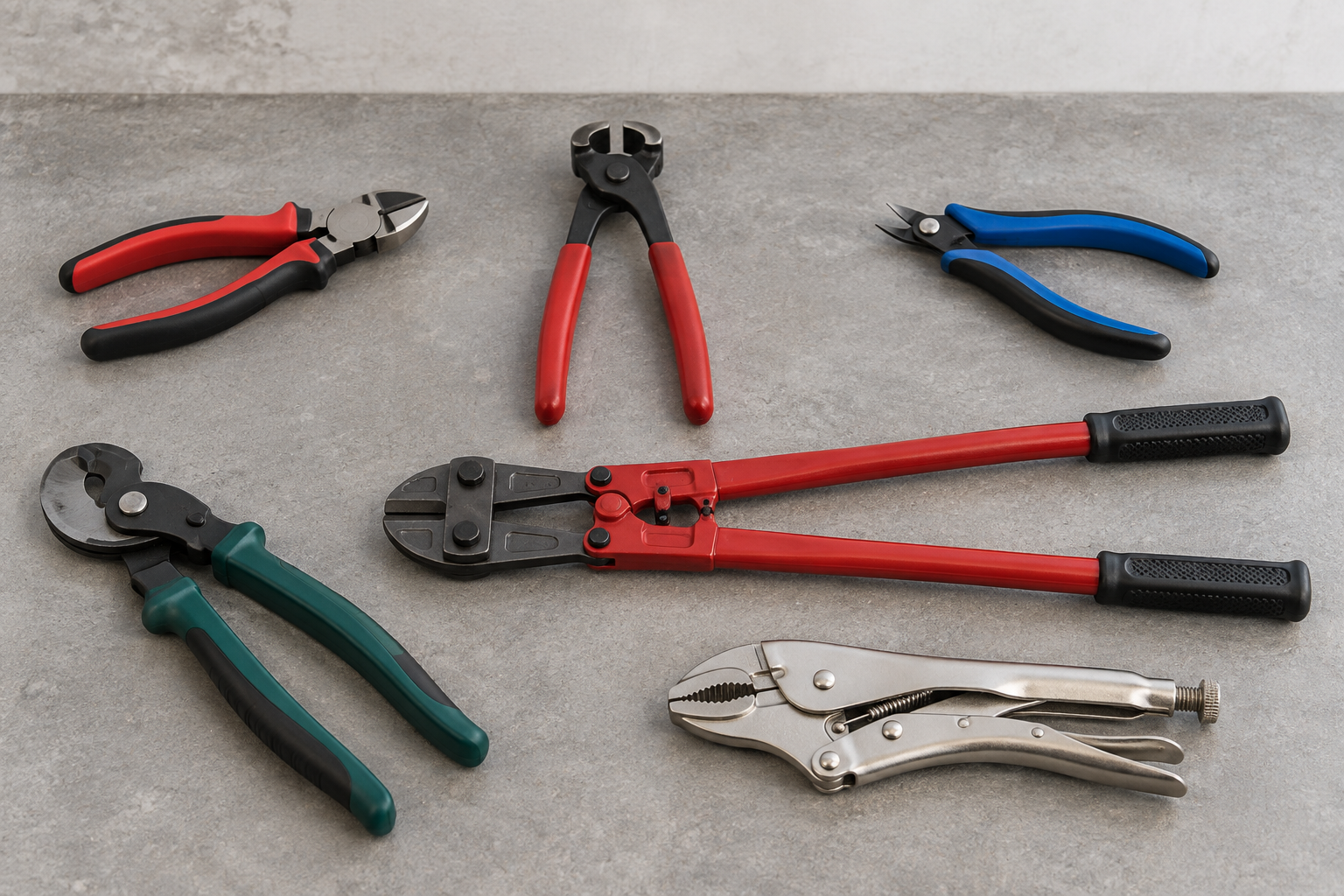
Diagonal cutters and end-cutting nippers both cut wire and nails, but they do it from different angles and leave different results. The right choice depends less on the tool’s advertised strength than on whether you need to cut flush, reach into a surface, or make repeated cuts quickly.
As an Amazon Associate we earn from qualifying purchases at no extra cost to you.


Our Top Picks
 Klein Tools D228-7 High Leverage Diagonal Cutting Pliers7-Inch (1-Piece)7.12 x 4.6 x 0.43 Inches0 PoundsCheck on Amazon

The short answer
Choose diagonal cutting pliers for general wire work, electrical cable, fencing, tie wire, and nails that are exposed and easy to approach from the side. Choose end-cutting nippers when you need to pull or cut nails close to a surface, remove staples, or lever a fastener upward before cutting it.
For occasional household repairs, a decent pair of diagonal cutters is usually the better first purchase. End-cutting nippers become worthwhile for flooring, upholstery, carpentry, fencing, and demolition work where the cutting edge faces the end of the tool rather than the side.
How the cutting jaws differ
Diagonal cutters have jaws set at an angle to the handles. The cutting edges meet diagonally, so you bring them alongside the wire or nail. This makes them compact and fast for repeated cuts. Many versions include a gripping area behind the cutters, although that feature is not a substitute for dedicated pliers.
End-cutting nippers have jaws at the very end of the tool. Their cutting edges face forward, like a small pair of pincers. You place the jaws over a nail head, staple, or protruding wire and squeeze. The broad, rounded head can also act as a fulcrum, allowing you to rock the tool and pull a fastener out.
That leverage is useful, but it creates a trade-off. End-cutting nippers are often bulkier at the nose and less convenient when you are working in a crowded electrical box or trimming a wire close to another component.
Diagonal cutters vs end-cutting nippers
| Feature | Diagonal cutters | End-cutting nippers |
|---|---|---|
| Best approach | From the side | From the end |
| Best uses | Wire, cable ties, fencing wire, exposed nails | Staples, brads, nails, protruding wire, fastener removal |
| Flush cutting | Good, especially with flush-ground jaws | Good against a surface, but depends on jaw shape |
| Pulling nails | Poor to fair | Good; the head can provide leverage |
| Access in tight spaces | Usually better | Usually worse |
| Repeated wire cuts | Faster and less awkward | Slower and more tiring |
| Main failure mode | Chipped edges from hard steel or twisting | Damaged jaws from prying beyond their capacity |
Which tool is better for wire?
Diagonal cutters win for most wire. The side-facing jaws let you position the cut precisely, and the handles provide a straight squeeze rather than a rocking motion. This matters when cutting dozens of conductors, fence ties, picture-hanging wire, or cable ties.
Match the cutter to the material. A typical household diagonal cutter may handle copper and aluminum wire up to roughly 10 or 12 AWG, depending on its design. Larger high-leverage cutters can handle heavier copper, aluminum, and some soft steel wire. Do not assume that a cutter rated for copper is suitable for piano wire, hardened fence wire, nails, or screws. Hard steel can leave dents or small chips in the cutting edge after only a few cuts.
End-cutting nippers are useful when wire sticks out of a wooden frame, floor, or piece of furniture and there is no room to approach from the side. They can also cut protruding tie wire nearly flush. However, their jaws are not automatically stronger. Using the handles to twist or pry sideways can permanently misalign them.
Which tool is better for nails and staples?
For a nail sticking out of a board, end-cutting nippers are usually the better tool. Grip the nail near the board, squeeze, and rock the tool gently on its rounded head. That action can pull a small nail or staple without needing room beneath the head for a claw hammer.
They are especially effective for removing upholstery staples and cutting brad nails during trim or flooring work. Some users first bite into the fastener, then roll the nippers to lift it. This works because the tool combines cutting and leverage.
Diagonal cutters can cut exposed nails, but they are less comfortable for pulling them. Their angled jaws tend to slide off a rounded nail head, and twisting them sideways puts force across the joint. For a nail that will be covered by trim or filled later, a diagonal cutter is fine. For clean removal, use end-cutting nippers or a dedicated nail puller.
Flush cutting and surface damage
Neither tool guarantees a perfect flush cut. A standard diagonal cutter leaves a small wedge-shaped nub because the cutting edges are beveled. A flush cutter has one nearly flat side that can sit against the workpiece, but its thin edge is more vulnerable to hard fasteners.
End-cutting nippers can cut a nail close to a board, but the rounded head may dent soft wood if you use it as a lever. Put a thin scrap of steel or a putty knife under the head when the surface matters. On finished flooring or painted trim, a nail puller with a protected fulcrum is safer.
If the remaining stub must be completely below the surface, cut it slightly proud first, then punch it below the surface. Do not force a cutter to crush a nail into the wood; that can chip the jaws and split the workpiece.
What to look for when buying
For general use, look for induction-hardened cutting edges, a smooth pivot, comfortable grips, and a size around 7 to 8 inches. A high-leverage joint reduces hand strain, but it also makes it easier to apply enough force to damage a cutter. Choose a tool with a stated capacity for the material you expect to cut.
For electrical work, use insulated tools rated for the relevant voltage and follow the required lockout and testing procedures. Insulated handles do not make a live circuit safe. For heavy wire, consider high-leverage diagonal cutters rather than simply buying the largest standard pair.
For frequent nail, staple, and upholstery work, buy end-cutting nippers with a substantial head and a joint designed for leverage. If you mainly need to pull nails from wood, end-cutting nail puller pliers may be more useful than a thin flush cutter.
Avoiding damaged tools and injuries
Wear eye protection: cut wire can spring several feet, and nail fragments can break off unpredictably. Keep your free hand behind the cutting jaws, not near the point where the wire exits. Cut large wire in a controlled motion rather than snapping the handles shut.
Never hammer on the handles, extend them with a pipe, or use either tool as a general-purpose pry bar unless the manufacturer specifically permits it. Keep the jaws aligned with the fastener, lubricate the pivot occasionally, and replace cutters with chipped edges. For a homeowner making a few soft-wire cuts and occasional nail trims, the cheaper diagonal cutter is enough. Buy end-cutting nippers when their forward-facing jaws and pulling leverage solve a problem you encounter repeatedly.