What's inside
As an Amazon Associate I earn from qualifying purchases. This post may contain affiliate links at no extra cost to you.
DeWalt’s DCS389 and Milwaukee’s 2721-20 are both flagship cordless recip saws, but they take very different approaches to power. The DCS389 is a 60V FlexVolt monster built for maximum cutting speed and demolition, while the 2721-20 is Milwaukee’s 18V workhorse that prioritizes balance, weight, and runtime on the M18 platform. On paper the stroke length and SPM look similar; in the cut they feel like different tools.
As an Amazon Associate we earn from qualifying purchases at no extra cost to you.


Our Top Picks
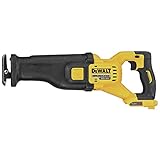
 DEWALT FLEXVOLT 60V MAX* Reciprocating SawOne Size19.4 x 7.3 x 4.21 Inches7.43 PoundsCheck on Amazon
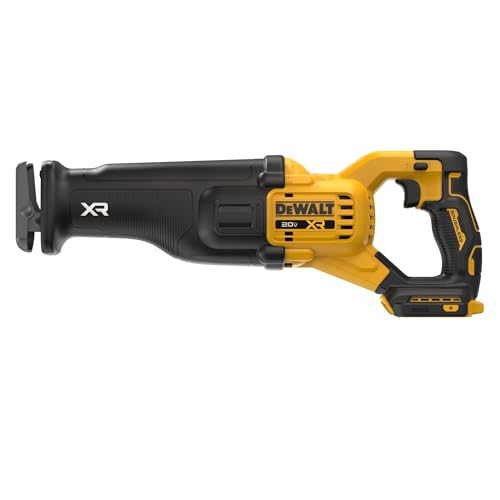 DEWALT 20V MAX* XR Brushless Cordless Reciprocating SawSTANDARD19.3 x 4.2 x 7.4 inches4.5 PoundsCheck on Amazon
 Milwaukee M18 Fuel Sawzall Brushless Cordless Reciprocating Saw10 x 6 x 4 inches6.8 poundsCheck on Amazon


Power and cutting performance
The DeWalt DCS389 is a FlexVolt 60V MAX brushless saw. When paired with a 60V FlexVolt battery it runs at 60 volts, and it can also run on a standard 20V MAX battery at reduced output. That voltage headroom is the whole point of the tool. It delivers 3,000 strokes per minute (SPM) with a 1-1/8-inch stroke length and maintains speed better under load than any 18V recip. In wood with nails, 2x framing, and even 4-inch embedded posts, the DCS389 rarely bogs if you keep the blade sharp.
The Milwaukee 2721-20 is an M18 FUEL brushless Sawzall. It also hits 3,000 SPM with a 1-1/8-inch stroke and Milwaukee’s claimed fastest cutting speed in its 18V class. In practice it is extremely close to the DeWalt on 20V power, but it cannot match the DCS389 on a 9.0Ah FlexVolt battery when you are cutting dense material continuously – think double 3/4-inch plywood, LVL, or cast iron soil pipe with a carbide blade. The Milwaukee will do it, but it slows sooner and draws more current, which heats the battery faster.
For metal, both saws benefit massively from the right blade. Neither saw will compensate for a dull 14 TPI bimetal blade in 1/4-inch steel. With a good carbide-tipped blade for demolition, the DCS389’s extra torque shows in fewer stalls when you twist the blade in a nail-embedded stud. The 2721-20 has excellent electronic clutching that cuts power before the motor stalls, which protects the tool but can feel like it is hesitating if you are used to brute-forcing a corded Sawzall.
Weight, balance and vibration
This is where the Milwaukee wins for most users. The 2721-20 weighs about 7.7 lbs bare and 9.8 lbs with an M18 5.0Ah XC battery. The DeWalt DCS389 weighs about 8.8 lbs bare and 11.1 lbs with a FlexVolt 6.0Ah battery (which itself weighs 2.3 lbs). That extra 1.5 pounds matters overhead or on a ladder.
Length and balance also differ. The 2721-20 is 17.5 inches long with the weight centered just behind the shoe. The DCS389 is longer at 18.6 inches and nose-heavy, especially with a FlexVolt pack hanging off the bottom. The DeWalt feels like a demo saw; the Milwaukee feels like an all-day saw.
Vibration control is good on both. Milwaukee uses a counterbalance mechanism and rubber-isolated handle that noticeably reduces hand fatigue in long rip cuts. DeWalt uses a similar counterbalance but transmits more vibration to the front grip when the blade starts to dull. Neither saw eliminates the chatter you get cutting sheet metal or thin-wall conduit – that is blade and technique, not the tool. If you do a lot of overhead or single-handed use (cutting out old plumbing, notching rafters), the lighter Milwaukee is objectively easier to control.
Features and durability
Both use a lever-action, tool-free blade clamp that accepts 1/2-inch universal shank blades. Milwaukee’s Quik-Lok clamp has a better reputation for holding blades under deflection – it is less likely to eject a slightly bent tang blade mid-cut. The DeWalt’s clamp is fast and positive, but sawdust and grit can make the lever stiff after a year of heavy demo use. Blow it out with compressed air regularly.
Both have an adjustable pivoting shoe. The Milwaukee shoe adjusts with a button and stays tight longer; the DeWalt uses a lever that is faster but can develop play after repeated hammering into joists. A loose shoe is the most common rattle failure on both saws and it makes the cut wander. Check the detent spring before you blame the blade.
Other details: The DCS389 has a two-stage trigger and variable speed dial plus an LED work light at the base of the shoe. The 2721-20 has a variable speed trigger, an LED, and Milwaukee’s REDLINK PLUS overload protection. Both are brushless and both handle dust well, but the trigger switch is the failure point if you cut a lot of plaster and drywall without dust extraction. If the trigger starts to feel gritty, clean it before it fails closed.
Warranty is 3 years limited for DeWalt and 5 years for Milwaukee (tool only, batteries separate). In service terms, both have wide repair networks.
Battery platform and runtime
This should drive your decision more than SPM numbers. The DCS389 only makes sense if you are already invested in FlexVolt or plan to be. On a FlexVolt 9.0Ah battery you will get roughly 30-40% more cuts per charge than the 2721-20 on an M18 5.0Ah, and significantly less voltage sag. On a 20V 5.0Ah battery, the DeWalt becomes a heavy 20V saw with no advantage over the Milwaukee – and you paid more for it.
Milwaukee’s M18 ecosystem is broader and cheaper to feed. An M18 5.0Ah or 6.0Ah High Output battery is lighter, cheaper, and runs every other M18 tool you own. If you are choosing your first cordless recip, buy into the platform you want to live with for five years. Picking up a Milwaukee M18 reciprocating saw makes sense if you already own M18 drills and impacts. If you already own FlexVolt circular saws or table saws, the DeWalt FlexVolt reciprocating saw keeps you on one battery system and delivers true corded-like power.
Runtime testing with a 6-inch demolition blade in SPF 2×10 with nails: a fresh M18 5.0Ah averages 45-60 cuts; a FlexVolt 6.0Ah averages 65-85 cuts. With a 9.0Ah FlexVolt, the DeWalt will outlast two M18 5.0Ah packs in back-to-back demo. For most remodeling work, though, one good battery plus a spare covers either saw.
Head-to-head specs
| Spec | DeWalt DCS389 | Milwaukee 2721-20 |
|---|---|---|
| Voltage / Platform | 60V MAX FlexVolt (also runs on 20V MAX) | 18V M18 |
| Motor | Brushless | Brushless FUEL |
| Strokes Per Minute | 0-3,000 SPM | 0-3,000 SPM |
| Stroke Length | 1-1/8 in. | 1-1/8 in. |
| Weight (bare tool) | ~8.8 lbs | ~7.7 lbs |
| Length | ~18.6 in. | ~17.5 in. |
| Blade Clamp | Lever-action, tool-free | Quik-Lok lever, tool-free |
| Orbital Action | No | No |
| Warranty (tool) | 3-year limited | 5-year limited |
Which saw should you buy
Choose the DeWalt DCS389 if your priority is raw power for demolition, large timbers, or continuous cutting in nail-embedded wood. Contractors tearing out framing, cutting out old window boxes, or sectioning pressure-treated 6x6s will use the extra torque. It is the closest to a corded 15-amp recip in cordless form, but you pay for it in weight, cost, and the need for expensive FlexVolt packs. If you try to save money by running it only on 20V batteries, buy a lighter 20V saw instead.
Choose the Milwaukee 2721-20 if you want the better all-rounder. It is lighter, better balanced, easier to control one-handed, and cheaper to buy and feed. For plumbing cut-outs, electrical demos, auto dismantling, pruning with a coarse blade, and general remodeling, it cuts 90% as fast with far less fatigue. Most homeowners and remodelers will never miss the extra FlexVolt power if they use sharp blades and let the tool do the work.
If you are still deciding on blades and batteries, stock up on quality reciprocating saw blades for demolition before you chase a more powerful saw. A $12 carbide demolition blade makes a $150 saw cut faster than a $300 saw with a dull bimetal blade. And whichever platform you choose, carry at least two batteries – a recip is the fastest way to drain a pack that exists.