What's inside
As an Amazon Associate I earn from qualifying purchases. This post may contain affiliate links at no extra cost to you.
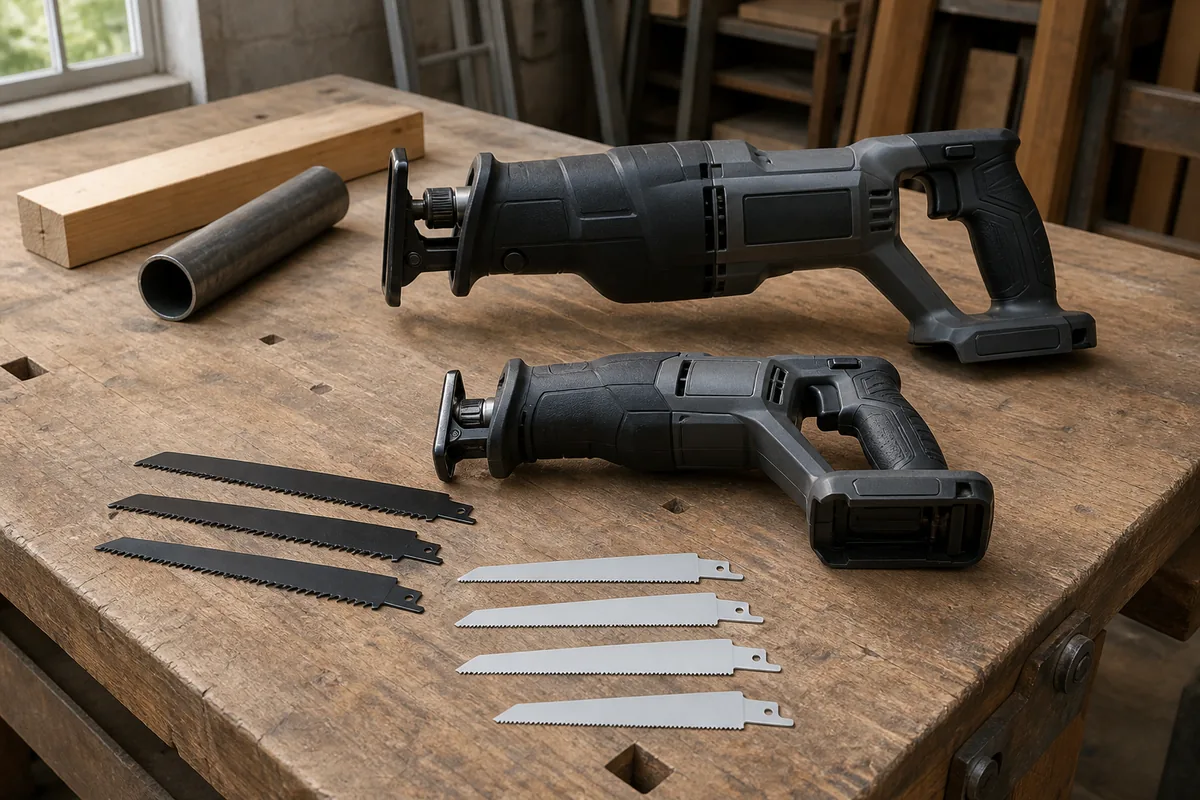
If you need one reciprocating saw for both yard work and indoor remodeling, the Makita DJR186 and DeWalt DCS367 look similar on paper but feel very different on the job. The Makita is a full-size, traditional recip saw. The DeWalt is a compact, one-handed design. That difference matters more than the spec sheet for pruning and remodeling.
As an Amazon Associate we earn from qualifying purchases at no extra cost to you.


Our Top Picks
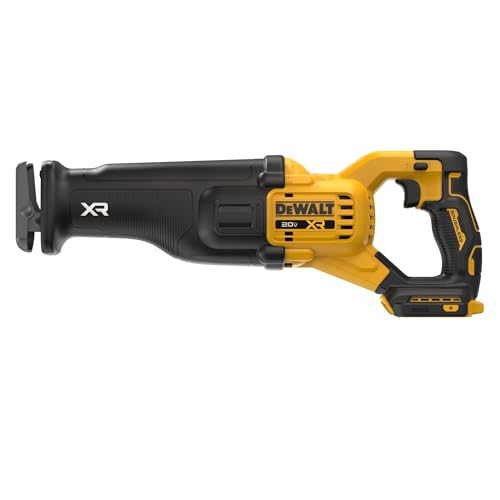 DEWALT 20V MAX* XR Brushless Cordless Reciprocating SawSTANDARD19.3 x 4.2 x 7.4 inches4.5 PoundsCheck on Amazon




At a glance: two different approaches
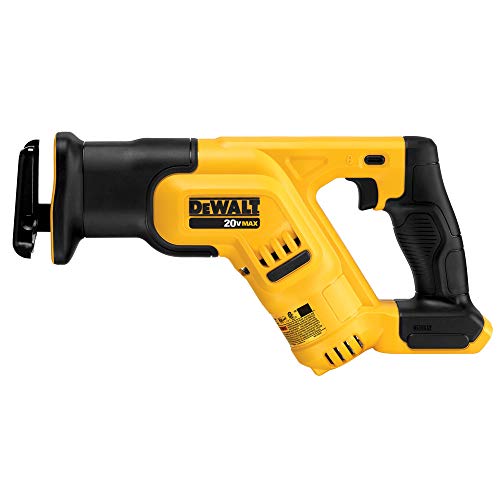
The Makita DJR186 is an 18V LXT brushless saw with a long body, D-handle, and a 32mm (1-1/4″) stroke. It’s built like a classic demolition saw — two hands on the tool, long reach, and weight forward to help you push the shoe into the work.
The DeWalt DCS367 is a 20V MAX (18V in Europe as DCS367N) brushless compact reciprocating saw. It has a much shorter body, a 28.6mm (1-1/8″) stroke, and a 4-position blade clamp that lets you mount the blade up, down, left, or right. It’s designed to be used one-handed in tight spaces — between studs, under sinks, or up on a ladder pruning.
Both are brushless and both use a lever-action, tool-free blade clamp. Neither comes with a battery in the bare-tool version. For most homeowners and remodelers already invested in a battery platform, that platform will be the deciding factor — both saws are good enough that switching systems rarely pays off.
Head-to-head specs
| Feature | Makita DJR186 (18V LXT) | DeWalt DCS367 (20V MAX / 18V XR) |
|---|---|---|
| Motor | Brushless | Brushless |
| Strokes per minute | 0 – 2,800 SPM | 0 – 2,900 SPM |
| Stroke length | 32mm (1-1/4″) | 28.6mm (1-1/8″) |
| Orbital action | No | No |
| Blade positions | 1 (vertical only) | 4 (0, 90, 180, 270 degrees) |
| Tool length | ~486mm (19-1/8″) | ~363mm (14.3″) |
| Weight (bare tool) | ~2.2 kg (4.9 lbs) | ~1.9 kg (4.3 lbs) |
| Weight with 5.0Ah battery | ~3.5 kg (7.7 lbs) | ~2.6 kg (5.8 lbs) |
| Shoe adjustment | Tool-free, telescoping | Pivoting, keyless lever |
| Vibration control | Counterbalanced, rubber handle | Minimal – compact frame transmits more vibration |
Numbers are with standard batteries. The Makita is longer and heavier, but that weight helps in demolition. The DeWalt is shorter by almost 5 inches, which is the whole point.
Power and cutting speed
On a full 5.0Ah battery, both saws cut fast enough for 2x lumber, nail-embedded wood, and branches up to about 100mm (4″). The Makita’s longer 32mm stroke clears chips a little better on deep cuts, so it stays cooler when you are continuously ripping through old studs or cutting out a subfloor. You’ll feel the difference after the third or fourth consecutive cut in demolition — the Makita bogs down less.
The DeWalt hits a slightly higher top speed at 2,900 SPM but its shorter stroke means each tooth takes a smaller bite. In clean wood it feels just as fast. In dense or dirty material — pressure-treated joists, plaster with wood lath, or hardwood branches — it needs a bit more pressure and drains the battery about 10-15% faster if you lean on the trigger.
Failure mode to watch on both: pushing too hard to compensate. Recip saws cut on the pull stroke. Excessive pressure bends the blade, overheats the tip, and strips teeth. Let the shoe do the work. If the blade is smoking or squealing, you need a coarser or fresher blade, not more force.
Handling, vibration and control
This is where they split. The Makita DJR186 requires two hands. The front grip is large, the shoe is long and adjustable without tools, and the balance point is just in front of the trigger. That makes it stable for straight cuts and less tiring on horizontal demolition where you can rest the shoe.
The DeWalt DCS367 is built for one hand. You can choke up behind the blade clamp and cut overhead or in a joist bay where the Makita simply won’t fit. The trade-off is vibration. The compact frame has less counterbalancing, so at full speed your hand will feel it. On pruning jobs with 20-30 cuts in a row, that vibration adds up to fatigue and less accuracy.
Blade change is tool-free on both, but the DeWalt’s 4-position clamp is genuinely useful. Flush-cutting a door jamb, cutting out a piece of drywall with the blade horizontal, or pruning with the teeth facing up to pull the saw into the branch — you can’t do that with the Makita without twisting your wrist into a bad angle.
For pruning: weight and reach matter
For light pruning (branches 25-75mm / 1-3″), the DeWalt DCS367 is the easier tool. Its short length lets you work one-handed while the other hand holds the branch, and it’s light enough to use overhead without a ladder. With a sharp reciprocating saw pruning blades with 5-6 TPI, it cuts green wood cleanly and you can orient the blade to pull away from you.
The Makita DJR186 is overkill for small branches but better for larger limbs (80-150mm) and for ground-level work where you can use two hands. The longer shoe gives you a solid pivot point against the branch, which reduces blade wobble and makes the cut straighter. If you are cutting a lot of 3-4″ limbs for firewood or clearing, the Makita will be faster and the extra weight actually steadies the cut.
Neither is a replacement for a proper pruning saw or chainsaw above 4-5″. Recip blades wander in large, wet wood and the batteries heat quickly. For anything you do regularly in the yard, pair either saw with dedicated pruning blades — standard demolition blades clog and burn in green wood.
For remodeling and demolition: fit vs. force
Inside the house, the DeWalt wins on access. Cutting out old copper pipe between studs, trimming a nailed-in stud, or cutting drywall and nails in a tight vanity cabinet — its 14-inch body can get into a 12-inch stud bay where the Makita hits the opposite stud before the blade reaches the work. The adjustable pivoting shoe also helps you start a plunge cut without skating.
The Makita wins on sustained demolition. Tearing out a wall, cutting through stacked 2x material, or doing window and door cutouts, the longer stroke, heavier body, and lower vibration let you make straighter, longer cuts with less arm fatigue. The telescoping shoe is also more robust — you can jam it against framing and lean in without flex. On the DeWalt, the smaller shoe can deflect if you use it as a fulcrum aggressively, which leads to bent blades and a loose shoe lever over time.
Common failure point on compact saws like the DCS367: the blade clamp collar. If you jam the blade in at an angle or don’t fully seat it, the clamp wears and will start ejecting blades under load. Always pull-test the blade after insertion. On the DJR186, the weak point is the front rubber boot — it tears if you drag the saw across concrete or roofing debris, exposing the mechanism to dust.
Battery, noise and ecosystem
Run time is similar: expect 60-90 cuts in SPF 2×4 with a 5.0Ah battery and a 6 TPI wood blade. The Makita LXT system tends to run slightly cooler and quieter at 77-78 dB vs. 80-82 dB for the DeWalt at no load, but you’ll be wearing hearing protection with either. If you already own Makita 18V LXT batteries or DeWalt 20V MAX batteries, stay on that platform. Buying a bare tool plus a charger and two batteries erases any price difference. Neither saw has a meaningful advantage in battery cost or longevity.
Both have variable-speed triggers and electric brakes. Neither has an LED that stays on long enough to be useful in a dark wall cavity — carry a headlamp.
Which should you buy?
Buy the DeWalt DCS367 if your work is mostly tight-space remodeling, plumbing cutouts, overhead pruning, or you need a saw you can carry on a belt. It’s the better second saw too — even if you own a full-size corded recip, the compact is the one you’ll actually grab for quick cuts.
Buy the Makita DJR186 if you do heavier demolition, longer straight cuts, or a lot of ground-level pruning of thicker branches. It’s more stable, vibrates less, and handles longer blades (up to 255mm) without whipping.
If you only get one and you do both jobs equally, be honest about where you struggle. Tight crawlspaces and cabinets favor the DeWalt. Straight power and comfort on long demo days favor the Makita. Neither will disappoint, but they are not interchangeable — pick the form factor that matches the spaces you work in, not the one with the higher SPM on the box.