What's inside
As an Amazon Associate I earn from qualifying purchases. This post may contain affiliate links at no extra cost to you.
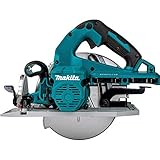
For cutting LVL beams, both the Makita XSH07 and DeWalt DCS578 have enough power for serious framing work. They are 7-1/4-inch cordless saws with roughly 2-9/16 inches of cutting depth at 90 degrees, so either can cut a standard 1-3/4-inch LVL in one pass. The important differences are battery systems, handling, blade behavior, and how each saw deals with repeated cuts through dense engineered wood.
As an Amazon Associate we earn from qualifying purchases at no extra cost to you.


Our Top Picks


Makita XSH07 vs DeWalt DCS578 at a glance
| Feature | Makita XSH07 | DeWalt DCS578 |
|---|---|---|
| Platform | 18V X2 LXT (two 18V batteries) | 60V MAX FLEXVOLT |
| Blade size | 7-1/4 inches | 7-1/4 inches |
| Depth at 90 degrees | 2-9/16 inches | 2-9/16 inches |
| Bevel range | Up to 53 degrees | Up to 57 degrees |
| No-load speed | About 6,000 rpm | About 5,800 rpm |
| Best battery advantage | Useful if you already own LXT batteries | Higher-voltage single-battery setup and strong sustained output |
Power for LVL beams
LVL is denser and more abrasive than ordinary softwood framing lumber. A saw that feels effortless in a 2×4 can slow down when cutting a long LVL rip or making repeated crosscuts. Both saws are powerful enough for normal LVL beam work, but technique and blade choice still matter.
The DCS578 has a slight advantage when the cut is long, deep, or repeated throughout the day. Its 60V battery provides substantial energy and the saw maintains speed well under load. That does not mean it cuts twice as fast. In a single 1-3/4-inch crosscut, the difference is small. The advantage becomes clearer when making many cuts, cutting wider stock, or working with a dulling blade.
The XSH07 is also a high-output saw, but it uses two 18V batteries. With a pair of healthy, fully charged packs, it handles LVL without struggling. Its higher no-load speed can produce a clean, controlled cut with a sharp framing blade. If you already use Makita’s LXT platform, the saw is a practical way to get near-corded performance without buying into another battery system.
Cutting capacity and bevel work
At 90 degrees, both saws have enough capacity for a standard LVL beam or header. A 1-3/4-inch LVL leaves useful clearance below the shoe, so you do not need to force the saw through the material. For a 3-1/2-inch built-up beam, plan on cutting from both sides or use a larger saw. Do not assume either saw will cleanly finish that cut in one pass.
The DeWalt offers a wider maximum bevel setting, reaching about 57 degrees compared with approximately 53 degrees for the Makita. That difference is rarely important for ordinary framing, where 45-degree bevels are common. Both saws have positive stops and usable bevel adjustments, though the exact ease of setting the bevel depends on how much jobsite dust has built up around the controls.
For compound cuts or angled beam ends, mark both faces before cutting. A deep LVL cut can wander if the saw is pushed too aggressively, and a small error on the top face becomes obvious on the bottom face.
Handling, balance, and visibility
The XSH07 uses Makita’s rear-handle layout, which places the main grip behind the motor. That design gives good control during long cuts and keeps the operator’s hand away from the blade path. The saw is relatively easy to guide along a straightedge, but two batteries add weight and make the tool feel bulkier than a compact single-pack saw.
The DCS578 is also a rear-handle saw and has a similarly substantial feel. Its single FLEXVOLT battery simplifies installation and can be more convenient on a ladder or crowded framing platform. The battery and motor combination is not light, however. For overhead cuts or repeated trimming at shoulder height, fatigue can matter more than the theoretical power difference.
Both saws have good blade visibility from the left side of the shoe. For accurate LVL work, use the front notch as a guide but verify it against your actual blade. Different kerf widths and aftermarket blades can make the factory marks less precise than expected.
Blades, batteries, and running costs
Use a sharp 24-tooth or 40-tooth framing blade rated for engineered wood. A coarse blade clears chips quickly and usually cuts faster. A finer blade leaves a cleaner edge but can load up with adhesive and resin, increasing heat and reducing speed. If the cut starts burning, the motor pitch drops, or the saw needs unusual force, stop and replace or clean the blade rather than continuing.
For a 7-1/4-inch framing blade for engineered wood, check that the arbor size matches the saw and that the blade is intended for the material. LVL adhesive can dull inexpensive blades quickly. Keep a spare available on a large job.
The battery decision is often more important than the saw specification. The Makita requires two LXT batteries, so a kit can be expensive if you do not already own that platform. The DeWalt needs one FLEXVOLT battery, but those packs are also costly and heavier than typical 20V batteries. If you already own several compatible packs and chargers, that platform usually wins on total cost.
Which saw makes more sense?
Choose the Makita XSH07 if you already use Makita LXT tools, want its fast blade speed, or prefer to share two 18V batteries across a large tool collection. It is more than capable for occasional LVL headers, rafters, and beam trimming. The cheaper option is fine when the work consists of a few crosscuts rather than hours of deep ripping.
Choose the DeWalt DCS578 if you need maximum sustained output, already own FLEXVOLT batteries, or expect frequent heavy cutting in LVL, glulam, pressure-treated lumber, and thick framing stock. Its wider bevel range is a minor benefit; the stronger reason to buy it is the single-battery high-voltage system and strong performance under load.
If neither platform is already in your shop, compare the complete kit price—not just the bare tool. A Makita XSH07 kit may be the better value for a user with existing LXT chargers, while a DeWalt DCS578 kit makes more sense when FLEXVOLT is already part of your battery lineup.
Safe cutting procedure for LVL
Support the beam on both sides of the cut, but keep the offcut from pinching the blade. Set the blade depth only slightly deeper than the material—about 1/8 inch beyond the underside is usually sufficient. Clamp a straightedge for long cuts, keep both hands on the saw, and let the blade reach full speed before entering the LVL.
Never twist the saw to correct a wandering line. Back out, shut it down, and restart the cut. Pinching can trigger a kickback even with a powerful cordless saw. Wear eye and hearing protection, and use dust control where practical; LVL dust is fine, plentiful, and unpleasant to breathe.