What's inside
As an Amazon Associate I earn from qualifying purchases. This post may contain affiliate links at no extra cost to you.
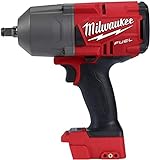
Milwaukee 2767-20 and DeWalt DCF899 are older cordless high-torque impact wrenches that still show up used, refurbished, and in clearance listings. Both use 20-volt-class battery systems and both can handle serious automotive work, but they are not interchangeable in performance or ownership cost.
The Milwaukee has the higher published torque rating and more useful electronic control. The DeWalt is often cheaper, widely available, and strong enough for many jobs. The better buy depends less on the badge than on the batteries, condition, and type of work you actually do.
As an Amazon Associate we earn from qualifying purchases at no extra cost to you.


Our Top Picks
 LEXIVON Torque Wrench 1/2-Inch Drive Click 10~150 Ft-Lb/13.6~203.51/2"DR. 10-150 FT-LB2.5 x 3 x 18 inches3 PoundsCheck on Amazon
Milwaukee 2767-20 vs DeWalt DCF899 specifications
| Feature | Milwaukee 2767-20 | DeWalt DCF899 |
|---|---|---|
| Tool type | 1/2-inch high-torque impact wrench | 1/2-inch high-torque impact wrench |
| Rated fastening torque | 1,000 ft-lb | 700 ft-lb |
| Maximum breakaway torque | 1,400 ft-lb | 1,200 ft-lb |
| Speed control | Four electronic modes | Three speeds |
| Drive retention | Friction ring | Usually hog ring; pin-detent versions also exist |
| Battery platform | Milwaukee M18 | DeWalt 20V Max |
| Approximate bare-tool weight | About 5.9 lb | About 6.4 lb |
Published torque numbers are not a guarantee that either tool will remove every fastener. Rust, thread damage, clamping load, socket fit, and battery condition can matter more than a 200 ft-lb difference. Impact-wrench ratings also are not directly comparable across brands because testing methods and conditions vary.
Real-world power and speed
The 2767-20 is the stronger tool on paper and generally the stronger tool in use. With a healthy high-output M18 battery, it is better suited to seized suspension bolts, large truck hardware, and repeated wheel or equipment work. Its 1,400 ft-lb breakaway rating gives it more reserve when a fastener will not move on the first few impacts.
The DCF899 is not weak. A good battery and a properly fitting impact socket will remove most passenger-car lug nuts, brake-caliper brackets, wheel hubs, and many suspension fasteners. Its 700 ft-lb fastening rating is more than enough for routine service. It may struggle sooner on heavily rusted exhaust hardware, axle nuts, trailer components, and large agricultural or commercial fasteners.
Neither tool should be used to tighten every fastener to its final specification. Impact tools can overshoot torque quickly, especially on small studs. Run the nut down with the wrench, then finish with a calibrated 1/2-inch torque wrench. For loosening, try a penetrating lubricant and allow time to work before escalating to heat or a breaker bar.
Control, anvil, and handling
Milwaukee gives the 2767-20 four drive-control modes. The lower settings make it easier to avoid spinning a lug nut too far down or damaging smaller hardware. Some versions include an automatic shutoff or removal-control function that reduces speed after the fastener breaks loose. These features are useful, but they do not replace checking torque.
The DeWalt DCF899 has three speed settings controlled by a simple selector. It is less flexible, but the controls are easy to understand and unlikely to confuse a casual user. For tire changes and occasional repairs, that simplicity is often enough.
Both are large, nose-heavy tools. They work well on open suspension and wheel hardware but can be awkward between frame rails or around engine accessories. The Milwaukee is slightly lighter without a battery, although the difference becomes less obvious with a large pack installed. A compact impact wrench is usually a better second tool for cramped spaces; neither high-torque model is a substitute for one.
Batteries, wear, and failure points
Battery size changes the experience. A tired 3.0Ah pack may run either wrench but can cause reduced output and early shutdown. A healthy 5.0Ah or larger pack is the practical minimum for demanding work. If you already own M18 batteries, the Milwaukee has a major ownership advantage. If your garage is built around DeWalt 20V Max batteries, the DCF899 may be cheaper overall even if the bare tool is not the least expensive listing.
When buying used, inspect the square drive for rounded corners, excessive wobble, or a damaged retaining ring. Check that the mode selector works, the trigger responds smoothly, and the tool does not produce grinding noises under load. A tool that spins normally in the air can still have a worn hammer mechanism or slipping internal drive.
Also check the battery contacts for heat discoloration and melted plastic. Repeated overheating can damage contacts and electronics. On a used DCF899, confirm whether it has the hog-ring or pin-detent anvil and whether the retaining hardware is intact. A hog ring changes sockets faster; a pin detent holds them more securely but can be slower in routine work.
Which impact wrench is the better buy?
Choose the Milwaukee 2767-20 if you regularly work on rusty vehicles, trucks, trailers, or heavy equipment, or if you value stronger breakaway performance and more speed control. It is the better heavy-use choice, provided the tool and battery are in good condition.
Choose the DCF899 if you mainly service passenger cars, change wheels, and remove ordinary suspension hardware. The cheaper DeWalt DCF899 is perfectly reasonable when it costs substantially less or when you already own DeWalt batteries. Its lower torque ceiling matters only when the job regularly exceeds what a 700 ft-lb tool can release.
For either model, buy quality impact sockets rather than using chrome hand-tool sockets. Keep the battery charged, support the tool with both hands when a fastener breaks free, and stop using it if the anvil develops visible play. In a used-tool purchase, condition and platform compatibility are more important than a small difference in advertised torque.