What's inside
As an Amazon Associate I earn from qualifying purchases. This post may contain affiliate links at no extra cost to you.
Our Top Picks
 Milwaukee 0960-20 M12 FUEL Brushless Lithium-Ion Cordless 1.61.6 Gal15 x 13 x 4 inchesCheck on Amazon

Overview: Two Very Different Takes on Compact Cordless
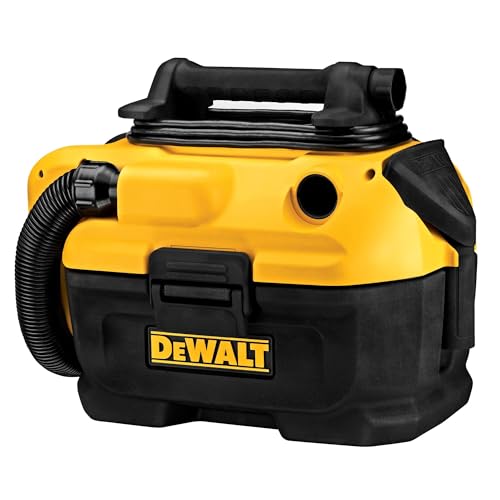
The DeWalt DCV517 and Milwaukee 0882-20 get lumped together as “compact cordless wet-dry vacs” but they were designed for different jobs. The DeWalt is a true handheld — shaped like a Dustbuster on steroids, meant for quick cleanups, car interiors, and overhead work. The Milwaukee is a small canister vac with a separate hose and floor tool, meant to live on a jobsite cart or in a service van for punch-list work.
If you already own batteries on one platform, that often decides it. If you don’t, the differences in capacity, suction, and how they handle fine dust matter more than brand loyalty.
As an Amazon Associate we earn from qualifying purchases at no extra cost to you.

Specs At A Glance
| Feature | DeWalt DCV517 (20V MAX) | Milwaukee 0882-20 (M18) |
|---|---|---|
| Voltage / Platform | 20V MAX (18V compatible) | M18 (18V) |
| Tank Capacity | 1/2 gallon (1.9L) – handheld tank | ~1 gallon (3.8L) canister |
| Weight (tool only, no battery) | ~4.6 lbs | ~5.6 lbs |
| Airflow | Rated ~31-35 CFM | Rated ~41 CFM |
| Wet Pickup | Yes, small sump – rated wet/dry | Yes, with foam filter change |
| Filtration | Washable HEPA cartridge (reusable) | HEPA cartridge + optional cloth/foam filters |
| Hose | Short integrated flexible hose (~3 ft extended) | 4 ft flexible hose + 2 extension wands + floor nozzle |
| Run Time (with 5.0Ah battery) | ~20-25 minutes on high | ~25-30 minutes on high |
| Street Price (bare tool) | ~$99 – $129 | ~$99 – $149 |
Numbers vary slightly by test method, but the Milwaukee moves more air on paper and the DeWalt is lighter and shorter. Both are bare tools — batteries and chargers are extra unless you buy a kit.
Suction and Real-World Performance
Neither will replace a 6-gallon corded shop vac for heavy cleanup. On drywall dust, sawdust, and jobsite crumbs, the Milwaukee has a clear edge in sustained suction because of its larger diameter hose and less restrictive air path. With a clean HEPA filter, it will pick up screws, wire nuts, and wood chips without clogging. The DeWalt is weaker once the small tank gets a third full — air velocity drops fast as the HEPA loads.
On crevice work, the DeWalt is better. Its short, tapered nozzle and handheld balance lets you vacuum inside cabinets, tool boxes, or a truck cab with one hand. The Milwaukee with the wands attached is awkward one-handed; without the wands, you’re holding a 4-foot hose to a canister on the floor.
For fine dust, both disappoint compared to a vac with auto filter cleaning. If you dry-vac a lot of drywall or concrete dust, expect to stop and tap out the HEPA every few minutes. Letting the filter cake over will overheat the motor and cut suction by half.
Capacity and Wet-Dry Use
This is the biggest practical difference. The DeWalt’s 1/2-gallon tank is tiny. For dry debris it’s fine for spot cleaning, but for wet pickup it’s almost useless — you get about 12-16 oz of liquid before the float shuts off suction to protect the motor. It’s meant for a spilled coffee or water in a window track, not a flooded utility room.
The Milwaukee holds roughly twice as much and has a proper ball-float shutoff in the canister lid. You can actually pull a gallon of water from a sink cabinet or condensate pan without stopping every 30 seconds. You do need to swap the HEPA for the foam sleeve filter before any wet work — running the HEPA wet ruins it permanently and will stink.
Failure mode to watch on both: users forget to dry the tank and filter housing after wet use. The HEPA traps moisture, grows mold, and then blows a musty smell on the next dry use. If you use either for wet work regularly, store it with the lid off and keep a second dry HEPA on hand. You can find Milwaukee M18 vacuum HEPA filters and the DeWalt equivalent for under $25, but they clog faster than the marketing suggests.
Filtration and Dust Control
Both ship with a true HEPA cartridge rated to 99.97% at 0.3 microns when sealed correctly. In practice, sealing is the weak point. The DeWalt’s twist-lock HEPA has a thin foam gasket that deforms if you overtighten it. The Milwaukee’s lid latches can leak fine dust around the edge if the canister rim gets dented or has grit in the groove.
Neither is a dust extractor and neither is OSHA Table 1 compliant for silica without modification. If you’re grinding concrete or cutting fiber cement, you want a vac with a proper dust extractor interface and auto-start. These are convenience vacs.
For allergies or working in finished homes, run the Milwaukee with its optional HEPA + cloth pre-filter. It adds a layer that catches the big stuff and extends HEPA life by 3x. The DeWalt has no pre-filter option; your only defense is to empty the tank often and knock out the cartridge outside.
Battery and Runtime
The DeWalt DCV517 is fairly efficient but hard on small batteries. On a 2.0Ah compact 20V battery you get 8-10 minutes of useful suction. It sounds longer on paper, but under load the small packs voltage-sag quickly. Use a 4.0Ah or 5.0Ah pack if you want to clean a whole room. It will also run on DeWalt FlexVolt batteries without extra power.
The Milwaukee 0882-20 is similar — a 2.0Ah M18 Compact gives about 10-12 minutes, a 5.0Ah XC gives 25+ minutes. Milwaukee has a slight advantage in low-battery behavior; it tapers off instead of abruptly cutting out.
If you’re buying into a system just for a vac, look at what else you own. Both vacs are cheapest as bare tools. Buying a single compact cordless wet dry vacuum kit with battery and charger often costs $199-$249, which erases any price difference between brands.
Handling and Build Quality
DeWalt went for one-hand operation. The handle, trigger, and tank release all fall under one hand. It hangs from a belt hook and fits in a tool bag. Downside: the tank latches are plastic tabs that wear with grit. After a year of jobsite use, many DCV517s won’t seal tightly unless you hold the tank — a known complaint. The flexible hose also kinks where it enters the body.
Milwaukee went for a shop-vac form factor. The latches are beefier, the hose is replaceable, and the whole thing stacks on Milwaukee Packout-style storage. Downside: it’s bulkier and the wands and floor tool add clutter. The on/off switch is on the motor housing near the floor, so you have to bend over to toggle it.
Blower function: The DeWalt has a small blower port on the back — useful for blowing sawdust out of a tool case or blowing out a workbench, but at ~30 CFM it’s not a leaf blower. The Milwaukee 0882-20 has no blower.
Noise is similar — both around 75-80 dB at 3 feet. Not hearing-safe for long periods, but quieter than corded shop vacs.
Which Should You Buy?
Choose the DeWalt DCV517 if you want a handheld for quick, elevated, or confined work: cleaning inside cabinets after install, vacuuming a car or van, cleaning a miter saw station between cuts. It’s better as a second vac that lives on your truck than as your only vac. Keep a 4.0Ah battery on it and empty it constantly.
Choose the Milwaukee 0882-20 if you want a small jobsite vac for service calls, punch lists, and general cleanup where a corded vac is overkill. It handles wet pickup better, holds more debris, and the hose + wands let you do floors without kneeling. It’s also better if you do a lot of wood dust and want a pre-filter option.
If you have neither battery platform, buy on price and on what other tools you plan to own. The cheaper option is absolutely fine here — both do the same core job and both have the same limitations on fine dust. Spend the savings on extra HEPA cartridges and a proper corded vac for heavy work. If you need accessories like extension wands or crevice tools, search for cordless vacuum accessories and crevice tools that fit your model before you buy, since neither includes much in the box beyond the basics.
For most homeowners and DIYers who just need to clean up sawdust between tool use, the Milwaukee’s larger tank and stronger sustained airflow make it less frustrating day-to-day. For techs, installers, and anyone who works one-handed on a ladder, the DeWalt’s handheld format is worth the capacity trade-off.