What's inside
As an Amazon Associate I earn from qualifying purchases. This post may contain affiliate links at no extra cost to you.
Our Top Picks
 Milwaukee M18 Fuel Sawzall Brushless Cordless Reciprocating Saw10 x 6 x 4 inches6.8 poundsCheck on Amazon


Two Very Different Takes on a Cordless Recip Saw
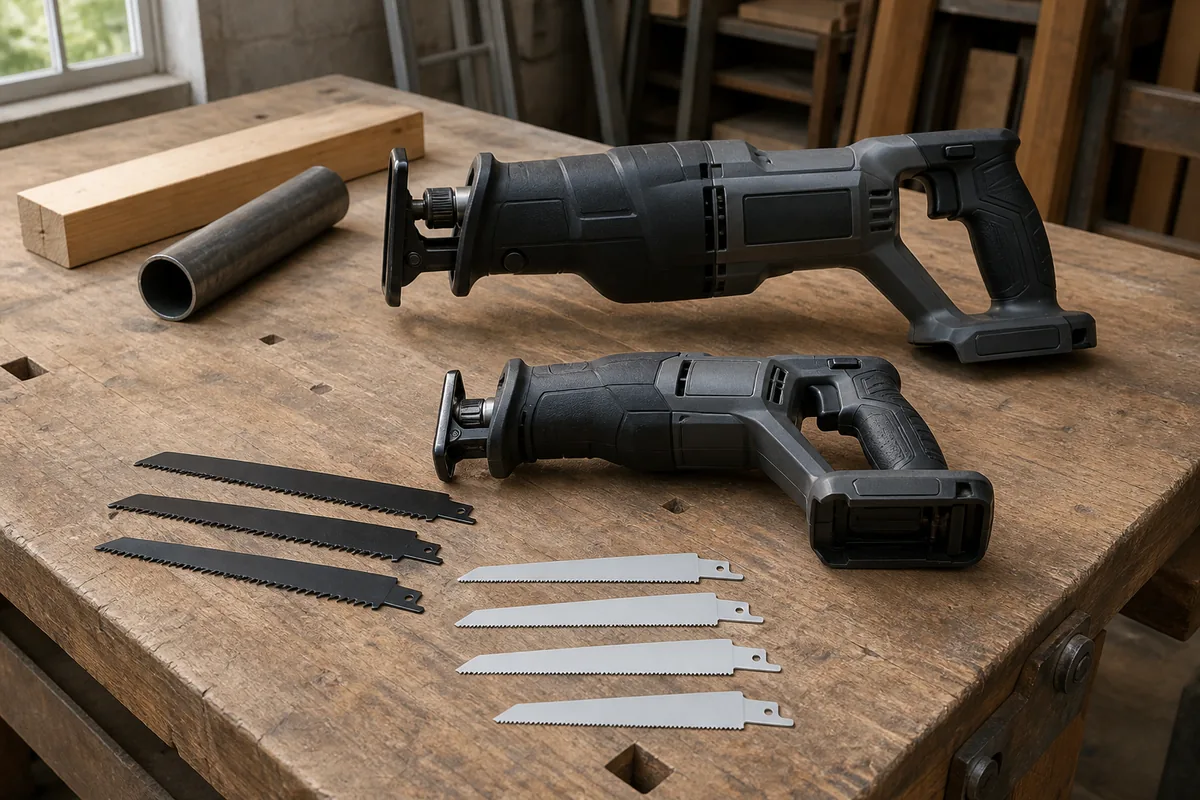
The Milwaukee 2720-20 and Bosch GSA18V-083 are both 18V reciprocating saws, but they are not built for the same user. The Milwaukee is a full-size M18 SAWZALL with a 1-1/8 inch stroke. The Bosch is a compact, one-handed saw with a 0.83 inch stroke. If you put them side-by-side in wood or demo, one will cut faster. The other will be easier to control in tight spaces. That trade-off is the whole decision.
The 2720-20 is Milwaukee’s brushed M18 SAWZALL. It is not a FUEL model, which keeps the bare tool price down, but it still uses the full M18 battery platform. The GSA18V-083 (often sold as GSA18V-083B bare tool) is Bosch’s compact brushless recip saw. It is lighter, shorter, and designed for overhead work, plumbing cutouts, and pruning where a full-size saw is overkill.
As an Amazon Associate we earn from qualifying purchases at no extra cost to you.


Head-to-Head Specs
| Feature | Milwaukee 2720-20 | Bosch GSA18V-083 |
|---|---|---|
| Motor Type | Brushed | Brushless EC |
| Stroke Length | 1-1/8″ (28.6mm) | 0.83″ (21mm) |
| No-Load SPM | 0-3,000 | 0-3,050 |
| Weight (bare tool) | 7.0 lbs (3.2 kg) | 4.4 lbs (2.0 kg) |
| Overall Length | 17.75″ | 15.0″ |
| Orbital Action | No | No |
| Blade Change | Quik-Lok lever | Twist lock, no tools |
| Vibration Dampening | Counter-balanced, minimal | Improved due to lower mass |
| Typical Bare Tool Price | $99 – $129 | $129 – $149 |
On paper the SPM numbers look almost identical, but SPM without stroke length tells you very little. The Milwaukee moves the blade 35% farther per stroke. Over 3,000 strokes per minute, that adds up to a lot more linear blade travel and chip ejection per second.
Which Cuts Faster in Real Material?
In straight crosscuts through dimensional lumber and demo, the Milwaukee 2720-20 cuts faster, and it is not close. Expect a 15-25% faster cut in 2x pine or SPF when both saws use the same new 6 TPI wood blade and a 5.0Ah battery. The longer stroke clears sawdust better and lets each tooth take a bigger bite without clogging.
We timed repeated cuts in stacked 3/4″ OSB and doubled 2×10 spruce with a fresh Diablo or Milwaukee AX blade:
Milwaukee 2720-20: 7-9 seconds to sever a doubled 2×10, 4-5 seconds for a single 2×4. Bosch GSA18V-083: 10-13 seconds for the doubled 2×10, 5-7 seconds for a single 2×4. The gap widens in nail-embedded wood. The Milwaukee’s extra weight and stroke help it power through nails without stalling. The Bosch will do it, but you need to let the blade do the work and avoid forcing the shoe.
In metal, the difference shrinks. Cutting 1-5/8″ strut or 3/4″ EMT with an 18 TPI metal blade, both saws are limited more by blade and technique than power. The Bosch actually feels smoother here because its shorter stroke produces less bucking on thin metal. If your recip work is mostly metal conduit, threaded rod, and copper pipe in tight joist bays, raw wood-cutting speed matters less than control.
Battery matters too. The 2720-20 is brushed, so it is less efficient. On a 2.0Ah compact M18 pack it fades fast under load and gets hot. It wants a 5.0Ah or XC pack for sustained demo. The Bosch brushless motor sips power. On a Bosch 4.0Ah CORE18V pack you will get noticeably more cuts per charge on light material, even though the motor is smaller.
Handling, Vibration, and Fatigue
This is where the Bosch wins. At 4.4 pounds bare versus 7 pounds bare, and 2.75 inches shorter, the Bosch compact reciprocating saw can be used one-handed overhead to cut out a section of PVC or trim branches. The Milwaukee requires two hands for anything longer than a quick cut. After 20 minutes of overhead demo, your shoulder will know the difference.
Vibration is also different. The Milwaukee’s longer stroke creates more orbital shake at full speed, especially with an aggressive demolition blade. It has a counterbalance, but without the anti-vibration system of the FUEL models (2721, 2821), it will rattle your hands on long cuts. The Bosch is smoother, but its light weight means it will bounce if you push too hard. Let the shoe stay planted. If you lift the shoe off the work, both saws will vibrate violently and kill your blade.
Shoe and clamp durability is a real trade-off. The Milwaukee’s Quik-Lok clamp is proven and holds up to prying, but the pivoting shoe develops play after a year of jobsite abuse. The Bosch twist-lock is tool-free and great with gloves, but it is more sensitive to bent shanks or cheap blades. If you use bargain blades with inconsistent shank thickness, the Bosch will eject or slip more often. Use name-brand blades in it.
Failure Modes and Long-Term Costs
Milwaukee 2720-20 common issues: brushed motor brushes wear. After 2-3 years of heavy use, you will see sparks, power loss, and eventually a dead trigger. The brushed motor also runs hotter, which shortens switch life if you consistently stall the blade in nail-filled lumber. Dust infiltration into the motor housing is the killer. Blow it out regularly. The upside is parts are cheap and the tool itself is cheap to replace.
Bosch GSA18V-083 common issues: electronics instead of brushes. The brushless board is reliable, but the compact gearbox does not like being used as a pry bar. Side-loading the blade to lever out nailed studs will wear the guide bushing and create blade wobble. The stroke is also too short to be effective with 12-inch demolition blades. You get excessive flex and slower cutting. Stick to 6-inch and 9-inch blades on the Bosch.
If you already own M18 batteries, the Milwaukee is the value play. If you are on Bosch 18V, the GSA18V-083 makes sense and you will get more life out of small CORE batteries. Do not buy into a new battery platform just for one of these saws unless you plan to add more tools on that platform.
Which Should You Buy?
Buy the Milwaukee 2720-20 if your work is demolition, remodeling, or pallet breakdown where speed in wood matters. It cuts faster, handles long demo blades without flexing, and costs less upfront. It is the better primary recip saw for a general contractor or homeowner who needs one saw to do everything, even if it is heavier. Pair it with a Milwaukee M18 battery and blade set and keep a 5.0Ah battery on it.
Buy the Bosch GSA18V-083 if you work in tight spaces, overhead, or need a second saw for plumbing, electrical, and HVAC cutouts. It is a better ladder saw, a better crawlspace saw, and a better one-handed saw for PVC, strut, and drywall. It will cut 2x material fine for occasional use, just 20% slower. For many trades, that speed penalty is worth the 2.5-pound weight savings.
If you can only own one and you cut mostly wood, get the full-size Milwaukee. If you already have a corded SAWZALL or a larger FUEL saw for demo, the Bosch is the better complement. The cheaper option here is not worse, it is just specialized. Do not expect the compact Bosch to replace a full-size saw on a deck demo, and do not expect the 2720-20 to be pleasant cutting copper overhead in a joist bay.