What's inside
As an Amazon Associate I earn from qualifying purchases. This post may contain affiliate links at no extra cost to you.
Our Top Picks
 Dewalt DCD794B 20V MAX ATOMIC COMPACT SERIES BrushlessOne Size6.61 x 3.32 x 8.39 Inches2.51 PoundsCheck on Amazon
 ATOMIC 20-Volt Lithium-Ion Cordless Compact 1/2 in. Drill/DriverOne Size7.97 x 2.49 x 7.97 inches0 PoundsCheck on Amazon

Quick verdict
For overhead work, the DeWalt DCD791 is the better compact drill for most users. It is slightly shorter, has a narrower head, and offers a higher 2,000-rpm top speed for faster small-hole drilling and screw driving. Those differences matter when your wrist is above shoulder height or you are working between joists and ductwork.
The Milwaukee 2801-20 is still a sensible choice if you already own M18 batteries. It has comparable working power, a comfortable grip, and enough capacity for routine installation work. The cheaper option is fine when the job is mostly pilot holes, cabinet screws, and occasional overhead drilling rather than continuous construction work.
As an Amazon Associate we earn from qualifying purchases at no extra cost to you.


DeWalt DCD791 vs Milwaukee 2801-20 specifications
| Specification | DeWalt DCD791 | Milwaukee 2801-20 |
|---|---|---|
| Battery platform | DeWalt 20V MAX | Milwaukee M18 |
| Motor | Brushless | Brushless |
| Chuck | 1/2-inch ratcheting metal chuck | 1/2-inch ratcheting metal chuck |
| No-load speed | 0–550 and 0–2,000 rpm | 0–550 and 0–1,800 rpm |
| Maximum torque rating | 460 UWO | 500 in-lb |
| Length | About 6.9 inches | About 7.25 inches |
| Tool weight | About 3.4 lb bare | About 3.4 lb bare |
The torque figures are not directly comparable. DeWalt uses unit watts out, while Milwaukee quotes inch-pounds, and manufacturers test these numbers differently. Do not treat the Milwaukee’s larger-looking number as proof that it will drive harder in every situation.
Which drill handles better overhead?
The DCD791 has the advantage in tight overhead positions. Its roughly 6.9-inch length keeps the chuck closer to your body, reducing leverage against your wrist. That may sound like a small difference, but holding a drill 7 inches above your head for a row of 20 holes is noticeably less tiring than holding one 7.25 inches out.
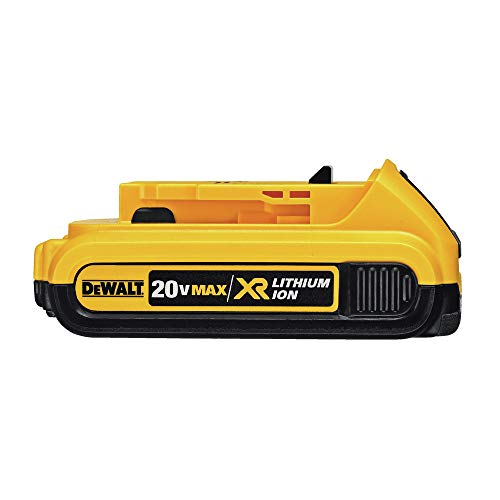
Both drills weigh around 3.4 pounds without a battery. A compact 2.0Ah pack typically adds roughly 1.3 to 1.5 pounds, putting the working tool near 4.8 pounds. A 5.0Ah battery can push the total above 5 pounds and shifts the center of gravity behind your hand. For overhead work, use the smallest battery that will finish the task. A DeWalt 20V MAX 2.0Ah battery or Milwaukee M18 2.0Ah battery is usually a better overhead choice than a high-capacity pack.
Milwaukee’s grip is comfortable and the 2801-20 balances reasonably well with a compact M18 battery. Its extra quarter-inch of length is not a deal breaker, but it becomes relevant when drilling between ceiling framing, pipes, or the back of a cabinet.
Drilling and screw-driving performance
The DeWalt’s 2,000-rpm high range is useful for small twist bits, brad-point bits, and self-drilling screws. It can make cleaner progress in 1/8- to 1/4-inch metal and wood holes, provided you use the correct bit and avoid leaning hard on the tool.
The Milwaukee tops out at 1,800 rpm, which is still plenty for general installation work. In practical use, the difference is measured in seconds rather than minutes on an individual hole. The Milwaukee’s rated output is competitive for a compact drill, and it will handle common tasks such as 2-1/2-inch construction screws, cabinet hardware, and small spade bits.
Neither drill is an ideal substitute for a hammer drill when you are making repeated holes in brick or concrete. A standard drill setting will often overheat the bit, stall, or force you to push dangerously hard overhead. For masonry, use a compact cordless hammer drill with the correct masonry bit.
Clutch control and failure modes
Both drills use mechanical clutches, but clutch numbers are not universal torque measurements. Start low when driving cabinet screws or electrical-device screws. Increase the setting until the fastener seats, then stop. Running at maximum clutch torque can strip a screw head, crush soft wood, or snap a small screw when your arm is in an awkward position.
For overhead drilling, the main failure mode is not lack of power. It is bit binding. A large spade bit can catch suddenly, twisting the drill and your wrist. Use low gear for larger holes, keep both hands on the tool when possible, and withdraw the bit periodically to clear chips. If the motor slows sharply, release the trigger rather than forcing it.
A second problem is battery sag. A nearly empty compact battery may run a small bit normally but stall during a large hole. Keep a spare charged pack nearby rather than switching to a heavier battery that makes the drill harder to control.
Battery ecosystem and value
The bare tool price is only part of the purchase. If you already own DeWalt 20V MAX batteries, the DCD791 is the economical choice even if the Milwaukee tool has a lower shelf price. The same applies to an existing M18 collection and the 2801-20.
Starting from zero, compare a kit that includes two compact batteries, a charger, and a case. A kit can cost more initially but avoids buying a battery and charger later. Look for a DeWalt DCD791 kit or a Milwaukee 2801-20 kit, but verify the included battery sizes before comparing prices.
Which compact drill should you buy?
Choose the DeWalt DCD791 if overhead work is frequent, access is tight, or you value the shorter body and faster high-speed range. It is the more refined choice for electricians, installers, and remodelers who spend hours drilling and driving above shoulder level.
Choose the Milwaukee 2801-20 if you already own M18 batteries, prefer Milwaukee’s grip, or find it substantially cheaper as a bare tool or kit. It gives up a little reach and speed, but not enough to matter for ordinary household repairs and light construction.
For occasional overhead work, buy the drill that matches your existing battery platform and spend the savings on sharp bits, compact batteries, and eye protection. Those choices will affect comfort and results more than a small difference in published torque.