What's inside
As an Amazon Associate I earn from qualifying purchases. This post may contain affiliate links at no extra cost to you.
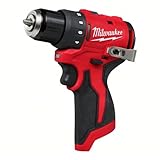
The Milwaukee M12 Fuel 3404 and DeWalt DCD703 are compact 12-volt drills suited to electrical work where a full-size drill is awkward. Both can handle pilot holes, device boxes and routine fastening. The difference is in how they get into tight spots: Milwaukee is a conventional compact drill, while DeWalt’s right-angle head and interchangeable attachments make it more adaptable around crowded framing and cabinets.
As an Amazon Associate we earn from qualifying purchases at no extra cost to you.



Our Top Picks


Quick comparison
| Feature | Milwaukee M12 Fuel 3404 | DeWalt DCD703 |
|---|---|---|
| Layout | Conventional drill/driver | Right-angle drill with interchangeable heads |
| Chuck | 1/2-inch metal chuck | Attachment-based; includes a 3/8-inch ratcheting chuck head |
| Speed settings | Two: up to 450 and 1,550 rpm | Two: up to 425 and 1,500 rpm |
| Clutch | 18 settings plus drill mode | 15 clutch settings plus drill mode |
| Best fit | General drilling and driving in a small package | Drilling and fastening where a straight drill will not fit |
| Main compromise | Still needs clearance behind the chuck and body | Smaller chuck capacity and a less direct feel than a conventional drill |
Specifications can vary slightly by kit or market, so check the exact package before buying. Neither tool replaces a larger drill for repeated big-hole work. Their 12-volt platforms are a good fit for carrying through a service call, not for forcing a large auger through dense lumber all day.
Access matters more than headline power
The DCD703’s main advantage is its right-angle form. Its head lets you work between studs, above a suspended ceiling or inside a cabinet without lining up a long drill body behind the bit. It is useful when an existing cable bundle or pipe blocks a normal drill’s path. The included offset and right-angle attachments add options, though swapping heads takes time and the extra joints can feel less solid than a one-piece drill.
The 3404 is easier to treat as an everyday drill. Its 1/2-inch chuck accepts common bits and gives more flexibility than the DeWalt’s 3/8-inch chuck head for larger shanks. The Milwaukee’s short body helps in tight spaces, but it is still a straight drill: if there is no room for the motor and battery behind the chuck, it will not solve the access problem. For an electrician frequently drilling sideways through studs, compare it with a 12-volt right-angle drill rather than assuming any compact drill will fit.
Drilling, fastening and control
Both tools offer two mechanical speeds, with low speed for controlled driving and higher speed for smaller holes. Their top speeds are close enough that bit choice, material and battery condition will matter more than the modest difference on paper. Use a sharp bit and a steady feed; leaning hard on a small drill can stall it, overheat the bit or twist your wrist when the bit catches.
For electrical rough-in, either can drill smaller holes for cable routing and pilot holes in wood. A self-feed or large spade bit demands more torque than these compact tools are meant to deliver continuously. If a hole is bogging down, back the bit out to clear chips, reduce pressure and use the slower gear. For frequent large holes through framing, a higher-torque drill is the sensible purchase.
Both have adjustable clutches for screws and other fasteners. Set the clutch low when attaching device boxes or driving small screws into plastic; too much torque can crack the box or strip the screw. For drilling, switch to drill mode rather than relying on a high clutch setting. A 1/2-inch chuck on the Milwaukee is useful for larger bits with compatible shanks, but chuck capacity does not mean the tool has the power to drive every bit it can physically hold.
Battery and kit considerations
Small batteries keep either drill light and manageable, but runtime falls quickly with repeated hole-saw work or stalled bits. Carry a charged spare if you are using the tool through a full shift. Compare the kit contents carefully: a bare tool may look cheaper until you account for batteries and a charger. If you already own compatible batteries, staying on that platform can be worth more than a small difference in drill specs.
For someone building a kit from scratch, a Milwaukee M12 drill kit or DeWalt 12V drill kit can be more practical than buying a bare tool, depending on current bundle pricing. Check whether the kit includes the attachments you need; the DCD703’s value is reduced if you buy it for access and then find the useful heads are missing.
Which one should you buy?
Choose the Milwaukee 3404 if you want a compact general-purpose drill with a larger chuck and a familiar straight-drill feel. It is a strong choice for service work, cabinet installation and ordinary drilling and fastening where there is room to line up the tool. It is also the more straightforward option if you already own M12 batteries.
Choose the DeWalt DCD703 when access is the deciding factor. Its right-angle configuration can save time in crowded cavities and awkward corners where a conventional drill cannot line up. The trade-off is a smaller chuck head and more setup when changing attachments. If those tight spots are occasional, the cheaper conventional compact drill is fine; use a right-angle attachment or a longer bit only when the job allows safe, controlled alignment.
Before drilling near finished walls or existing wiring, identify what is behind the surface and use appropriate protection and detection. A compact drill makes access easier, but it does not make a blind hole safe. For most electricians choosing one tool for everyday carry, pick the 3404 for general use and the DCD703 for repeated right-angle access problems.