What's inside
As an Amazon Associate I earn from qualifying purchases. This post may contain affiliate links at no extra cost to you.
For cabinet installation, a compact 12V driver is often easier to control than a full-size drill. The Makita DF012DSE and Bosch PS21 are both small cordless tools, but they are built around different ideas. The Makita is a dedicated two-position screwdriver with a 1/4-inch hex holder. The Bosch is a conventional drill/driver with a 3/8-inch keyless chuck and substantially more torque.
That difference matters when you are driving hinge screws, mounting face frames, installing drawer hardware, or drilling through cabinet sides for shelf pins. The Makita favors precision and access. The Bosch offers more general-purpose capability and a much larger performance margin.
As an Amazon Associate we earn from qualifying purchases at no extra cost to you.



Our Top Picks
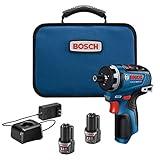
 Makita DF012DSE 7.2V Lithium-Ion Cordless 1/4" Hex Driver-Drill14.38"L x 10.75"W x 4.13"H4.3 x 14.4 x 10.1 inches0.9 poundsCheck on Amazon

Makita DF012DSE vs Bosch PS21 at a glance
| Feature | Makita DF012DSE | Bosch PS21 |
|---|---|---|
| Tool type | Two-position screwdriver | Conventional drill/driver |
| Battery platform | 7.2V lithium-ion | 12V Max lithium-ion |
| Speed range | 0–200 and 0–650 rpm | 0–350 and 0–1,300 rpm |
| Maximum torque | Approximately 71 in-lb | 265 in-lb |
| Chuck or holder | 1/4-inch hex bit holder | 3/8-inch keyless chuck |
| Clutch | 21 settings plus drilling mode | 20+1 settings |
| Best use | Cabinet hardware and controlled screwdriving | Installation, drilling, and heavier fastening |
Control and screw driving
The DF012DSE has the better shape for cabinet work. Its handle pivots between pistol-grip and inline positions, so it can fit inside a narrow cabinet or let you push directly behind a hinge plate. The inline position also reduces the tendency to twist your wrist when driving a long run of screws.
Its low-speed range is particularly useful for cabinet hardware. You can start a screw slowly, watch the head seat, and stop before damaging a melamine surface or stripping a small brass screw. The clutch is not a substitute for technique, but it gives useful protection against overdriving.
The PS21 is still controllable, especially at its lower speed and clutch settings, but it is a more powerful tool than most cabinet screws require. Its motor can bury a screw head quickly if the clutch is set too high. With frameless cabinets, that can pull a screw through the particleboard or distort a hinge plate. Start low, test on scrap, and increase the clutch only when the fastener will not seat.
For repetitive hinge installation, the Makita’s smaller body and lighter feel are meaningful. For mixed installation work, the Bosch’s extra power is more valuable than the Makita’s specialized format.
Drilling and bit compatibility
The Bosch wins decisively when drilling is part of the job. Its 3/8-inch keyless chuck accepts ordinary round-shank drill bits, countersinks, hole saw arbors, and many specialty accessories. Its 1,300-rpm high range is also better for drilling clean pilot holes in wood and assembling cabinet components.
The Makita uses a 1/4-inch hex holder. That makes bit changes fast if you use impact-style hex bits or quick-change drill-bit sets, but it limits the tool to accessories with compatible shanks. A hex-shank drill set works well for pilot holes, but the DF012DSE is not the right choice for large holes, repeated boring, or aggressive drilling.
For a cabinet installer who already owns a drill, the Makita can serve as a dedicated screw gun while the larger drill handles boring. If you want one tool to do both jobs, consider a compact 12V drill/driver kit instead.
Power, batteries, and common failure modes
The Bosch produces nearly four times the Makita’s published maximum torque. You will not need that output for most hinge screws, but it helps when driving cabinet screws into studs, joining thick face frames, or drilling through hardwood. The extra capacity also means the motor is less likely to stall under moderate load.
That power creates its own failure modes. A PS21 can snap a small screw, strip a soft screw head, or spin a bit out of a poorly fitted fastener before you react. It can also damage a cabinet edge when a long screw breaks through the back. Use the clutch for normal fastening and reserve the drill setting for actual drilling.
The Makita’s limitation is the opposite: it can stall if you use it for structural screws or dense hardwood without a properly sized pilot hole. Stalling is not necessarily harmful, but repeated high-load work heats the small motor and drains its compact battery quickly. Keep a sharp bit and drill the correct pilot diameter rather than forcing the tool.
Both kits typically include two batteries and a charger, which is useful during a full installation. Battery availability is worth checking before buying. The DF012DSE uses a less common 7.2V battery system, while the PS21 belongs to Bosch’s broader 12V Max family. If you want to share batteries with other tools, the Bosch platform is generally the safer choice. A Bosch 12V Max battery and charger is also easier to find than replacement batteries for an older niche screwdriver.
Ergonomics in cabinets
The Makita’s compact nose and pivoting handle are its strongest advantages. It is easier to position inside a base cabinet, behind a drawer box, or along the inside edge of a face frame. The inline setting is especially handy when fastening from a cramped corner.
The Bosch has a familiar drill shape and a comfortable small-grip body, but its chuck adds length. That extra reach can make it harder to keep the bit square on a hinge screw in a tight cabinet. On the other hand, the Bosch’s shape is better for drilling overhead, driving longer screws, and applying steady pressure with two hands.
Neither tool replaces a right-angle drill for extremely restricted spaces. If access is the main problem, a right-angle drill adapter can help, but cheap adapters often wobble and can damage screw heads. A compact driver that fits the space is usually the more reliable solution.
Which screwdriver is the better buy?
Choose the Makita DF012DSE if your work is mainly cabinet hardware, hinge adjustment, drawer slides, and small wood screws. It is the more precise and maneuverable tool, and its two-position handle is genuinely useful rather than a cosmetic feature. It is also the better choice when you already own a drill for boring and heavier fastening.
Choose the Bosch PS21 if you want one compact tool for cabinet installation and general household work. Its chuck accepts more accessories, its high-speed range is better for drilling, and its torque gives it room for larger screws and harder materials. The cheaper option is fine when your work is limited to light fastening and you value access over versatility; otherwise, the Bosch’s broader capability usually justifies choosing it.
Whichever tool you use, drill pilot holes in brittle sheet goods, keep the bit aligned with the screw, and test clutch settings on a scrap of matching material. Those habits prevent more cabinet damage than buying the highest-torque driver.