What's inside
As an Amazon Associate I earn from qualifying purchases. This post may contain affiliate links at no extra cost to you.
Choosing between a traditional center punch and an automatic center punch comes down to how many holes you mark, how much control you need, and whether you want to use a hammer. Both tools make a small conical indentation that keeps a drill bit from wandering. The cheaper hand punch is often the better choice for occasional work, while an automatic punch is faster and more convenient for repeated layout.
As an Amazon Associate we earn from qualifying purchases at no extra cost to you.


Our Top Picks
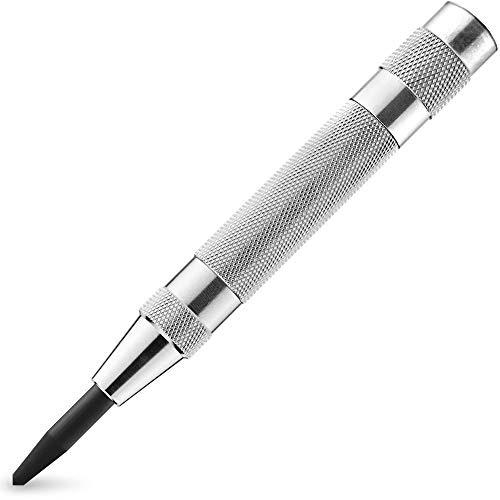 NEIKO 02639A 6-Inch Automatic Center Hole Punch with6" Length6 x 6 x 6 inches0.3 PoundsCheck on Amazon
What each tool does
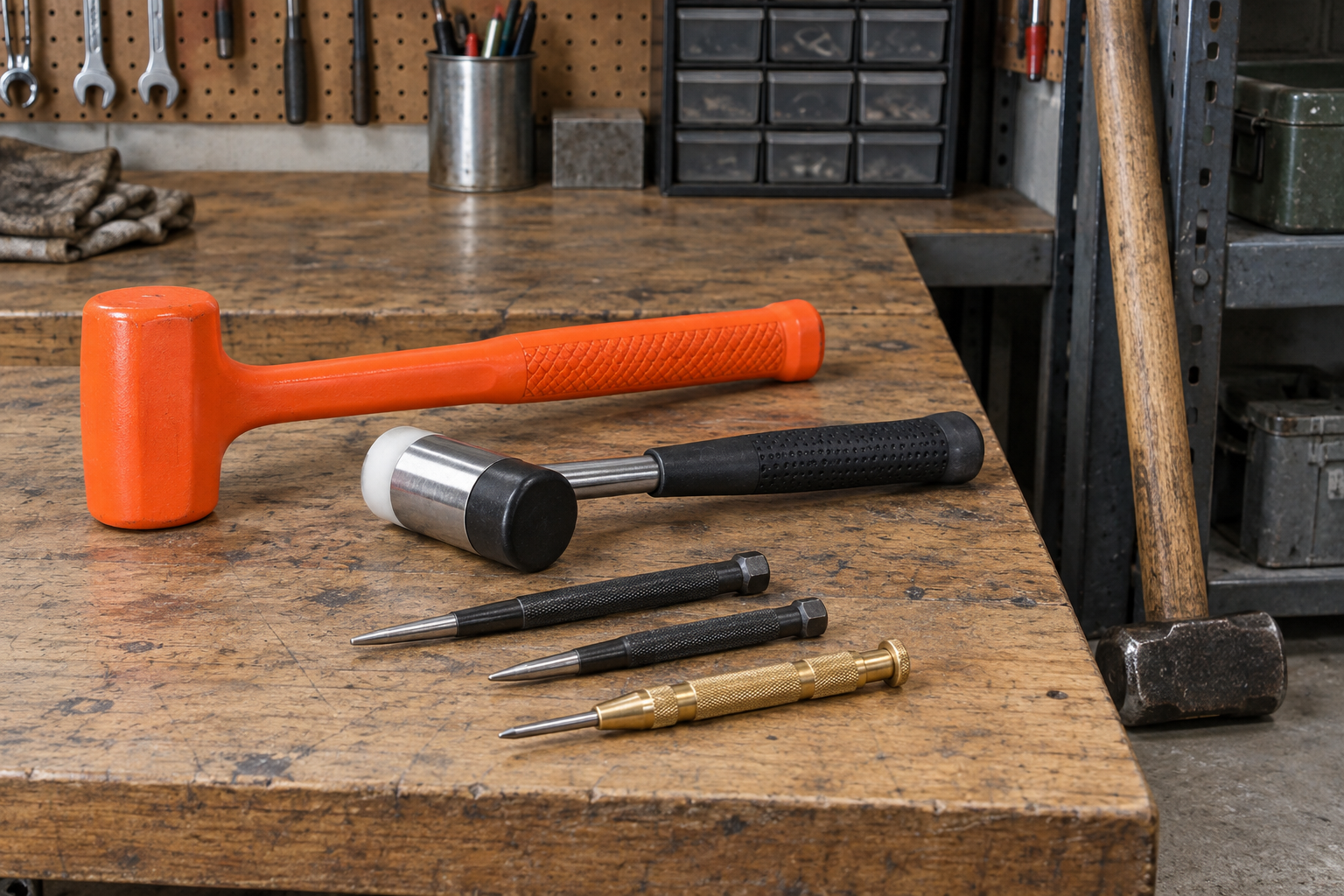
A standard center punch is a hardened steel rod with a pointed tip and a flat striking end. You place the tip on your layout mark and hit the back with a hammer. A typical general-purpose punch has a point angle around 60 degrees, although some are sharper or blunter for particular materials.
An automatic center punch contains a spring-loaded striking mechanism. Pressing the nose against the workpiece compresses the spring until the internal hammer releases and strikes the punch tip. The impact is generated by the tool itself, so you do not need a separate hammer or a second hand for striking.
Most automatic punches have an adjustable cap or collar. Turning it changes spring tension and therefore impact strength. That adjustment is useful, but it does not make the tool universal. A small automatic punch can mark thin sheet metal neatly, yet may lack the force needed for thick steel.
Center punch vs automatic center punch
| Feature | Traditional center punch | Automatic center punch |
|---|---|---|
| Purchase cost | Usually about $5–$15 for a basic tool | Usually about $10–$30, depending on construction |
| Impact source | Separate hammer | Built-in spring and hammer mechanism |
| Control | Very high; force depends on your strike | Fast and repeatable, but less direct feedback |
| Best materials | Wood, plastic, aluminum, brass, and steel | Thin to medium sheet metal, aluminum, plastic, and light fabrication |
| Typical weakness | Requires two hands and a hammer | Can be too weak for heavy steel or thick stock |
| Maintenance | Minimal; keep the tip sharp | Keep the mechanism clean and avoid side loading |
When a traditional center punch is better
Choose a traditional punch when you need maximum control over the mark. A light tap makes a shallow depression for a small drill bit. A harder blow creates a deeper starting point for a larger bit or for drilling into tougher material. You can make several light taps instead of one heavy strike, which is useful when working near a finished edge.
The hammer also gives the traditional punch more potential force. For a 10 mm hole in 6 mm mild steel, a solid punch and a small ball-peen hammer will generally make a more useful starting dimple than a compact automatic model. The workpiece must be supported on a firm surface, though. Punching sheet metal while it is hanging or unsupported can bend it instead of marking it.
A traditional punch is also the sensible budget choice if you mark only a few holes a month. A basic punch, a 4–8 ounce hammer, and a flat scrap of steel can handle ordinary drilling layout for years. There is little to break, and a damaged tip can sometimes be reground if you know how to preserve its shape.
Shop for a steel center punch set if you want several tip sizes. Sets are useful because a very large punch can make an oversized dimple, while a tiny punch tip may bend if struck too hard.
When an automatic center punch is better
An automatic punch wins when you are marking many holes, working in awkward positions, or need to keep one hand on the workpiece. Position the tip, press down, and the tool fires. That makes it especially convenient for hinges, brackets, electrical boxes, and sheet-metal panels where holding a hammer is awkward or risks scratching nearby surfaces.
It is also easier to produce consistent marks. With the adjustment set correctly, each press makes roughly the same indentation. That does not guarantee perfect hole placement—the punch can still slide if you miss the layout mark—but it reduces variation caused by changing hammer blows.
For thin sheet metal, start with the lowest useful setting. Excessive impact can stretch the metal around the depression, leave a large burr on the back, or dent a finished panel. On aluminum, brass, and soft plastics, test on a scrap first. Some automatic punches hit harder than their size suggests.
A good adjustable automatic center punch is preferable to a fixed-impact bargain tool. Adjustment lets you use a light setting for thin stock and a stronger setting for mild steel. Still, treat it as a layout tool rather than a substitute for a heavy machinist’s punch.
Accuracy and drilling technique
The punch mark should be centered on the layout line before you apply force. On a crosshair, use the tip to confirm the intersection from two directions. If accuracy matters, make a very shallow first mark, inspect it, and deepen it only after confirming the position.
For drill bits up to about 6 mm, a shallow dimple is usually enough. Larger bits benefit from a deeper or wider starting mark, but do not make it so deep that the bit’s point bottoms out while the cutting edges have not engaged. A pilot hole—often 3 mm or less—can be more reliable than trying to start a large bit directly in a heavy punch mark.
Use cutting fluid on steel when appropriate, clamp the work securely, and keep the drill perpendicular. A perfectly placed punch mark will not correct for a tilted drill. On thin sheet, place a sacrificial board behind the panel to reduce flexing and tearing as the bit breaks through.
Common failure modes
The most common mistake is using an automatic punch at maximum force on every material. This can mushroom the tip, crack brittle plastic, or leave a raised ring around thin steel. Another is striking a traditional punch with a hardened hammer or another punch. Use a normal machinist’s or ball-peen hammer; hardened tools can chip and send fragments flying.
Never hold a small workpiece in your fingers while punching. The tip can slip, and the hammer can catch your hand. Clamp it or place it on a stable surface. Wear eye protection, particularly if the punch tip is damaged or you are working with hardened steel.
Both types eventually develop a blunt or chipped point. A blunt tip makes a wide, poorly centered depression and is more likely to skid. Replace an inexpensive automatic punch when its tip or mechanism is worn; replacement tips are not universal.
Which one should you buy?
Buy a traditional center punch if you want the lowest cost, work with thick materials, or need precise control over impact. It is the better all-purpose workshop tool when a hammer is already in your toolbox.
Buy an automatic center punch if convenience, repeatability, and one-handed operation matter more than maximum impact. It is particularly worthwhile for repeated sheet-metal layout and household repairs. A replacement-tip automatic center punch can be a practical upgrade over the cheapest sealed models.
For many DIY users, owning both is sensible: use the automatic tool for quick marks and the traditional punch when the material is thick or the hole location is critical. If you will buy only one, choose the traditional punch unless you regularly mark dozens of holes or cannot conveniently swing a hammer.