What's inside
As an Amazon Associate I earn from qualifying purchases. This post may contain affiliate links at no extra cost to you.
Our Top Picks
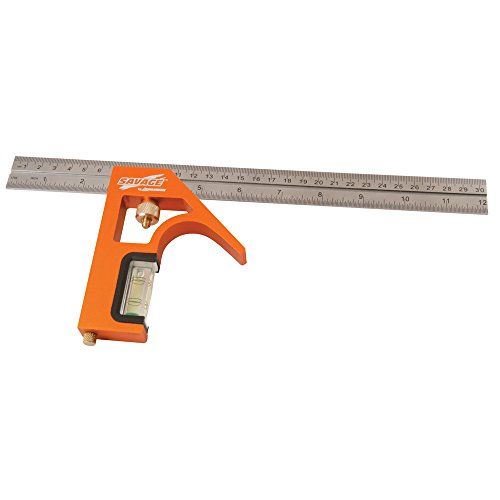 Swanson SVC133 12-Inch Savage Combination Square12 Inch9 x 4.14 x 0.78 inches0.64 PoundsCheck on Amazon
 Klein Tools 935CSEL Combination Square Ruler for ElectriciansOne Size12 x 5.16 x 0.75 inches0.62 PoundsCheck on Amazon
 Swanson 12-Inch Combo Square with Stainless Steel Rule12 Inch5 x 5.75 x 0.75 inches0.77 poundsCheck on Amazon


Short answer: choose for the marks you make most
A combination square is more useful for general woodworking layout: it checks and marks 90- and 45-degree angles, measures short distances, and helps transfer measurements from one edge to another. A speed square is faster for marking common angles across boards, especially when laying out cuts for framing, decks, or rough carpentry.
If you’re buying one square for a small shop, start with a combination square. If most of your work involves marking crosscuts on wide boards or setting saw angles, a speed square may earn its place first. Neither replaces the other completely, and either can give bad results if its reference edge is damaged or the tool is out of square.
As an Amazon Associate we earn from qualifying purchases at no extra cost to you.


What each square does well
A combination square has a ruler that slides through a stock, usually with a 90-degree face and a 45-degree face. Many also have a level vial and a small marking point. You can set the ruler to a particular measurement, lock it, then mark repeated distances. That makes it handy for locating a shoulder line, checking stock thickness, or marking a line parallel to an edge.
A speed square is a compact triangular tool. Its lip hooks over a board edge, and its markings help you lay out 90-degree and 45-degree lines. Many have angle graduations for setting a bevel or marking rafters. The wide, flat body is quick to hold in place, but it does not slide along an edge to make a long, controlled parallel line the way a combination square can.
Combination square vs. speed square
| Job or feature | Combination square | Speed square |
|---|---|---|
| Check a 90-degree corner | Good for small parts and checking a blade or fence | Fast on board edges; larger body suits rough stock |
| Mark 45 degrees | Useful for short, accurate lines | Quick for crosscuts and layout on lumber |
| Set a measurement from an edge | Strong point: lock the ruler at the needed distance | Not designed for adjustable parallel marking |
| Mark common angles | Possible, but slower and more limited | Strong point: angle scale and pivot point |
| Check thickness or depth | Useful with the ruler extended | Limited |
| Portability and durability | More parts; ruler and lock need care | Simple, compact, and generally tolerant of jobsite use |
Accuracy depends on the tool—and how you use it
For furniture work, a small error can show up as a visible gap. A combination square’s sliding head can collect dust or shift if its lock is loose. Before trusting a new square, check it: draw a line along the 90-degree face on a straight-edged board, flip the square over against the same edge, and draw a second line from the same point. If the lines diverge, the square or the reference edge is not true.
You can do a similar check with a speed square by testing it against a known straight edge and comparing its marked 90-degree line to a reliable square. Don’t assume a tool is accurate just because the graduations look crisp. A nick in the lip, a burr on a ruler, or a board edge that isn’t straight can all throw off a layout. For fine cabinet work, verify the tool periodically and use a sharp pencil or marking knife; a thick pencil line can add more error than the square.
What to buy
For a first shop square, a combination square with a sturdy head, a ruler that locks without rocking, and clearly etched graduations is a practical choice. A 12-inch ruler is versatile for ordinary furniture parts; a shorter ruler is easier to handle in a crowded toolbox. If you plan to check larger panels, remember that neither type can verify a long diagonal on its own.
Compare sizes and materials in 12-inch combination squares. For framing and deck work, a basic aluminum or steel speed square is often enough; paying extra for a premium finish doesn’t automatically make your cuts more accurate. See 7-inch speed squares if you want a compact everyday size. A larger square is easier to register against broad stock but takes up more space and can be awkward on narrow pieces.
Choose by the work you do
For cabinets, shelves, drawers, and small furniture, the combination square usually helps more. It can set a repeatable setback—say, 25 mm from an edge—then mark that distance on several pieces. It is also useful for checking whether a table-saw blade is at 90 degrees to the table, though the tool must fit safely and the saw must be unplugged before you check it.
For framing, fence building, and rough cuts, a speed square is quicker. Hook its lip over the board, draw along the 90-degree side, and you can mark a crosscut without adjusting a head or measuring across the full width. Its angle scale is useful for common roof and stair layout, but read the markings carefully: setting an angle by the wrong scale or pivot point can produce a cut that looks close and still leaves a gap at assembly.
The practical choice
Buy the combination square first if your layout involves measured offsets, checking small assemblies, and repeatable marks. Buy the speed square first if you mostly mark cuts on construction lumber and value fast, sturdy handling. If woodworking is a regular hobby, owning both is reasonable: the combination square handles measurement and checking, while the speed square handles quick edge-referenced layout.
If money is tight, a sound, checked square is more valuable than a premium one you haven’t verified. A cheap tool is fine for rough layout when its edge is straight and its angle checks out. For close-fitting joinery, take the extra minute to test it—and recheck your mark before cutting.