What's inside
As an Amazon Associate I earn from qualifying purchases. This post may contain affiliate links at no extra cost to you.
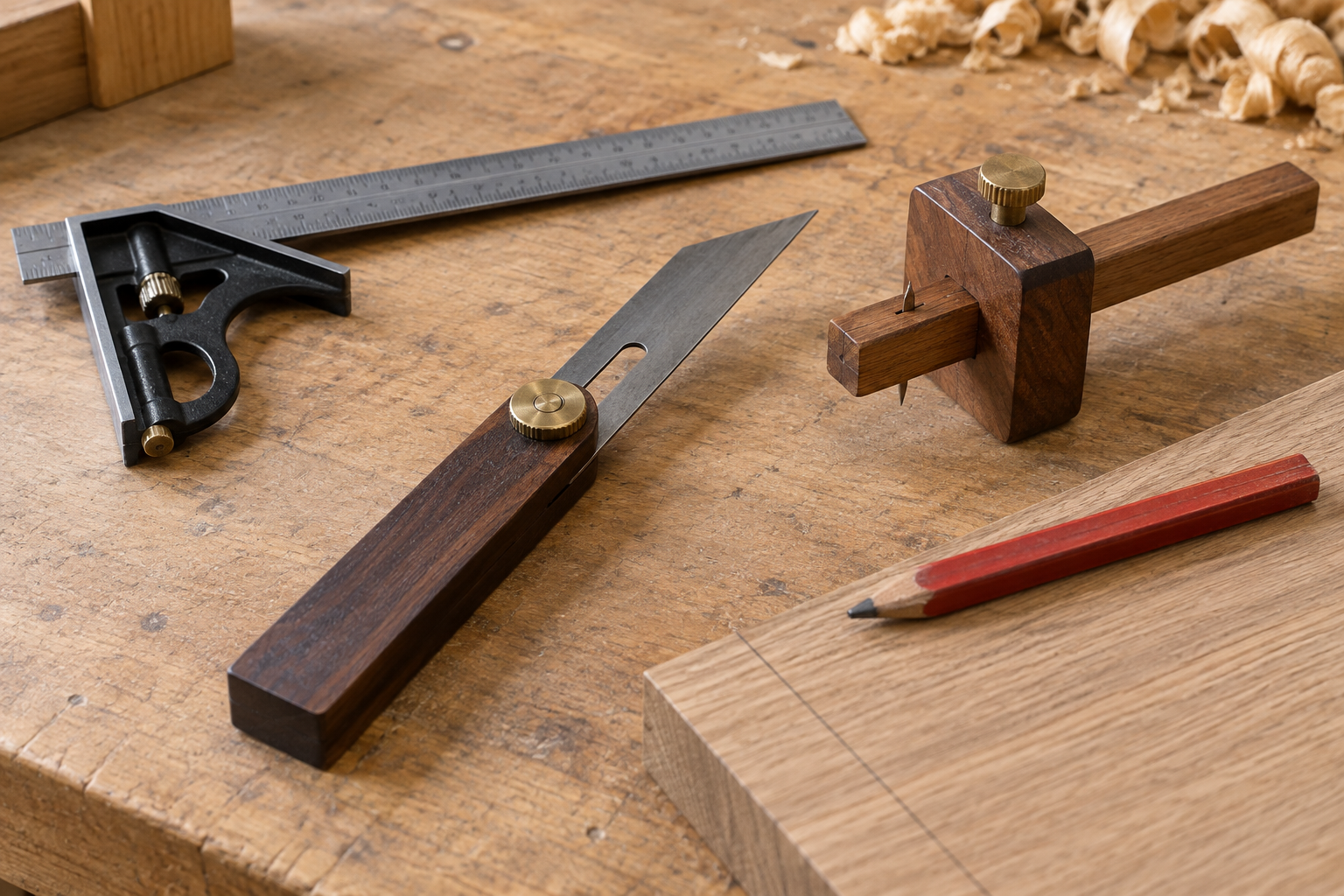
For layout work, a combination square earns its keep by doing several jobs without taking much room: checking 90 and 45 degrees, marking a measured line, finding depth, and setting out from an edge. The Starrett and PEC versions look similar, but they are aimed at different buyers. Starrett generally offers better fit, finish, and long-term refinement. PEC delivers most of the same shop utility for substantially less money.
The practical question is not whether both can mark a square line. They can. It is whether the extra cost buys useful repeatability, smoother adjustment, better resistance to wear, and confidence when the tool is used as a reference rather than just a marking aid.
As an Amazon Associate we earn from qualifying purchases at no extra cost to you.


Our Top Picks
 Starrett Steel Combination Square with Square Head12"1 x 1.4 x 12.3 inches1.22 PoundsCheck on Amazon

Starrett and PEC at a glance
| Feature | Starrett combination square | PEC combination square |
|---|---|---|
| Typical position | Premium reference tool | Budget to mid-priced shop tool |
| Stock and blade | Well-machined stock with a hardened steel blade | Machined or cast stock with a hardened steel blade, depending on version |
| Scale readability | Usually crisp, consistent, and easy to read | Generally good, though finish and engraving can vary by model |
| Adjustment feel | Smoother, more controlled, with less slop on good examples | Functional, but may need cleaning or minor tuning |
| Best use | Precision layout, inspection, and frequent professional use | General woodworking, metalworking, and DIY layout |
| Value | High if you depend on the tool daily | Excellent when the budget matters |
Precision and squareness
A combination square is only as useful as the relationship between its blade and stock. If that joint is out of square, every line you mark from the tool is wrong. A deviation of just 0.5 degrees produces roughly 0.044 inch of error across a 5-inch blade. That is noticeable when fitting joinery, setting a table-saw gauge, or laying out metal parts.
Starrett has the stronger reputation for this part of the job. Its better-known combination squares are made as inspection-quality tools, and the stock typically seats firmly against an edge with little rocking. The blade should slide without binding, then lock without shifting. That behavior matters more than a polished finish.
PEC squares can also be accurate enough for serious shop work, but quality control and individual examples deserve more attention. Check the specific tool before trusting it. Put the stock against a straight reference, mark a line, flip the square over, and mark again from the same edge. If the lines do not coincide, the square is not reliably square. Keep the test marks close together so you are measuring the tool rather than an imperfect board.
Adjustment, wear, and durability
Starrett’s advantage becomes clearer after hundreds of adjustments. The blade generally has a controlled fit in the stock, and the locking mechanism is less likely to feel gritty or move the blade as it tightens. A small amount of movement may not matter when rough-marking framing lumber, but it is frustrating when setting a repeat dimension to within 1/32 inch.
PEC uses a more cost-conscious design. Many examples work well straight out of the package, but the blade can have more perceptible side play, or the locking screw may require a careful touch. Dirt, dried oil, and fine metal chips make either brand worse. Remove the blade, clean the slot, and apply only a tiny amount of light oil. Excess oil attracts abrasive dust.
The stock is also a wear surface. Dropping a square can nick the reference edge or bend the blade. A premium square is not immune to damage, but its better machining gives you more confidence that the stock is flat and the blade is properly supported. Store either tool where it cannot be buried under steel parts or used as a clamp spacer.
Scales and useful features
Most versions offer imperial graduations, often with finer divisions on one face than the other. Read the scale you actually use before buying; availability varies by model and market. Some squares also include a level vial, scriber, and a small bubble or center-finding feature. These are convenient, but they should not drive the purchase. The blade-to-stock relationship and the quality of the locking mechanism matter more.
For woodworking, a 6-inch blade is compact and easy to control, while a 12-inch blade reaches farther across wide stock and sheet goods. Longer blades are more vulnerable to being knocked out of alignment and are less convenient in a tool bag. If your work is mostly furniture parts, a smaller square is usually easier to use. For cabinet sides, doors, and machine work, the longer size may save time.
Keep the graduations readable. Bright shop lighting can reflect off a polished blade, and sawdust can fill shallow markings. A satin or matte finish is often easier to use than a mirror finish, even when both scales are technically accurate.
Which one should you buy?
Choose Starrett if the square is part of your inspection process, you lay out expensive material, or you need a tool that will be used daily for years. It is also the safer choice when you do not want to test, tune, or exchange a square before putting it into service. Browse current Starrett combination squares by blade length and graduation style rather than choosing solely by the lowest listed price.
Choose PEC when you need a dependable shop square but do not want to spend premium-tool money. For furniture layout, trim work, general fabrication, and home shop projects, the accuracy is usually more than adequate after a basic squareness check. A PEC square is also a sensible second tool for a saw bench or welding table, where it may see dirt, heat, and occasional abuse. Compare PEC combination squares by reviews and return policy, since details can differ between sizes and versions.
What to check before keeping either square
Inspect the reference edge for burrs, dents, or a visible gap against a known-straight surface. Slide the blade through its full travel and tighten the lock at several positions. The blade should not twist as the screw is tightened. Check the 90-degree setting with the flip test, then check the 45-degree shoulder against a reliable angle reference if that feature is important to your work.
Also check whether the zero end of the scale is damaged or difficult to read. A scale that starts slightly away from the stock is not automatically defective, but you must account for that offset when marking. If the square rocks, shifts during locking, or fails the flip test, return it rather than trying to compensate with every layout.
For most buyers, PEC is the better value. Starrett is the better buy when repeatability, fit, and long-term confidence justify the premium. Neither replaces a dedicated machinist square for close inspection, but either can be a highly useful layout tool when its condition and accuracy are verified.