What's inside
As an Amazon Associate I earn from qualifying purchases. This post may contain affiliate links at no extra cost to you.
For routine plumbing repairs, both the Channellock 440 and Knipex Cobra 250 are capable water pump pliers. They can grip threaded fittings, loosen supply-line nuts, hold a pipe while you turn a fitting, and handle many jobs that do not justify a pipe wrench. The differences are in adjustment, jaw control, comfort, and how much damage they are likely to cause on finished fittings.
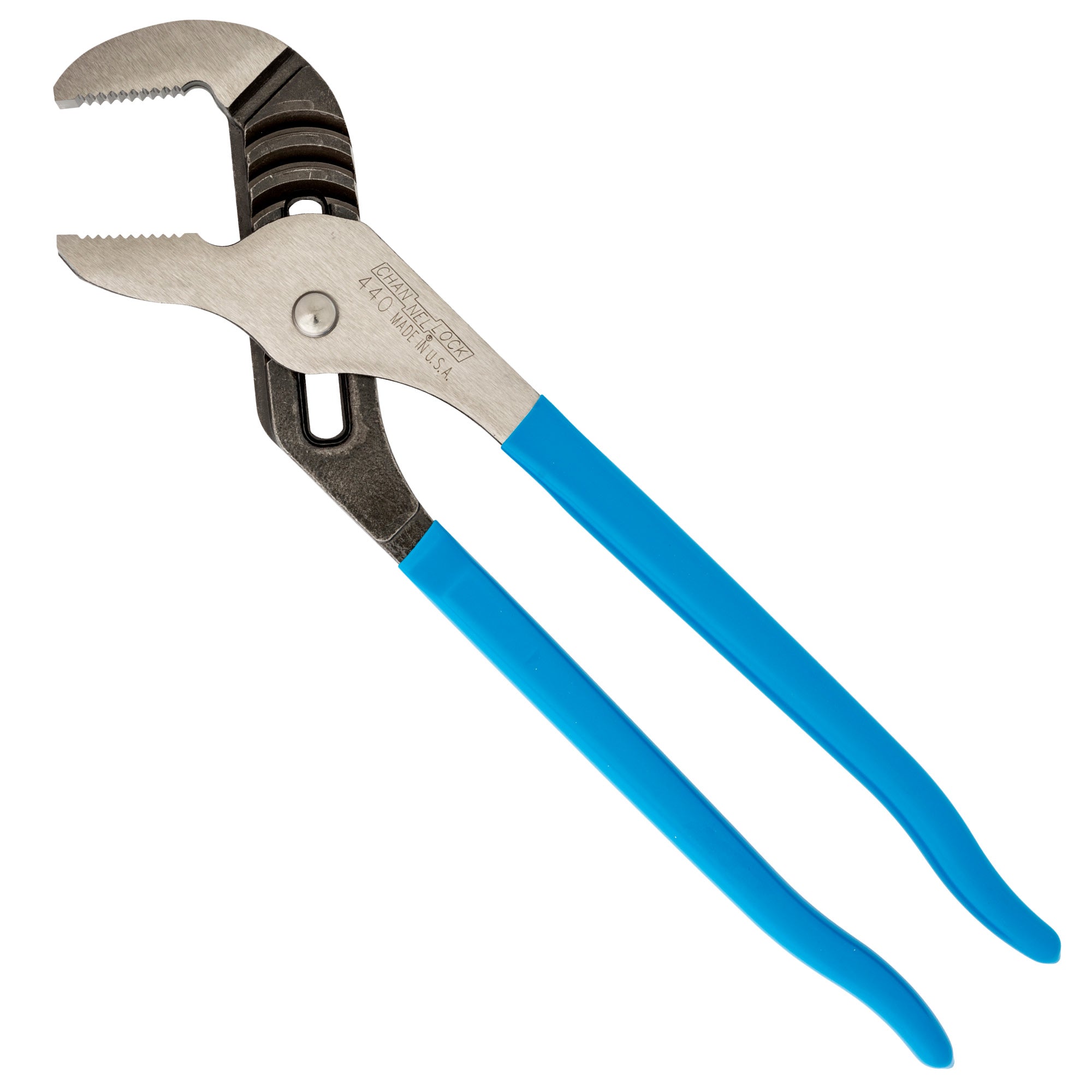
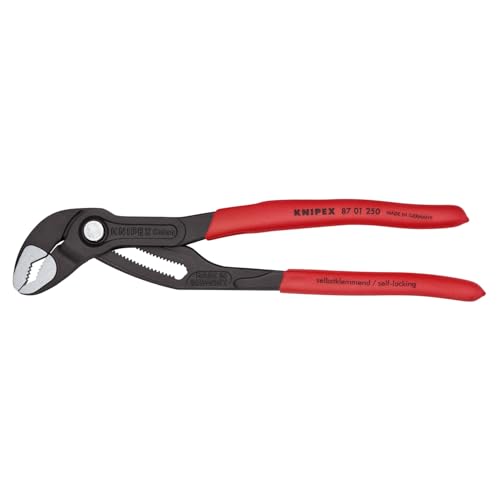
The Channellock 440 is a traditional 12-inch tongue-and-groove plier with a broad jaw and plenty of leverage. The Knipex Cobra 250 is a 10-inch push-button plier with finer adjustment and more aggressive gripping teeth. The cheaper tool is often enough for rough plumbing work, but the Knipex is easier to position precisely and generally feels more controlled.
As an Amazon Associate we earn from qualifying purchases at no extra cost to you.


Our Top Picks
Channellock 440 and Knipex Cobra 250 specifications
| Feature | Channellock 440 | Knipex Cobra 250 |
|---|---|---|
| Tool length | 12 inches | 10 inches |
| Adjustment system | Tongue-and-groove sliding joint | Push-button adjustment |
| Jaw capacity | About 2-1/4 inches | About 2 inches |
| Jaw style | Serrated, broad utility jaw | Serrated, self-locking gripping jaw |
| Best strength | Leverage and larger fittings | Precise positioning and strong bite |
| Typical weakness | Coarser adjustment and easier slipping | Can mark soft or plated fittings |
Adjustment and grip
The Knipex Cobra 250 has the more refined adjustment system. Press the button, slide the lower jaw into position, and release it. The many adjustment points make it easier to fit the jaws closely around a fitting instead of grabbing it with a partially open jaw. That matters because a close fit reduces rocking, slipping, and damage to the corners of a nut.
The Channellock 440 uses a conventional tongue-and-groove layout. It is quick once familiar, but its adjustment steps are farther apart. You may need to open the jaws slightly wider than the fitting or reposition the tool several times. That is not a serious problem on iron pipe or a stuck hose bib, but it is less convenient under a sink where access is limited.
Both tools have sharp teeth designed to bite into round surfaces. Neither should be your first choice for a polished faucet nut, chrome-plated trim, or a plastic compression nut. Wrap the fitting with a layer of leather or a thick cloth if appearance matters, though padding reduces grip and can make slipping more likely.
Leverage and capacity
The 440 has a two-inch length advantage. That gives it more leverage when breaking loose a stubborn threaded connection, assuming you can fit the longer handles into the work area. Its roughly 2-1/4-inch capacity also gives it a small advantage on larger pipe and fittings.
The Cobra 250 gives up some reach and capacity, but its jaw geometry transfers force efficiently. On a clean, correctly adjusted fitting, it often feels stronger than its size suggests. The shorter handles are easier to control around supply valves, P-traps, and cramped cabinet interiors.
Do not use either plier as a substitute for a large pipe wrench on heavy steel pipe. Overloading a water pump plier can spread the jaws, damage the adjustment area, or crush thin-wall tubing. If a fitting will not move with firm hand pressure, apply penetrating oil where appropriate, support the opposite side, and consider a properly sized wrench.
Performance in common plumbing repairs
For replacing a P-trap, disconnecting a hose, or loosening a slip-joint nut, the Channellock 440 is usually sufficient. Its wide jaws are useful for holding a drain body while turning the retaining nut, and its longer handles help with old, stuck connections. It is also a sensible choice for homeowners who use pliers only a few times per year.
The Cobra 250 is better for repeated work on shutoff valves, threaded adapters, and exposed fittings where precise jaw placement saves time. Its push-button mechanism is faster when moving between several sizes. The narrow nose can also reach into spaces where the 12-inch Channellock feels awkward.
For new plastic fittings, use hand pressure first and follow the fitting manufacturer’s instructions. Serrated pliers can distort plastic threads or leave deep marks. A strap wrench or smooth-jaw adjustable wrench is safer for some finished plumbing parts. A second plier is often needed to hold the valve body while turning the connection; twisting the pipe inside the wall is a costly failure mode.
Durability, comfort, and maintenance
The 440 has a straightforward design with no push-button mechanism to clog with grit. Its dipped handles are comfortable enough for occasional repairs, and the tool tolerates general jobsite abuse. The trade-off is less refined jaw positioning and a greater tendency to slip if the jaws are not loaded squarely.
The Cobra’s push-button joint is smooth and precise, but keep dirt out of the mechanism and oil the pivot occasionally. Its slim, textured handles provide good control, although either tool can pinch fingers if the handles close against a hard fitting. Always keep your hand behind the joint and pull rather than push when possible.
Which one should you buy?
Choose the Channellock 440 if you want maximum leverage, occasionally work on fittings larger than two inches, or need a dependable general-purpose plier at a lower price. For basic household repairs, it is not a false economy. If the job is replacing a faucet supply line, loosening a drain connection, or holding a pipe while another wrench turns, the 440 is generally enough. You can check the current Channellock 440 price before buying.
Choose the Knipex Cobra 250 if you do plumbing regularly, work in cramped cabinets, or value fast, exact adjustment. The extra cost buys better control rather than dramatically greater size or capacity. It is the better daily-use tool, particularly for service work where slipping can damage a visible fitting or waste time. See current Knipex Cobra 250 listings for availability.
For a homeowner buying one pair, the decision is simple: get the 440 for leverage and value, or the Cobra 250 for precision and frequent use. Whichever you choose, match the jaw size closely, support the plumbing on the opposite side, and stop using toothed pliers when the fitting’s finish or material cannot tolerate bite marks.