What's inside
As an Amazon Associate I earn from qualifying purchases. This post may contain affiliate links at no extra cost to you.
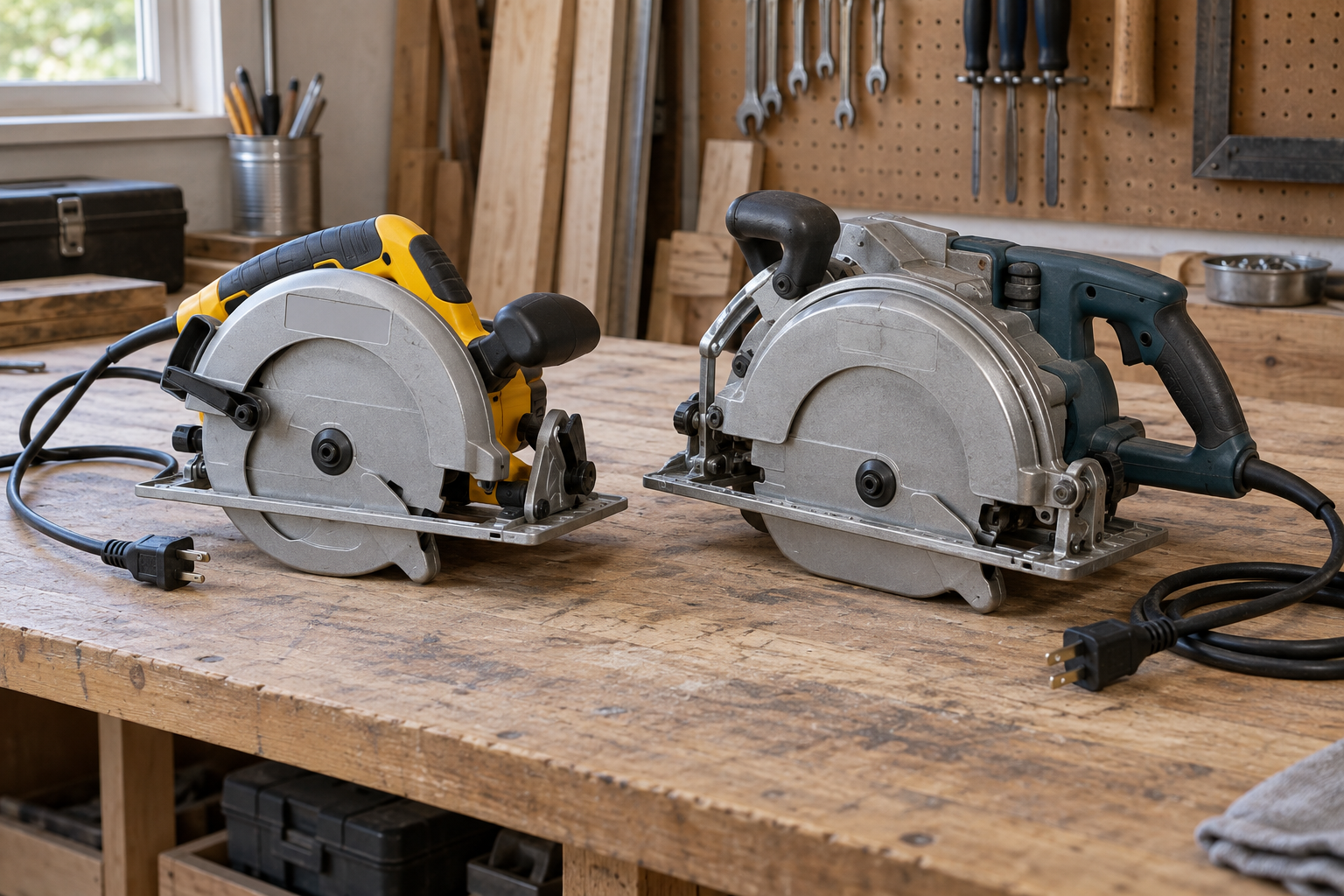
Wet framing lumber is harder on a saw than dry, kiln-dried stock. The wood may be heavier, slightly tougher to cut, and more likely to pinch the blade as a board bends around the cut. That makes the worm-drive-versus-sidewinder choice more than a question of motor power. Balance, visibility, blade selection, and how long you will carry the saw all matter.
For occasional framing, a good sidewinder is usually the sensible buy. For production framing, repeated bevel cuts, or large wet timbers, a worm-drive saw gives you more torque and better resistance to slowing down. It also weighs more, costs more, and can be tiring to use overhead.
As an Amazon Associate we earn from qualifying purchases at no extra cost to you.



Our Top Picks
 DEWALT FLEXVOLT 60V MAX* Circular Saw for FramingOne Size18 x 9 x 8.2 inches10.9 PoundsCheck on Amazon
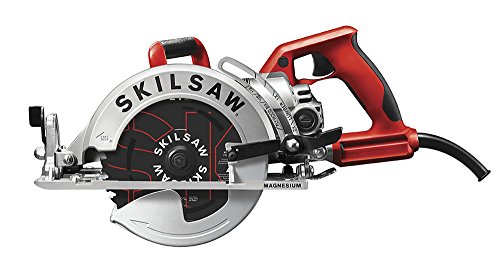 SKILSAW SPT77WML-01 15-Amp 7-1/4-Inch Lightweight Worm Drive CircularOne Size20.5 x 7.75 x 8.75 inches11.5 poundsCheck on Amazon


How the saws differ
A sidewinder places the motor directly in line with the blade shaft. It is compact, relatively light, and commonly weighs between 8 and 11 pounds with a cord. The motor spins the blade at high speed, often around 5,000 to 6,000 rpm.
A worm-drive saw uses gearing to turn the blade at a lower speed, commonly around 4,000 to 4,500 rpm. The gear reduction produces strong torque at the blade and gives the saw a long, narrow shape. Typical corded models weigh roughly 11 to 15 pounds.
That weight difference is noticeable after a day of cutting. It is less important when making a few dozen cuts on the ground, but it becomes a real disadvantage during sheathing, rafter work, and overhead cuts.
| Factor | Worm-drive saw | Sidewinder saw |
|---|---|---|
| Torque under load | Excellent; slows less in thick or wet stock | Good; quality saws handle normal framing well |
| Typical weight | 11–15 pounds | 8–11 pounds |
| Handling | Stable, but bulky and tiring | Quick, compact, and easier overhead |
| Wet 2x lumber | Very capable, especially with long cuts | Capable with a sharp framing blade and steady feed |
| Price and upkeep | Usually higher; some require gear oil service | Usually lower; generally simpler maintenance |
Which cuts wet lumber better?
In wet 2×4 and 2×6 framing lumber, both saw types can make clean, fast cuts when fitted with a sharp framing blade. The worm drive has an advantage when the cut is long, the stock is thick, or the board is under compression. Its extra torque helps maintain blade speed when resin, moisture, and pinching increase resistance.
That does not mean a worm drive will never bind. A wet board can bow inward as its weight shifts, closing the kerf behind the blade. No motor design fixes poor support. If the board is supported at both ends and the offcut hangs down, the cut can pinch regardless of the saw.
A sidewinder may actually feel faster for short cuts because it is easier to position and less tiring to hold. For cutting studs to length on sawhorses, the difference in motor strength is often minor. A sharp blade and correct support matter more than the drive layout.
Blade choice and cut quality
Use a carbide-tipped framing blade with roughly 18 to 24 teeth for fast crosscuts and ripping in ordinary framing lumber. A 24-tooth blade is a useful middle ground for wet stock: it removes material quickly without being as grabby as an extremely coarse blade. More teeth can improve finish, but they also increase feeding resistance and can load up with resin.
Do not keep forcing a dull blade through wet wood. Excessive pressure overheats the motor, increases kickback risk, and can burn the cut. If the saw is leaving black marks, pulling sideways, or requiring two hands to maintain a normal feed rate, replace or clean the blade.
For a buyer who mainly cuts wet framing lumber, a 24-tooth framing blade is usually a better upgrade than spending extra on a heavier saw.
Safety in wet conditions
“Wet lumber” does not necessarily mean you should use the saw in rain. Water on the wood is one issue; water entering the tool, extension-cord connections, or a damaged receptacle is another. Keep corded saws and connections out of standing water, use a GFCI-protected circuit, and inspect the cord before cutting. A cordless saw avoids the trailing cord, but its battery and electronics still should not be soaked.
Wet lumber is often slippery and heavy. Support it on stable sawhorses or sacrificial blocks, keep the cut line clear, and position the blade so the lower guard can close freely. Set the depth only slightly deeper than the material—about 1/8 inch below a 1-1/2-inch-thick 2-by board. Too much exposed blade increases binding and kickback without improving the cut.
Keep both hands on the saw when the cut requires them, and wait for the blade to stop before setting the tool down. Pressure-treated lumber can be particularly wet and abrasive; wear eye protection and avoid using a general-purpose blade that is already dull.
When a worm drive is worth buying
Choose a corded worm-drive circular saw if you regularly cut wet 2x material, 4x posts, engineered lumber, or multiple layers of sheet goods. The extra torque is useful when the blade enters dense knots or the workpiece shifts during a long cut. The saw’s weight can also help it track straight on a rip cut.
It is a poor value if most of your work is short stud cuts, trim carpentry, or occasional home repairs. You will carry several extra pounds for performance you may rarely use. Gear-oil maintenance on some worm-drive designs is another small ownership task, though it is not difficult.
When a sidewinder is enough
Buy a corded sidewinder circular saw when low weight, price, and easy handling matter most. A quality 7-1/4-inch sidewinder has enough capacity for standard 2-by framing and can cut wet boards reliably if you feed it steadily. For a small framing project, the money saved can go toward a spare blade, better sawhorses, or a longer outdoor-rated extension cord.
If you already own a sidewinder, test it on the actual lumber before replacing it. Use proper support, a fresh blade, and a controlled feed. Upgrade to a worm drive only if the saw repeatedly stalls, overheats, or becomes uncomfortable to push through the material. In most residential framing jobs, technique and blade condition decide the result before drive style does.